🔄 Updated 21 Jun 2026
Before you go — please read
Pattani sits in Thailand's deep south. Before traveling, check the latest news and official safety advisories from government authorities, and keep a backup plan. Most of these coastal communities are tourism areas where villagers welcome visitors, but it's best to go during the daytime, and going with locals or a community tourism group will feel more reassuring. Respect Muslim-Malay customs: dress modestly and ask permission before photographing people or homes.
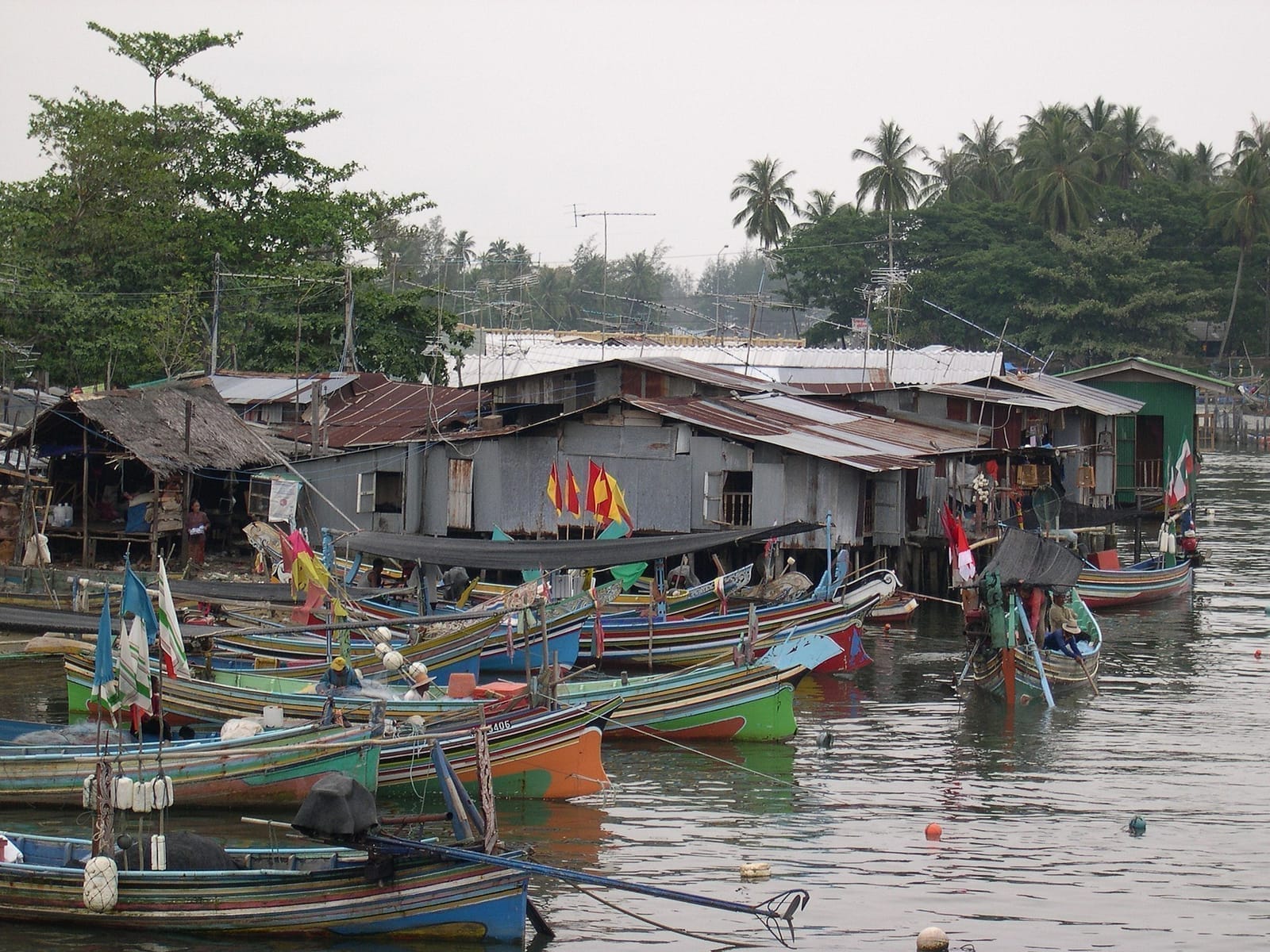
The word kolae comes from Malay, roughly meaning to sway or to drift, and refers to the small-to-medium fishing boats that the sea people here have used to fish along the Gulf of Thailand coast for hundreds of years. What sets the kolae apart from ordinary fishing boats is the painting and patterning across the whole hull, from bow to stern. It is craft, art, and belief rolled into a single boat.
Where the hull patterns come from
Kolae patterns blend three cultures together: Thai, Malay, and Javanese motifs. Local painters draw them by hand in a continuous flow along the hull. The bow is usually a mythical creature such as a naga, a hera (a serpent-like figure), or a Malay legendary bird like the burong singa (some call it the kakah sura bird), while the stern picks up the tail of the same creature, making the whole boat look like a single animal cutting through the waves.
- The bow — usually a naga, a hera, or a legendary bird; some hulls show Hanuman seizing a fish, or Rahu swallowing the moon
- The midsection — vine motifs, flower patterns (bunga), and Malay geometric designs in alternating bright, contrasting colors
- The stern — finished with the tail of the bow's creature so the whole hull reads as one continuous image
- The colors — once made from natural pigments, now oil paint in vivid tones of red, yellow, green, and blue
These days, kolae that actually go out to sea are becoming rare. Fishing methods have changed and motorized boats have taken over, and skilled pattern painters are few. So you'll more often see the fully painted hulls on souvenir model boats and on boats kept for the annual races than on everyday working vessels.
Want more out of Pattani? Book tours & activities
Booking online ahead on Klook or GetYourGuide is usually cheaper than the gate and skips the queue. Pick only the experiences you actually want — prices and availability are shown live on each site.
Boatbuilding villages you can still visit
If you want to see real boatbuilders and pattern painters at work, Pattani has several coastal villages that still carry on the craft. The best-known is Ban Pase Yawo in Sai Buri district. There's also Ban Bang Kao, Ban Budi, and the communities around Talo Kapo in Yaring district, where you can still see kolae boats lined up along the beach.
Ban Pase Yawo (Sai Buri district)
Pattani's most famous kolae boatbuilding village, with both large working fishing boats and souvenir model boats. The craftsmanship is fine, blending Thai and Malay patterns seamlessly. It's also a source of good budu fish sauce.
Bunadara community (Talo Kapo, Yaring district)
A coastal fishing community that runs cruises through mangrove tunnels and out to sunset spots. There are kolae boatbuilders in the area, and cruises start from the Bunadara pier.
Bana wooden bridge (Mueang district)
A long wooden bridge stretching out over the sea from the Bana community. A seaside photo spot where you can see fishing life and small boats lined up. Good for an early-morning or evening stop.
Getting to Ban Pase Yawo
From Pattani town, take Highway 42 toward Sai Buri for about 50 km, then continue on Highway 4157 (Sai Buri–Panare) for about another 2 km, where there's a turnoff into the village. A private car or rental is recommended, as public transport is hard to come by here.
Bunadara cruise through the mangroves
If you want fishing culture and nature in one place, the Bunadara community in Talo Kapo subdistrict, Yaring district, runs cruises through the mangrove tunnels. The trip takes about 2 hours, and one boat seats around 6 people, with an onboard guide who shares the nature and the community's stories. Go in the evening and you'll also catch the sunset over the mangroves.
- Boat fee — around 700–800 THB per boat (seats about 6), so it works out reasonable split between you
- Cruise time — about 2 hours; the evening run gives you both the mangroves and the sunset
- Book ahead — call the community in advance; contact numbers 093 335 6658, 087 836 1820
- What to bring — hat, sunglasses, mosquito repellent, and drinking water; the sun and sea breeze are fairly strong
Prices and contact numbers can change over time, so call the community to check again before you travel, and confirm cruise times clearly, especially if you're going during a long holiday when it gets busy.
Kolae boat races — when the boats look their best
If you want to see many fully painted kolae boats together, the best time is the annual boat races. The big event is in Narathiwat (along the Tha Phraya Sai dam), held around late September, with kolae, yokong, and longboat races competing for a royal trophy. Pattani itself also holds paddle-boat races at local festivals. Around this time, the boats are decorated and painted as brightly as they get all year.
Race dates may shift
The race dates vary from year to year, depending on the official program and the local calendar. If you're set on going during the event, confirm the exact dates with the provincial tourism office or the municipality before booking accommodation and travel tickets.
A one-day coastal Pattani route
With a private car, you can easily take in fishing life and kolae boats in a single day. Here's a rough itinerary.
One day by the sea
Etiquette and things to know
- Dress modestly — sleeved tops and knee-covering pants or skirts, out of respect for the Muslim community
- Ask before photographing — especially people, homes, or inside mosques
- Support the community — buy a model boat, a souvenir, or take the community boat trip; it helps keep the craft alive
- Check safety — follow local news before traveling and plan mainly for daytime trips
- Watch the sun and wind — the coast gets strong sun; bring a hat, sunscreen, and drinking water
Keep planning your Pattani trip — where to stay, eat, and go
See the Pattani travel guide →