🔄 Updated 21 Jun 2026
Korat, or Nakhon Ratchasima, is the largest province in Isan and the first stop many people pass through before heading deeper into the northeast. The appeal here is variety: the city center has the Thao Suranari monument (Ya Mo) as its heart, while the outskirts hold the Phimai stone sanctuary that's over a thousand years old, Wat Ban Rai of the late Luang Phor Khun, and the Pak Chong–Khao Yai side packed with cafes, vineyards, and a national park. On a first visit, once you grasp that the sights are spread far apart, planning gets a lot easier.
How to get to Korat — pick your style
From Bangkok it's about 250 km, roughly 3–4 hours depending on how you go and what time. Mittraphap Road is the main route. Choose based on budget and convenience.
- Bus / minivan — Catch one at Mo Chit 2 bus terminal (Chatuchak). Transport Co. 999, Cherdchai Tour, and joint operators run all day. Tickets are around 210–300 THB depending on the class, and it takes roughly 3.5–4 hours. You get off at a Korat bus terminal (the new one or the old one in town). It's the popular, budget-friendly way.
- Train — Board at Krung Thep Aphiwat Central Terminal (Bang Sue). The northeastern line drops you at Nakhon Ratchasima station, taking about 4–5 hours, with tickets starting in the low hundreds. The scenery through Dong Phaya Yen is lovely, but it's slower than the bus.
- Self-drive — From Bangkok take the motorway, then continue on Mittraphap Road — about 3–3.5 hours. This is the most flexible option since the sights are spread far apart, and you can easily detour to Phimai, Wat Ban Rai, or Khao Yai. Highly recommended if you plan to explore beyond the city.
- Plane — There are flights into Nakhon Ratchasima Airport (Nong Teng), but there aren't many and the airport is far from town, so most people skip it unless there's a genuinely cheap fare.
If you can't decide
Just want the city plus Phimai and want to save money? The bus is the sweet spot. But if you mean to take in Khao Yai, Pak Chong, and Wat Ban Rai, which sit in different directions, self-driving is far more worth it, because public transport between the out-of-town sights is sparse and hard to connect.
Book the activities in your Nakhon Ratchasima trip ahead
Booking online ahead on Klook or GetYourGuide is usually cheaper than the gate and skips the queue. Pick only the experiences you actually want — prices and availability are shown live on each site.
Understand Korat's geography before you plan
The most common first-timer mistake is assuming the sights are close together. In reality Korat is vast, and the main attractions split into 3 zones in different directions. Get this straight and you won't end up backtracking and wasting time.
- City-center zone — The Thao Suranari (Ya Mo) monument, Chumphon Gate, the old-town quarter, Wat Sala Loi, and the Central / The Mall malls. Everything is a 10–15 minute drive apart. It's the most convenient base for accommodation.
- Phimai zone — The Phimai stone sanctuary and Sai Ngam sit to the northeast, about 60 km from town — roughly an hour's drive. It works as a half-day to full-day trip.
- Pak Chong–Khao Yai zone — Cafes, vineyards, farms, and Khao Yai National Park lie to the southwest, about 70–80 km from town. Bangkok visitors often stop here before even reaching the city, since it's along the way.
- Dan Khun Thot zone (Wat Ban Rai) — Wat Ban Rai and Luang Phor Khun's Thep Witthayakhom shrine sit to the west, about 60 km from town — a different direction entirely from Phimai.
Routing it to make it worth it
Because Khao Yai–Pak Chong sits between Bangkok and Korat city, many people stop at Khao Yai on the way up, then do the city and Phimai before heading back, so they don't have to double back. If you're genuinely short on time, pick one zone rather than trying to cover all three in a quick trip.
How many days in Korat is enough?
It depends on how much you want to cover. 1 day is enough for just the city — pay respects to Ya Mo, walk the old town, eat pad mee, and grab souvenirs — good for anyone passing through. 2 days 1 night is the plan we recommend for first-timers: you get the city plus the Phimai sanctuary, or you can swap in city + Khao Yai instead. 3 days or more lets you cover the city, Phimai, Wat Ban Rai, and Khao Yai without rushing. If you want to do Khao Yai properly, set aside at least a full day for that zone.
In-town sights first-timers shouldn't miss
Thao Suranari Monument (Ya Mo)
The city-center landmark in front of Chumphon Gate. Locals and visitors come to pay respects to Ya Mo all day long, and the area around it is great for strolling and eating. Open 24 hours, free entry.
Old-town quarter + Chumphon Gate
The surviving old city gate of Korat's walls. Good for a walk and photos, and in the evening some days there's a market and walking street. An old Isan-town feel.
Wat Sala Loi
A temple Ya Mo had built, with an unusual modern junk-shaped ordination hall. It sits by the Lam Takhong river in town — a quiet walk and lovely architecture to photograph.
Terminal 21 Korat
An airport-themed mall in the city center, each floor styled after a different city, with photo spots, a food zone, and plenty of souvenirs. Good for escaping the heat or a midday break.
Out-of-town sights that define Korat
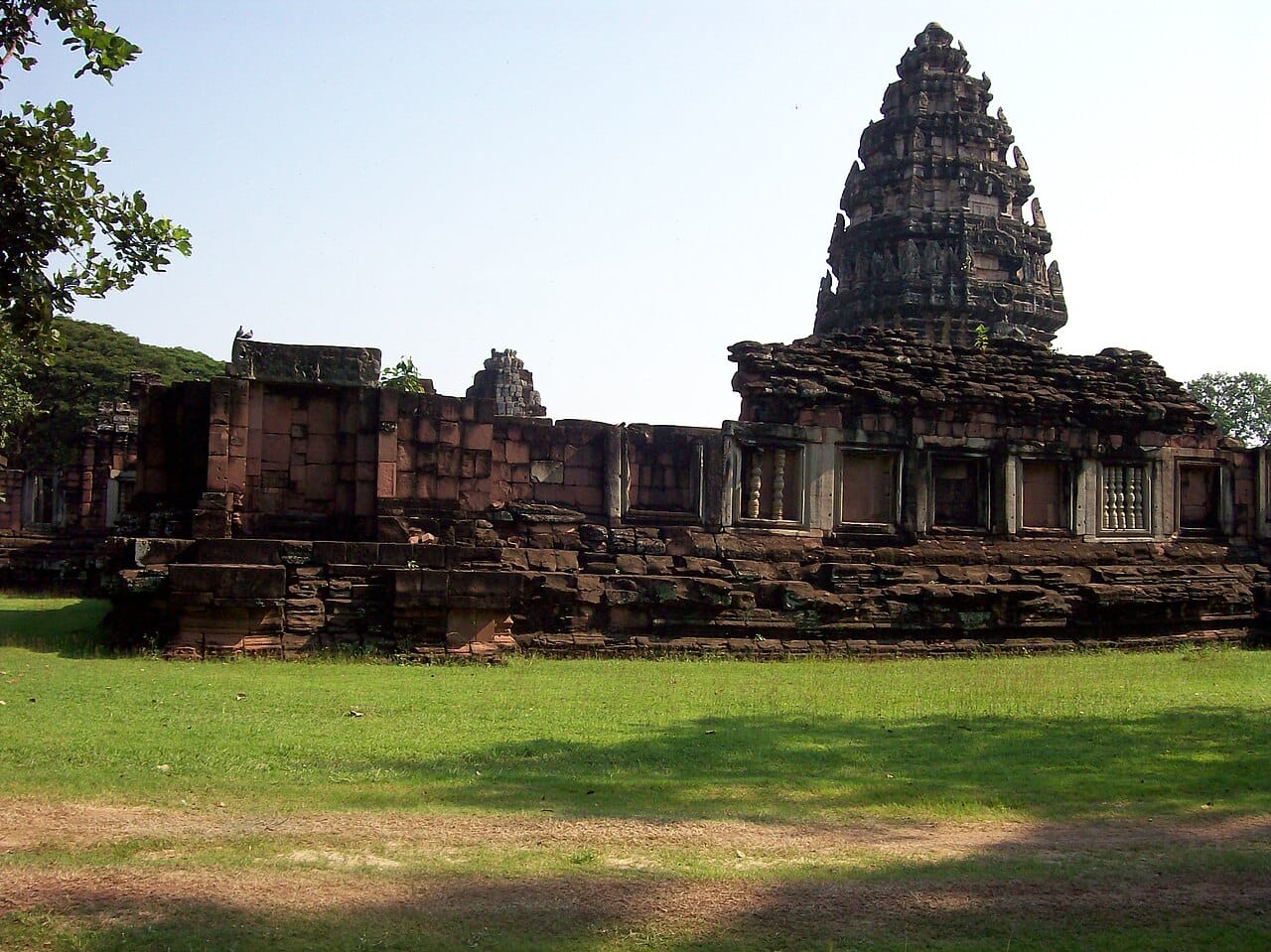
- Phimai Stone Sanctuary — A large Khmer sanctuary over a thousand years old, in Phimai Historical Park. It's so big and well-preserved that many say it feels like a sibling of Angkor Wat. It's 60 km from town. Entry is in the tens of baht for Thais, in the hundreds for foreigners. Nearby is Sai Ngam, a century-old banyan grove worth a stop.
- Wat Ban Rai + Thep Witthayakhom shrine — Luang Phor Khun's temple in Dan Khun Thot, popular for blessings. The Thep Witthayakhom shrine is a stunning ceramic-mosaic hall set over water. Open roughly 08:30–17:00, free entry.
- Khao Yai — A World Heritage national park with waterfalls, viewpoints, and wildlife. The Pak Chong side outside the park is full of mountain-view cafes and vineyards — a zone Bangkok folks love for weekend stays.
- Pak Chong farms and vineyards — Sheep farms, Farm Chokchai, winemaking vineyards, and cafes out in the fields, scattered along the road up to Khao Yai. Great for families and photo lovers.
Match it to your style
Into history and temples? Focus on Phimai and Wat Ban Rai. Into nature and cafes? Focus on Khao Yai and Pak Chong. First time with limited days? We'd suggest the city + Phimai first, because that's the true character of Korat that you won't find elsewhere.
Food you have to try in Korat
- Pad mee Korat — The number-one local dish. Korat rice noodles are chewy and soft, stir-fried with a signature sauce that leans sweet, and eaten with som tam as the classic combo. Famous spots are plentiful, both in town and along Mittraphap Road.
- Mee krob Korat — Crispy fried noodles tossed in a sweet-and-sour syrup. It's both a snack and an easy-to-find souvenir.
- Isan food — Som tam, grilled chicken, larb, nam tok — done with real punch here, true to Isan. You can find it in every corner of town at friendly prices.
- Coffee and cafes on the Pak Chong side — If you pass through Khao Yai, there are loads of mountain-view cafes and local coffee shops — a favorite stop for a break and photos.
Souvenirs people love to bring home
- Instant pad mee Korat — Dried rice noodles with a seasoning sachet — just stir-fry it at home and you've got the Korat flavor. A popular, easy-to-carry souvenir that keeps well.
- Mee krob, Chinese sausage, pork floss — Isan dry goods you can pick up at souvenir shops in town and along Mittraphap Road.
- Pak Thong Chai silk — Korat is a source of fine silk, and Pak Thong Chai district is known for handwoven cloth — a nice special souvenir to buy.
- Pak Chong souvenirs — If you come via Khao Yai, there's fresh milk, sweet corn, beef steak, and local wine from the vineyards. Grab some before you head back.
Suggested plan for first-timers — 2 days 1 night
This plan is built for first-timers using Korat city as a base. Day one covers the city in full — paying respects to Ya Mo, walking the old town, and eating well. Day two you drive out to the Phimai sanctuary, the highlight, before buying souvenirs to take home. It's an unhurried trip that shows you two sides of Korat. If you'd rather swap day two for Khao Yai, you can.
Explore the city + signature food
Phimai Sanctuary + souvenirs home
Tweak the plan as you like
Want nature instead of history? Swap day 2 for Khao Yai–Pak Chong and do mountain-view cafes and waterfalls — but set aside the whole day, since it's in the opposite direction from Phimai. If you truly have only one day, trim it to just day 1 and you'll still see plenty of Korat's character.
Small details first-timers should know
- Carry cash — Local restaurants, markets, and several entry fees still take cash only, so it's handier to have small bills ready.
- Prep for sun and heat — Korat is central Isan and very hot midday. Bring a hat, sunglasses, and water, especially for walking the open grounds at Phimai.
- Dress modestly for temples — Wat Ban Rai, Wat Sala Loi, and the Phimai sanctuary are sacred sites; skip tank tops and shorts above the knee.
- Pick city accommodation first — For the city + Phimai, staying in the city center is most convenient since eating, sightseeing, and getting around are easy. But if you're focused on Khao Yai, staying on the Pak Chong side is closer to the sights.
Ready to go? Check out the full Korat guide, or find a well-located place in town to stay the night.
See the Korat travel guide →