🔄 Updated 21 Jun 2026
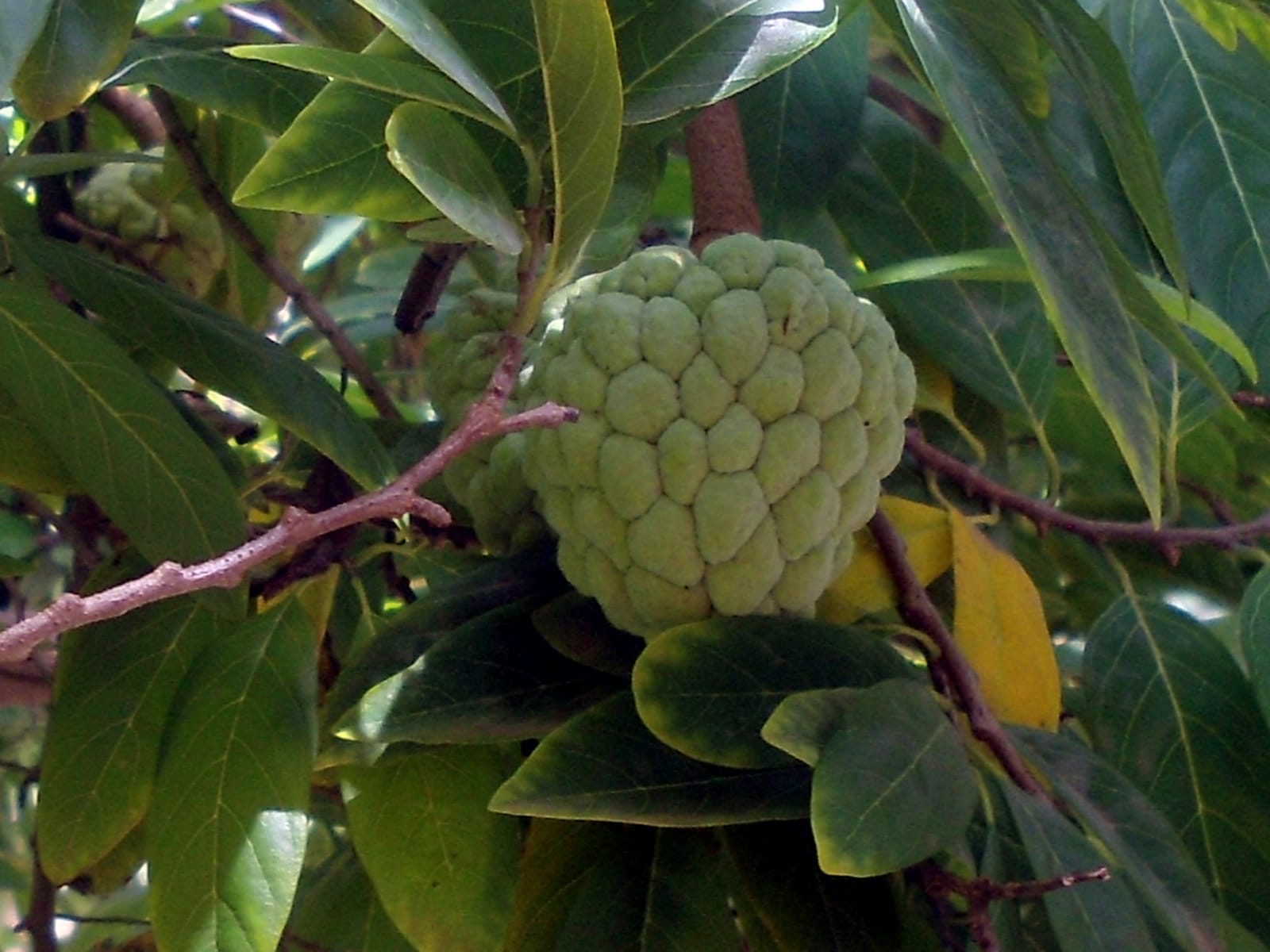
Custard apple has been tied to Lopburi for a long time. Locals will tell you it's been grown here since the reign of King Rama V. The main growing areas sit on the hill slopes north and east of town — around Khao Sam Yot, the self-help settlement zone, Ban Nam Chan, on out to Phatthana Nikhom district. The hillside soil drains well and gets strong sun, exactly the conditions custard apple likes, so the fruit comes out bigger and sweeter than in a lot of other places.
One thing to know before you make a special trip to buy: custard apple fruits once a year. The window when fresh fruit is most plentiful is roughly August to October. Come outside that season and fresh fruit straight from the orchard is hard to find — you'll mostly run into processed versions like crispy fried custard apple or custard-apple powder instead.
The custard apple varieties you'll find in Lopburi
Fai variety (Phra Thinang Yen / Phra Narai)
Lopburi's original heirloom variety. The flesh is fluffy and white like a tuft of cotton, sweet and fragrant — this is the one people picture when they think of this town's custard apple. It's grown around Tha Le Chup Son sub-district, especially Ban Phra Thinang Yen. The flesh comes away from the skin easily but goes mushy fast, so you want to eat it right when it's ripe.
Petch Pak Chong (the 'nang' / leathery type)
A large-fruited hybrid with thicker skin, chewy-firm flesh, fewer seeds, and it ships and keeps longer than the fai variety. That's why a lot of orchards have switched to growing it for the souvenir trade. Some fruit run over half a kilo each, and they're easy to eat because the flesh doesn't turn to mush.
Green-skin / lac-red 'nang' types
The general leathery-skin varieties that Petch Pak Chong was bred from. Skin runs green or a reddish-purple, flesh is chewy and sweet, and the price is gentler. You'll see these at roadside stalls and fresh markets all over town — better as a snack to eat as you go than as a showpiece gift.
Fai vs. nang — what's the difference
If you want that old-school sweet, fragrant flavor and you'll eat it within a day or two, go for the fai variety. But if you're carrying it a long way home or sending it to family in another province, the nang / Petch Pak Chong types hold up far better — the flesh doesn't go mushy on the trip.
Want to taste deeper? Try a Lopburi food tour or cooking class
Half a day with a local who knows the lanes — or cooking a dish yourself — teaches you more than just eating. Book ahead on Klook or GetYourGuide.
Season — when to come for fresh fruit
Custard apple is a fruit tree that bears once a year, following the rains. The window when fruit is thickest is the late rainy season, roughly August to October. In years when the rain comes early it can start from late July. The real peak is September, when prices drop and the fruit looks its best. After October the supply starts to thin out and prices creep up as there's less left.
- Late July — first batch starts, supply still thin, prices still high
- Aug–Sep — the best window, fruit is plentiful, big and good-looking, prices down
- October — end of season, still some around but getting harder to find
- Off-season (Nov–Jun) — almost no fresh orchard fruit, only processed versions
Where to buy custard apple in Lopburi
For something like this, buying at the source gets you the best flavor and price — it's a direct sale from the orchard to you, without passing through several middlemen. There are a few different spots where locals and passers-through stop to buy.
Roadside stalls along Khao Sam Yot–self-help settlement
In season there are custard-apple stalls set up along the road around Khao Sam Yot and the self-help settlement zone. Many are run by the orchard owners themselves — fresh-picked fruit, and you pick your own.
Orchards around Phra Thinang Yen (Tha Le Chup Son)
The home of the original fai variety, Moo 8 Ban Phra Thinang Yen. Some orchards take advance orders during the season — good if you want the real fai variety.
Fruit stalls on the Phatthana Nikhom–Khao Chin Lae side
The road out to Khao Chin Lae and the sunflower fields has local fruit stalls along it — handy for grabbing custard apple while you're out sightseeing.
Fresh markets in Lopburi town
If you don't want to drive out of town, the in-town fresh markets sell custard apple in season too. The price is bumped up a little but it's convenient.
Rough prices and how to pick
Price depends on the variety, the fruit size, and the timing within the season. Fruit bought straight from the orchard at peak is noticeably cheaper than buying in town or out of season. The numbers below are rough ranges to budget around, not fixed prices — always double-check at the stall.
- Fai variety (Phra Thinang Yen) — about ฿40–50 per kilo straight from the orchard; hand-picked premium fruit runs higher
- Petch Pak Chong / large nang variety — about ฿30–50 per kilo depending on size; bigger grades cost more
- General nang varieties — at roadside stalls during the glut sometimes as low as ฿20–30 per kilo
- Picking fruit — look for skin with wide-spaced 'eyes' and deep grooves; press gently and a slight give means it's near ripe, rock-hard means it's still raw. If you're carrying it far, choose fruit that's a touch firmer and ripen it at home.
Ripening it just right
Custard apple that's still firm will ripen in about 2–3 days left at room temperature. Once it's soft all over, move it to the fridge to slow it down. Don't refrigerate it while it's still raw — it won't keep ripening and the flesh loses its flavor.
Lopburi souvenirs to buy alongside
If you come during custard-apple season it usually lines up with the sunflower bloom. There are a few other souvenirs worth grabbing to take home.
- Sunflower honey — from the bee farms around Phatthana Nikhom, only available during the sunflower bloom, with a light fragrance
- Din so phong (chalk powder) — a Lopburi staple from way back, produced around Ban Hin Song Kon
- Din-so-phong salted eggs — coated in chalk powder the local way, found at markets and souvenir shops
- Processed custard apple — crispy fried custard apple or custard-apple powder, an option for those visiting out of season
Plan your Lopburi trip to line up with custard-apple and sunflower season
See the Lopburi travel guide →