🔄 Updated 21 Jun 2026
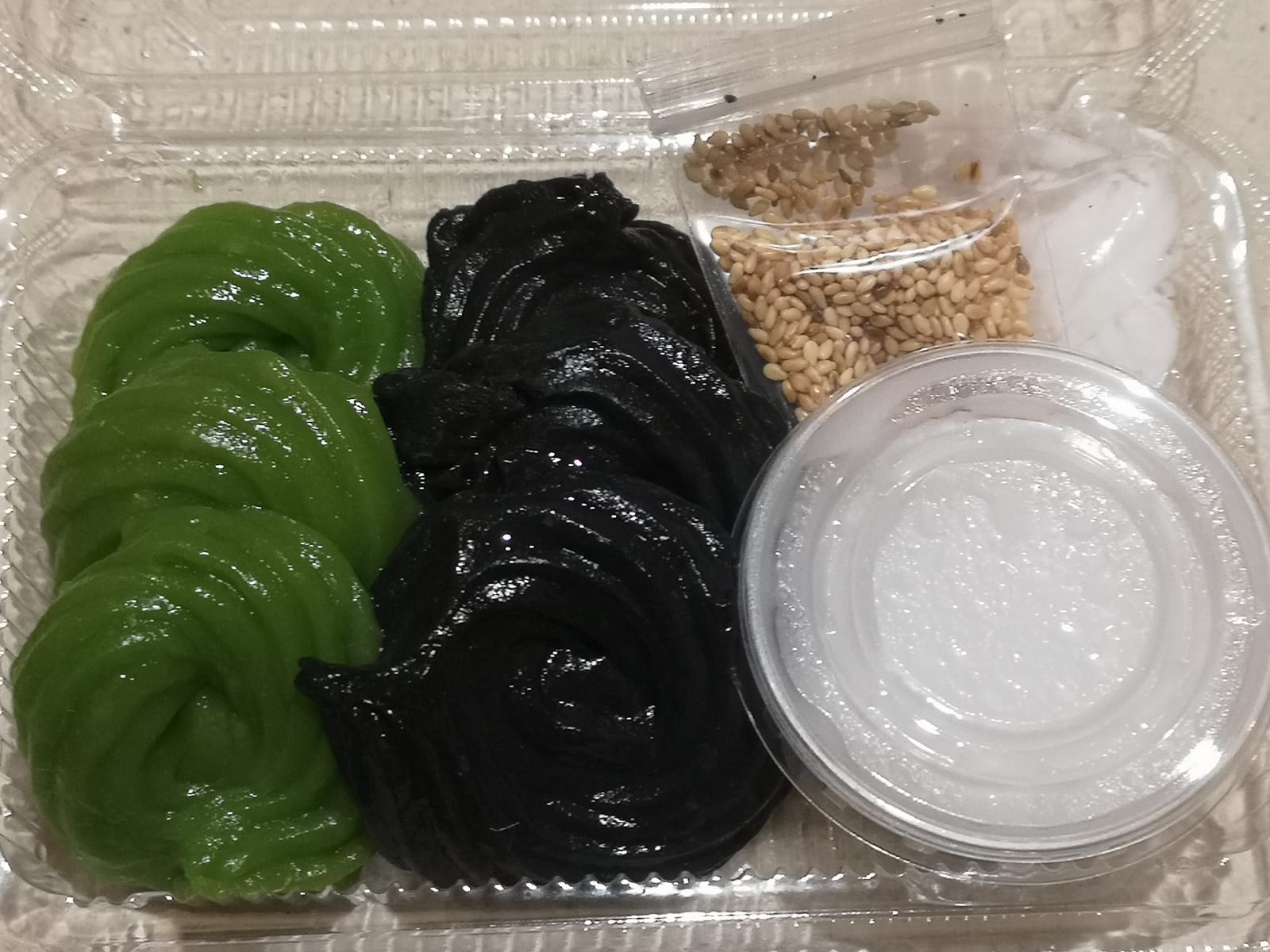
Piak poon with fresh coconut cream looks like a simple dessert, but it really comes down to the details. The jelly itself should be soft and chewy, not mushy and not hard. The green comes from real pandan (the old-school traditional recipe actually turns out black because it uses alkaline water from burnt coconut husk, but most stalls now make the green pandan version). It's topped with fresh coconut cream simmered with a pinch of salt so it turns out salty-rich against the dessert's mild sweetness, then finished with toasted sesame or toasted grated coconut for fragrance. In Lopburi you'll usually find it sold in small cups at market stalls, with prices starting around 15–25 THB per cup. Eat it fresh on the spot or take it home in a bag.
Where to find piak poon in Lopburi town
Piak poon with fresh coconut cream in Lopburi isn't sold from big shops with clear signs. It's mostly Thai-dessert stalls in the markets selling it alongside khanom chan, khanom tan and khanom thuai. If you really want a cup, you have to go market-hopping in the mornings and at the night market, because the fresh coconut cream is made daily — once it's gone, it's gone. Here are the spots where we most often find piak poon and other Thai desserts.
Thai dessert stalls, Talat Bon Mueang (Old-Town Municipal Market)
A morning market in the old-town area near Phra Prang Sam Yot, this is where Lopburi locals come to do their shopping and where you'll find handmade Thai desserts. Several stalls sell piak poon, khanom chan and khanom tan together, scooping it into a cup and pouring the coconut cream over right in front of you. Come in the morning before it sells out.
Talat Sa Kaeo (Sa Kaeo Market)
A popular in-town market with a wide range of street food from morning to evening. Thai-dessert and sweets stalls are easy to find here, and piak poon with fresh coconut cream is one of them. It's convenient to grab it along with other snacks, and parking is easier than in the old-town area.
Talat Lang (Tha Khun Nang area – old riverside market)
An old market right by the Lopburi River with local food and traditional Thai desserts. The atmosphere of a genuine old market makes it a pleasant place to wander and take photos. You'll come across sweets stalls with piak poon here and there — come early and there's more to choose from.
Railway night market (Lopburi train station area)
Evening-to-late food in the train station area, with both savory and sweet options — bua loi, roti and Thai desserts from pushcarts. If you miss piak poon in the morning, you can hunt down desserts here in the evening. Good for anyone who's been exploring the old town and gets hungry after dark.
Modern Thai-dessert shops in town (for catering / souvenirs)
Beyond the market stalls, Lopburi has handmade Thai-dessert shops that take orders for snack boxes and souvenirs. Several make piak poon with the coconut cream packed separately by the cup — handy if you want a large quantity to give away or for an event. You can order ahead; try searching for Lopburi Thai-dessert shop pages on Facebook.
How to pick the best cup
Look at the coconut cream first. Good fresh coconut cream is thick and smooth with a soft creamy-white color — not watery and not separated into liquid — and it smells rich. Press the piak poon gently and it should spring back, not feel hard. If a stall pours the coconut cream in front of you and it's still warm, that's a sign it was made fresh that day.
Want to taste deeper? Try a Lopburi food tour or cooking class
Half a day with a local who knows the lanes — or cooking a dish yourself — teaches you more than just eating. Book ahead on Klook or GetYourGuide.
How to eat it best, and how long it keeps
Piak poon with fresh coconut cream is best eaten fresh, because the coconut cream is a fresh ingredient. The charm is in cool coconut cream poured over the jelly and eaten right away — the mild sweetness of the piak poon meets the salty richness of the coconut and the fragrance of toasted sesame, a balance that's classic traditional Thai dessert. If you're taking it home, we suggest keeping the jelly and the coconut cream in separate bags and pouring it over only when you eat.
- Eat it the same day — fresh coconut cream has no preservatives, so it doesn't keep long out of the fridge, especially in hot weather.
- Refrigerate for 1–2 days — but the coconut cream may thicken and set, so take it out and let it come back to room temperature before eating.
- Keep the jelly and coconut cream separate — if you're storing it, keep them in separate bags and pour the coconut cream over when you're ready to eat for a fresher taste.
- Watch for soured coconut cream — if it smells sour or the taste has changed, it's starting to go off and you shouldn't eat it.
Lopburi souvenirs to take home
If you've come hunting for piak poon, Lopburi has plenty of other local souvenirs you can buy in the same market. Many of them keep longer than fresh desserts, so they make good gifts you don't have to eat in a rush.
Som fak / pla som fak (fermented fish)
A sour, fermented local food that's been tied to the Lopburi community for a long time. You can find it at Talat Lang and souvenir stalls — eat it with rice or fried.
Din so phong (chalk powder)
A signature product of Lopburi and a popular OTOP item that travelers like to take home. You can find it at souvenir shops in town.
Salted eggs coated in din so phong
Salted eggs coated in chalk powder, Lopburi style — salty and rich, just right. A souvenir that keeps well and is unique to the province.
Other handmade Thai desserts
The same stall that sells piak poon usually has khanom chan, khanom tan and khanom thuai — buy them together as a dessert gift set at the morning market.
Plan a day of eating and sightseeing
Hunt down piak poon in the morning at the old-town market, then walk on to see Phra Prang Sam Yot and King Narai's Palace, which are close by. In the evening, come back to pick up food at the railway night market — a day that covers both the savory and the sweet.
Plan a full day of eating and sightseeing in Lopburi old town
See the Lopburi travel guide →