🔄 Updated 21 Jun 2026
This trip suits anyone with their own car or a rental, because the sights are spread out beyond the towns and public transport between them is a hassle. The whole loop is roughly 200 km counting from Bangkok — about two and a half hours up to Lopburi, where you spend the first day and stay one night, then work your way down to Saraburi on day two before heading back to Bangkok comfortably in the evening.
If you don't drive, you can still have fun by staying one night in Lopburi town and visiting only the in-town sights (Phra Prang Sam Yot, Narai Ratchaniwet Palace, San Phra Kan). But the natural spots on the Saraburi side, like Jet Sao Noi Waterfall or Pa Sak Dam, are tough to reach without your own vehicle.
The 2-day, 1-night overview
- Day 1 — Lopburi temples + old town · Khao Wong Phra Chan → Phra Prang Sam Yot → San Phra Kan → Narai Ratchaniwet Palace → overnight in Lopburi town
- Day 2 — Saraburi temples + nature · Wat Phra Phutthabat → Jet Sao Noi Waterfall → Pa Sak Jolasid Dam → back to Bangkok
- Where to stay · Sleep in Lopburi town — it sits right between the day-one sights and the route down to Saraburi
- Rough budget per person · Entry fees across all the sights come to under 200 THB; the rest is fuel, lodging and food
Book the activities in your Lopburi trip ahead
Booking online ahead on Klook or GetYourGuide is usually cheaper than the gate and skips the queue. Pick only the experiences you actually want — prices and availability are shown live on each site.
Day 1 — Lopburi temples + old town
Start the first day fairly early, because the highlight is Khao Wong Phra Chan, where you climb 3,790 steps — the earlier you go, the cooler it is. Then ease into Lopburi's old town in the afternoon, where the sights are close enough to walk between.
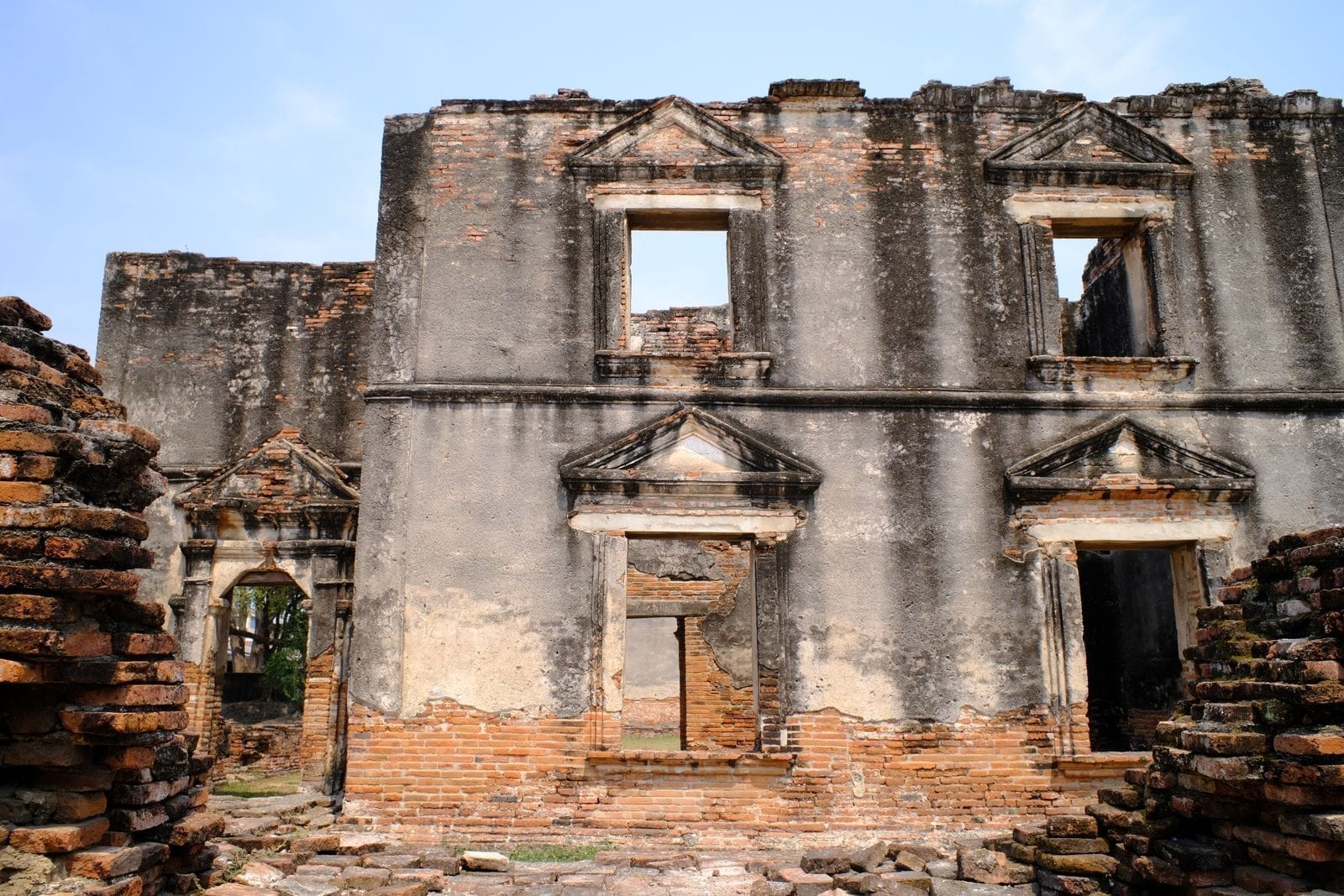
Lopburi — from Khao Wong Phra Chan to the old town
About the Lopburi monkeys
The monkeys in Lopburi's old town really are everywhere and really are mischievous. Don't walk around showing off plastic bags, food or drinks, take off and stash your sunglasses, and watch out for open bags — they grab fast.
Day 2 — Saraburi temples + nature
Day two crosses over to the Saraburi side. Start with merit-making at Wat Phra Phutthabat, one of central Thailand's most important temples, then switch gears to splash around at Jet Sao Noi Waterfall in Muak Lek district, and close out with the wide views at Pa Sak Jolasid Dam before the run back to Bangkok.
Saraburi — from the Buddha's Footprint to waterfall and dam
Tweak the plan by season
If you come in late rainy to early cool season (Nov–Jan), Jet Sao Noi Waterfall has plenty of water and the floating train runs at Pa Sak Dam. In hot season (Mar–May) the waterfall may run lower, but you can splash around to your heart's content to beat the heat.
Where to stay on this trip
We'd suggest sleeping one night in Lopburi town, since it sits right in the middle. You finish day one in Lopburi and head straight to your hotel, then drive down to Saraburi on day two without doubling back. Hotels in Lopburi town come in a range of tiers, from budget stays near the train station to lakeside places by Pa Sak Dam on the Phatthana Nikhom side.
In Lopburi town
Close to Phra Prang Sam Yot, San Phra Kan and the train station, with the old town walkable. A solid base for a one-night stay.
By Pa Sak Dam (Phatthana Nikhom)
Wide reservoir views and a quiet setting — good if you want to focus on relaxing and the scenery, but far from the old town.
See our hand-picked Lopburi hotels, with real prices and reviews
See the Top 10 Lopburi hotels →Before you go
- Own car / rental — the sights are spread out beyond the towns and public transport between them is awkward; a car keeps you nimble
- Start early — Khao Wong Phra Chan takes a while to climb, so going early dodges the midday heat and leaves time for the in-town sights by afternoon
- Dress modestly — you'll enter temples in both provinces, so skip short shorts, low-rise cuts and spaghetti straps
- Swimwear + non-slip shoes — for Jet Sao Noi Waterfall; the limestone is slipperier than you'd think
- Carry cash — temple fees, parking, and some local shops take cash only