🔄 Updated 21 Jun 2026
Walk a morning market in Yasothon between May and July and you might see round greenish-yellow seeds piled up, sometimes still tucked inside their flat brown pods. That's luk niang — an old-school local food your parents' generation grew up eating, though plenty of younger people walk straight past it without a clue what it is. So we wanted to tell you what it actually is, how it's eaten, and why it fits an Isan spread so well.
What is luk niang, and what does it taste like?
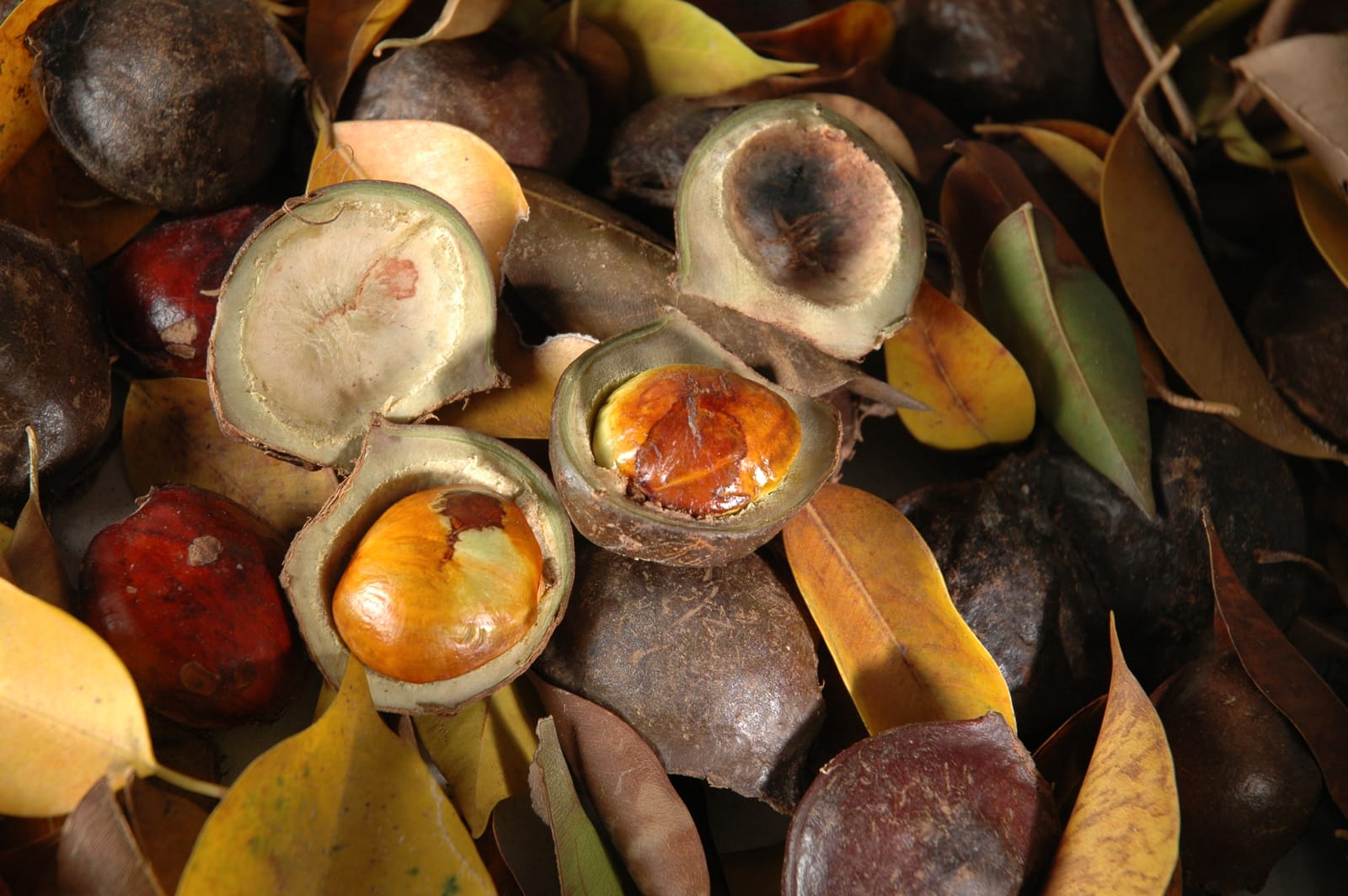
Luk niang (in some areas called luk niang nok) is the seed of a tree in the legume family. The pod is flat and curved like a horseshoe, with round flattened seeds lined up inside under a dark brown skin. Peel off the thin pinkish-purple coat and you get a creamy greenish-yellow kernel. Bite in and you get a nutty, bean-like richness, then a bitter edge that lingers on the tip of your tongue, plus that distinctive smell — like sator but not as pungent. First-timers might not take to it right away, but eat it next to something bold and salty and you'll get why people end up hooked.
- Young seeds — soft texture, mild flavour, barely bitter, easier to eat raw. A good place to start.
- Mature seeds — firmer and harder, much richer and noticeably more bitter. This is the version regulars go for.
- Sprouted seeds — buried in sand or soil until a young shoot breaks through; softer flavour, lighter smell, easier to eat.
Want to taste deeper? Try a Yasothon food tour or cooking class
Half a day with a local who knows the lanes — or cooking a dish yourself — teaches you more than just eating. Book ahead on Klook or GetYourGuide.
How Isan locals eat luk niang
In Yasothon and across Isan, luk niang isn't cooked into a curry as a main dish the way it is in the south. Instead it's a raw relish — what Isan folks call phak naem — sitting in the veggie plate beside the main spread, ready to scoop between mouthfuls of something spicy. The richness of luk niang cuts the heat, salt, and sour, giving your mouth a breather before the next bite.
- With nam phrik / jaew bong — slice the luk niang thin and dip it into jaew bong or fermented-fish chilli paste; the richness balances the salt nicely.
- With laab and koi — pork laab, beef laab, raw fish koi; bold flavours, and a bite of luk niang in between cleans the palate.
- Alongside som tam and pon — tray-style som tam, fish pon, frog pon; a few luk niang on the side of the plate is just normal home cooking out in the countryside.
- Grilled in the pod — roast over a low flame until fragrant, then peel and eat hot; the bitter smell fades and the richness comes up.
Eating tip
Raw luk niang has a strong smell, so if you're not used to it, start with young or sprouted seeds. Slice them thin and dip in jaew bong — that's a lot easier than biting into a whole seed.
Eating luk niang safely — what you really need to know
We'll be straight with you here, because it's a health matter. Luk niang naturally contains djenkolic acid. Eat a large amount raw in one sitting and some people get lower-back pain and difficulty urinating, and in severe cases there are reports of acute kidney failure. This comes from actual public-health sources — it's not a scare story, but it doesn't mean you can't eat it either. Isan and southern Thai people have eaten it for generations by eating it in moderation and knowing how.
- Keep it moderate — eat it as a relish, just a few seeds per meal; don't sit down and put away a whole pile.
- Cooking lowers the risk — boiling, steaming, or grilling before eating helps reduce the acid.
- Sprouting helps too — seeds that have sprouted a young shoot are milder and considered easier to handle.
- Drink plenty of water — it helps flush the system and reduces crystal build-up in the urinary tract.
- At-risk groups, take care — people with kidney disease, pregnant women, and young children should avoid it or eat very little.
Where to buy luk niang in Yasothon
Luk niang is seasonal — it isn't sold year-round. You'll see it most in the early rains, roughly May to July, laid out among other wild foods and local vegetables like phak tiu, phak waen, krachiao flowers, and forest mushrooms. If you're going to track it down, here are the markets locals actually shop at.
Yasothon Municipal Fresh Market (Municipal Market 1 / Thanarak)
The main fresh market in the centre of town, where the wild foods and local vegetables all gather. In season you'll find luk niang sitting among the mushrooms and phak tiu. Go early — the produce is fresher and easier to pick through.
Yasothon Morning Market (beside the fresh market)
Village vendors bringing their own garden and forest produce to sell at friendly prices. Good for browsing seasonal local foods.
Green Market / Yasothon Organic Market
An organic-farm market around the plaza in front of the Provincial Administration office and the clock tower, focused on chemical-free vegetables and seasonal local foods. Ask the vendors when luk niang comes in.
Yasothon Walking Street
On the evenings it runs, there are stalls of local food and seasonal wild produce mixed in — a pleasant place to graze and browse.
On price
Luk niang is sold by the pile or by the kilo, and the price moves with the season and the supply. When it's plentiful you might see a pile for 20 THB; late in the season, when there's less around, the price climbs. Pre-peeled, ready-to-eat seeds usually cost a touch more than buying whole pods. Ask a few stalls and compare.
How to pick good luk niang
- Firm, un-shrivelled pods — if you're buying whole pods, choose ones that are still plump and full rather than shrunken; the seeds inside will be in good shape.
- Creamy greenish-yellow seeds — even, fresh colour with no dark bruised spots or mould.
- Pick for how you'll eat it — go young if you want it easy, mature if you want it rich.
- Give it a sniff — that distinctive smell is normal, but if it smells off, sour, or spoiled, skip it.
Once you've bought it, if you're not eating it straight away, whole pods keep for several days somewhere cool. Once peeled, eat the seeds within a day or two, since the kernels start to change colour and the smell grows stronger.
Want to pair luk niang with more local eats? Plan a full food-and-travel trip around Yasothon.
See the Yasothon travel guide →