🔄 Updated 21 Jun 2026
The charm of temple visits around Mae Klong and Amphawa comes down to one word — riverside. Many of the temples have their own jetty, so a longtail boat can pull right up to the front. Along the way you'll pass old wooden houses, coconut groves, and everyday life on both banks of the canal. And if a boat isn't convenient, you can drive to every temple just as easily, since the main ones sit close to Amphawa town and the city of Mae Klong.
3 main riverside temples you shouldn't miss
Wat Chulamani
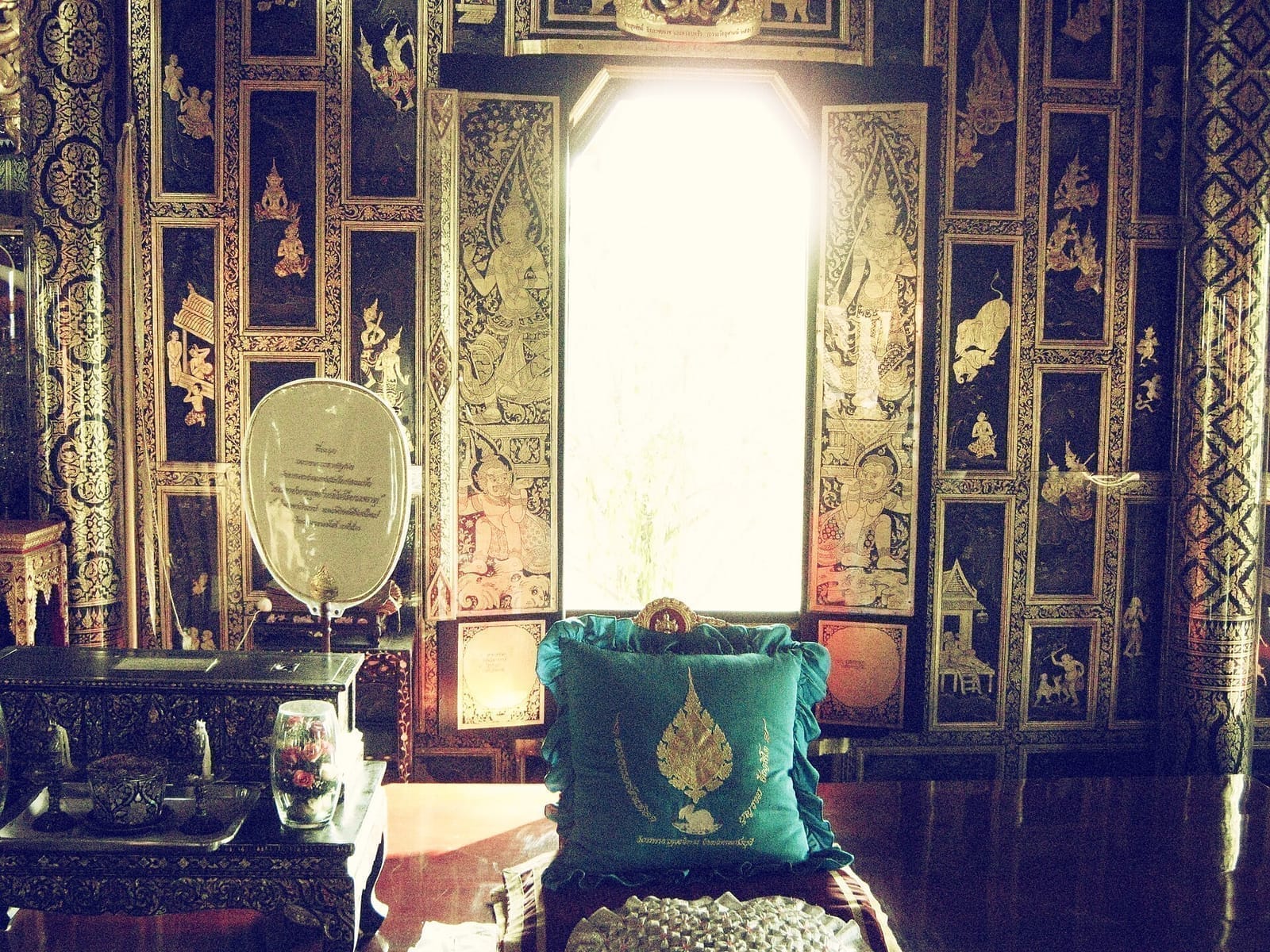
A temple more than 300 years old, dating to the late Ayutthaya period, sitting along the Amphawa canal. The big draw is the large open-air statue of Thao Wessuwan that the devout come to make wishes to, plus the incorrupt body of Luang Pu Nueang. Inside you'll find a beautiful four-gabled marble ordination hall and a monk's quarters decorated with gold-and-black lacquer. It's the first stop most people picture when they think of temple hopping in Amphawa.
Wat Phummarin Kudithong
Sitting on the north bank of the Mae Klong River at the mouth of Prachachom Chuen canal. The highlight is the Kudithong — an old teak Thai-style monk's quarters moved here from Wat Bang Nang Li Noi when erosion threatened the riverbank, which is how the temple got its name. Inside is Phra Phuttha Rattana Mongkhon (Luang Pho To), a gilded stucco principal Buddha in the subduing-Mara posture. The temple carries a story linked to the queen consort of King Rama I.
Wat Bang Kapom
Known for Luang Pho Khong, a former abbot famed for his mastery of the occult arts. The standout is the shrine holding four overlapping Buddha footprints, each ring measuring about 18.5 metres around and roughly 3 metres tall, with the central footprint set on a panel you can lift. The shrine walls are covered in finely detailed stucco reliefs telling the story of the footprints and the life of the Buddha — craftsmanship that's hard to find elsewhere. The shrine itself is in a Chinese style, with a round entrance guarded by stucco door guardians.
Good to know before you go
Luang Pu Nueang's quarters at Wat Chulamani (the lacquer-painted walls) are open Monday–Friday 07:00–17:00 and Saturday–Sunday 07:00–18:30. The open-air Thao Wessuwan can be visited until midnight. If you want to see both the ordination hall and the quarters, coming during the day is the safer bet.
Want more out of Samut Songkhram? Book tours & activities
Booking online ahead on Klook or GetYourGuide is usually cheaper than the gate and skips the queue. Pick only the experiences you actually want — prices and availability are shown live on each site.
Two more temples to add if you have time
Wat Phet Samut Worawihan (Luang Pho Ban Laem)
A royal temple right in the centre of Mae Klong town, home to Luang Pho Ban Laem — a 167 cm standing Buddha in the alms-bowl posture and the image Mae Klong locals revere most. It's close to Mae Klong railway station and the Maeklong Railway Market, so you can fit it into the same trip.
Wat Bang Khae Noi
Set along the Mae Klong River on the same side as the boat route. The draw is an ordination hall carved entirely from teak, depicting Jataka tales. Temple-hopping boats often stop here for the fine woodwork and the quiet riverside atmosphere.
Temple route by boat (half day)
The boat is the way to soak up the most atmosphere. You can arrange one at Amphawa Floating Market, either per person or by chartering the whole boat. Per-person fares start at around 50–100 THB depending on distance, while a private charter to several temples is usually priced as a package. Negotiate and confirm the exact stops before you board. Most boats run roughly 08:00–17:00.
Cruising the Amphawa canal and Mae Klong River
Temple route by car (1 day)
If you're travelling as a family or bringing older relatives, driving is more comfortable and you control your own timing. All the temples sit within a 20-minute drive of Amphawa town, and every one has parking on site.
Self-drive temple hop around Mae Klong and Amphawa
What to know before visiting riverside temples
- Dress respectfully — skip tank tops and shorts above the knee, especially when entering an ordination hall or shrine.
- Bring small cash — boat fares, donations, and gold leaf are mostly cash-only. Some spots take PromptPay, but not all.
- Come early or on a weekday — Wat Chulamani and Amphawa Floating Market get packed on weekends. For a calmer visit, go midweek.
- Leave buffer time for the boat — schedules depend on the tide and how many passengers there are, so confirm your return time clearly to avoid missing the boat.
- Pair it with the floating market — visit temples in the morning, then move on to Amphawa Floating Market in the evening for the fireflies. It makes for a well-rounded plan.
Plan a full Samut Songkhram trip — temples, floating markets, and food
See the Samut Songkhram guide →