🔄 Updated 21 Jun 2026
Mae Sai is a small town with real border-town character. Walk a few steps and you'll see Burmese signage and hear Northern Thai, central Thai, and Burmese all mixed together. Most people come here for two things: browsing the border markets for shopping, and heading up to pay respects at Wat Phra That Doi Wao and look across to Tachileik on the Myanmar side. Plan your time well and half a day to a full day is plenty.
The Mae Sai-Tachileik border crossing
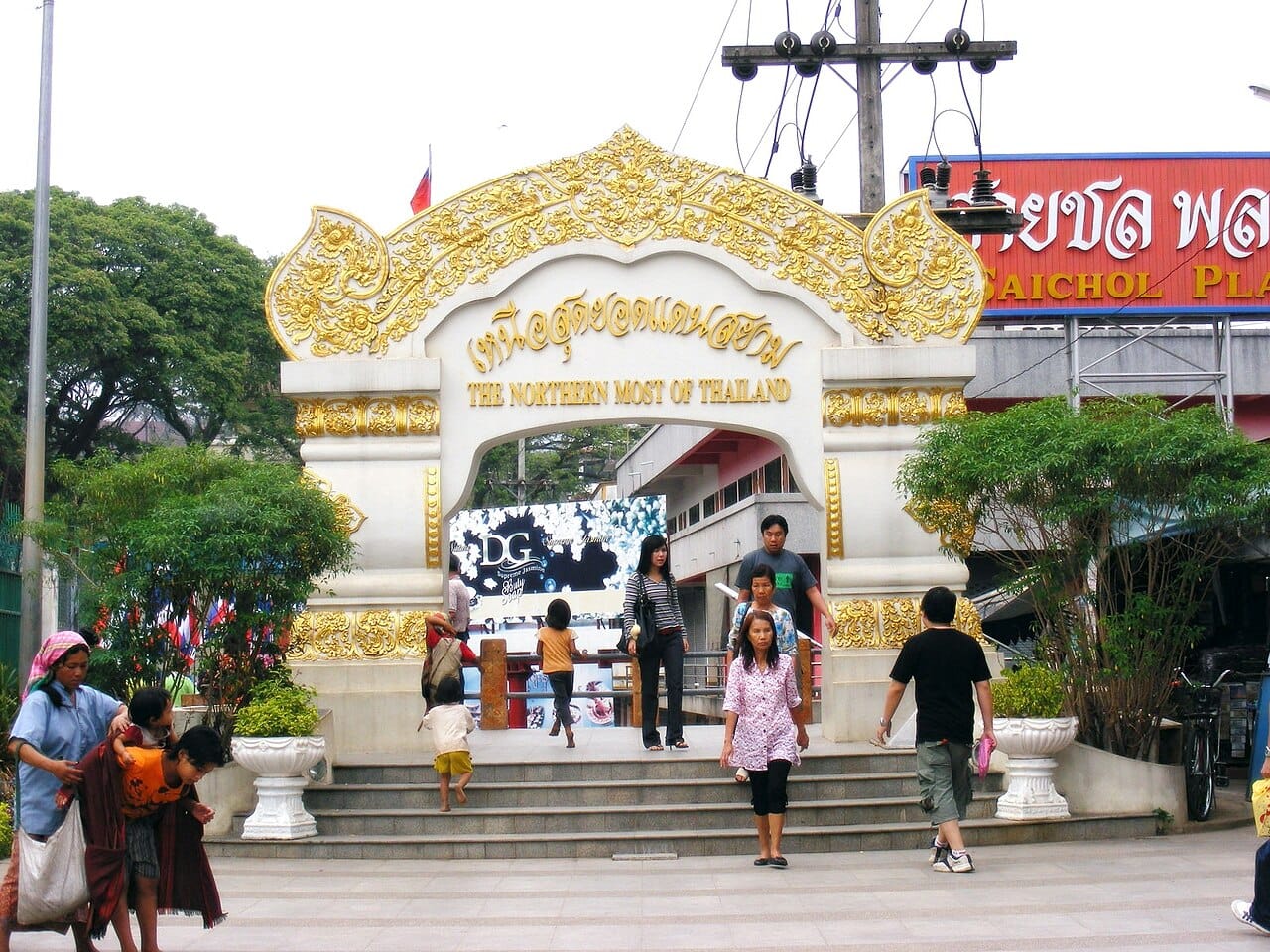
The Mae Sai crossing marks the very end of Phahonyothin Road, with a bridge over the Sai River connecting to Tachileik on the Myanmar side. There's an archway and a "Tip of Siam" sign by the checkpoint for a check-in photo. Even if you don't cross over, you can still wander around and take in the border-trade atmosphere and the surrounding markets.
Border status right now (updated 2026) — read this before you plan
Since mid-2024 the Mae Sai-Tachileik crossing has been closed to foreign nationals, open only to Thai and Myanmar citizens crossing with a border pass, due to unrest in Shan State on the Myanmar side. If you're set on crossing into Tachileik, check the news and announcements from Mae Sai Immigration before you travel. Don't build your whole trip around crossing the border, because there's no firm date yet for reopening it to foreigners.
Want more out of Chiang Rai? Book tours & activities
Booking online ahead on Klook or GetYourGuide is usually cheaper than the gate and skips the queue. Pick only the experiences you actually want — prices and availability are shown live on each site.
The border markets — Doi Wao and Sai Lom Joy
The real charm of Mae Sai is in the markets around the checkpoint. The main shopping area has two zones you can walk straight between: Doi Wao Market and Sai Lom Joy Road (some people call it Sai Lom Choey). The two zones sell a lot of the same things, mostly goods imported from Myanmar and China. You can haggle, and they're open mainly during the day.
- Gems and jade — coloured stones, rubies and jade are what the Myanmar side is known for. If you're not an expert, treat them as light-on-the-wallet keepsakes; don't drop a big sum without certification.
- Clothes, jackets and blankets — cheap and cheerful, handy to grab for the cold if you're heading up into the hills.
- Snacks and edible souvenirs — candied plums, dried fruit, nuts, snacks, tea and coffee, with plenty of stalls letting you taste before you buy.
- Household and decor items — accessories, bags and cheap odds and ends; a fun browse.
Make the most of the market
You can haggle at nearly every stall — start around 60-70% of the asking price and work up from there. For snacks like candied plums and pickled fruit, ask to sample first, and carry small bills, because many stalls don't take bank transfers.
The Wat Phra That Doi Wao skywalk
It sits on a hill right next to the market — you can climb the steps or drive up. The highlight is the curved glass-floored skywalk, around 150 metres long, with the Thai side of Mae Sai and Tachileik on the Myanmar side in a single view. At the top there's the Doi Wao stupa to pay your respects, so it's a spot that gives you both the view and a bit of merit.
- Opening hours — around 07:00-20:00 (evening light is lovely and the view is crisp).
- Skywalk admission — 50 THB for adults, 25 THB for students; monks, seniors over 70, people with disabilities, and children up to 120 cm tall enter free.
- Come prepared — you need to wear socks or shoe covers before walking on the glass floor; they're available to borrow at the entrance.
More to see around Mae Sai
If you have time to spare, there are several more stops around Mae Sai, all a short drive from the town centre and a good follow-on after a morning at the markets.
Tham Luang-Khun Nam Nang Non
The forest park made famous by the 2018 Wild Boars rescue. You can see the cave mouth, walking trails, and the clear green Khun Nam Nang Non emerald pool. About 10 km from the town centre.
Wat Phra That Doi Wao
The temple on the same hilltop as the skywalk — pay respects at the old stupa and take in the view across both sides of the border. You can walk straight up from the market.
Doi Pha Hi / Doi Pha Mi
Hillside villages where you can sip coffee over a sea of mist in the cool season — Akha coffee-growing country. About a 30-40 min drive up.
Souvenirs worth taking home
- Candied plums and dried fruit — a signature of the border-side stalls, easy to buy and easy to share around.
- Hill-grown tea and coffee — beans and tea leaves from the hills around Mae Sai, better value than buying in the city.
- Jackets and blankets — worth it if you're carrying on into the hills in the cool season.
- Gemstone keepsakes — fine as small souvenirs, but if you're buying something pricey, know your stuff and ask for certification.
Straight talk
A lot of people expect Mae Sai to feel like stepping into another country, but while the crossing is closed to foreigners, the main draws are the border-market atmosphere and the view from Doi Wao. If you're coming to browse the markets, pick up souvenirs and snap a photo at the northernmost point of Thailand, you won't be let down. But if you're hoping to cross over and explore Tachileik, always check the border status first.
Getting there and planning
- From downtown Chiang Rai — about 61 km, roughly 1 hour by car or rental along Highway 110, or take a songthaew/minivan on the Chiang Rai-Mae Sai route from the bus terminal.
- Best time — come mid-morning to afternoon when the market is buzzing and all the shops are open; the evening light is best for photos on the skywalk.
- How long to spend — the market plus the skywalk takes about half a day; add Tham Luang and the hills and it's a full day.
- Where to stay — most people stay in Chiang Rai city and drive out, but if you want to stay near the border there are hotels and guesthouses in the town itself.
Plan your full Chiang Rai trip — things to do, where to eat, and where to stay
See the Chiang Rai travel guide →