🔄 Updated 21 Jun 2026
Maha Sarakham sits in the middle of the Isan plateau, only about 70 km from Khon Kaen and right next to Roi Et to the east. People often call it the city of learning because it's home to both Mahasarakham University (MSU) and a Rajabhat university, so the town is full of students, the food is cheap, and dorms and cafes are everywhere. The town center is small and easy to walk, while the main sights are spread out across the outer districts — you'll really want a car to get around comfortably.
Who Maha Sarakham suits
If you like busy cities with plenty going on, this one might feel a touch sleepy. But if you want a relaxed Isan trip where you're not fighting anyone for a photo spot — paying respects at a stupa, wandering old Khmer ruins, eating real Isan food, and sitting in student-priced cafes — Maha Sarakham fits the bill. It's a great stop if you're passing through on a Khon Kaen–Roi Et trip, or visiting family who study at MSU.
- Temple and history fans — Phra That Na Dun, Ku Santarat, Ku Ban Khwao and Wat Maha Chai are enough to fill a full day.
- Easygoing nature lovers — Kaeng Loeng Chan reservoir right by town, plus Don Pu Ta in Kosum Phisai with its hundreds of monkeys.
- Food and cafe people — the area in front of MSU and the town itself are full of Isan eateries, mookata grills, and wallet-friendly cafes.
- Craft seekers — Ban Mo, an old pottery village where they still throw clay pots by hand for real.
Book the activities in your Maha Sarakham trip ahead
Booking online ahead on Klook or GetYourGuide is usually cheaper than the gate and skips the queue. Pick only the experiences you actually want — prices and availability are shown live on each site.
How to get to Maha Sarakham
Maha Sarakham has no airport and no train line running into town. There are only a handful of ways in, and most of them lean on Khon Kaen as the gateway.
- Bus from Bangkok — direct buses run from Mo Chit to the Maha Sarakham bus terminal, a roughly 8–9 hour ride. Tickets start around 350–550 THB depending on the class, with both daytime and overnight sleeper services.
- Fly to Khon Kaen, then transfer — the fastest option. Bangkok to Khon Kaen is about a 1-hour flight, then a van or bus from Khon Kaen to Maha Sarakham takes another hour or so, for around 50–80 THB.
- Drive yourself — the most convenient way to see the area, since the sights are scattered across districts. It's about an hour from Khon Kaen, or 6–7 hours from Bangkok via Korat.
- Getting around the province — songthaews in town cost 10–20 THB, but public transport thins out fast once you leave the main district. Renting a car or motorbike is far more practical.
A tip about transport
Phra That Na Dun and the Khmer ruins are in Na Dun district, about 60–65 km from town, while Don Pu Ta is out in Kosum Phisai in the opposite direction. If you don't have your own car, book a chartered car or hire a driver by the day for any out-of-town outings — it'll save you far more time than waiting on songthaews.
Where to stay
Most accommodation clusters in two areas. The first is the town center around Nakhon Sawan and Phadung Withi roads, near the market and restaurants — handy if you don't have a car and want to walk to your meals and sights. The second is the area in front of MSU (Kham Riang), packed with daily-rate dorms, cafes and student eateries at low prices. Both areas have 2–3 star hotels and guesthouses to choose from, running roughly 500–1,200 THB a night. During the MSU graduation period, rooms fill up fast and prices climb, so book ahead.
Town center (around the market)
Near the fresh market, breakfast spots and Wat Maha Chai. Walkable, and ideal if you don't have a car and want easy meals.
By MSU (Kham Riang)
Daily-rate dorms, cafes and student-priced eateries. Lively during term time, and easy on the budget.
What to see
Maha Sarakham's main sights split neatly into the stupa-and-Khmer-ruins cluster out in Na Dun, the nature spots near town, and local craft. Here's what first-timers shouldn't miss.
Phra That Na Dun
A large white bell-shaped stupa standing in a wide open plaza, known as the Buddhist park of Isan. It enshrines Buddha relics unearthed at the ancient city of Champa Si, and the grounds include a shady garden and a museum telling the story of the old city. This is the number-one stop most first-timers come for.
Ku Santarat
A laterite Khmer sanctuary from the reign of Jayavarman VII, not far from Phra That Na Dun. It was originally an arogayasala, a community hospital from the height of Khmer power, and the structure is still clearly defined and easy to walk around. It pairs well with the stupa in a single day.
Kaeng Loeng Chan
A large reservoir on the edge of town with a fitness park, shade trees and a cool breeze — a good spot to sit out in the evening, cycle, or shoot photos over the water. There are restaurants and cafes nearby, and it's the most accessible place for locals to unwind.
Don Pu Ta (Kosum Phisai monkey forest)
The Don Pu Ta forest in Kosum Phisai is home to a large troop of long-tailed macaques along the Chi River. Kids love it because they get to see the monkeys up close, but keep a tight grip on any food — the monkeys are quick, and it's best not to tease them.
Ku Ban Khwao
Another Khmer ruin, closer to town than Ku Santarat. It's a small laterite monument that locals still hold in respect, and a good quick stop along the way if you'd rather not drive all the way out to Na Dun.
Wat Maha Chai (royal temple)
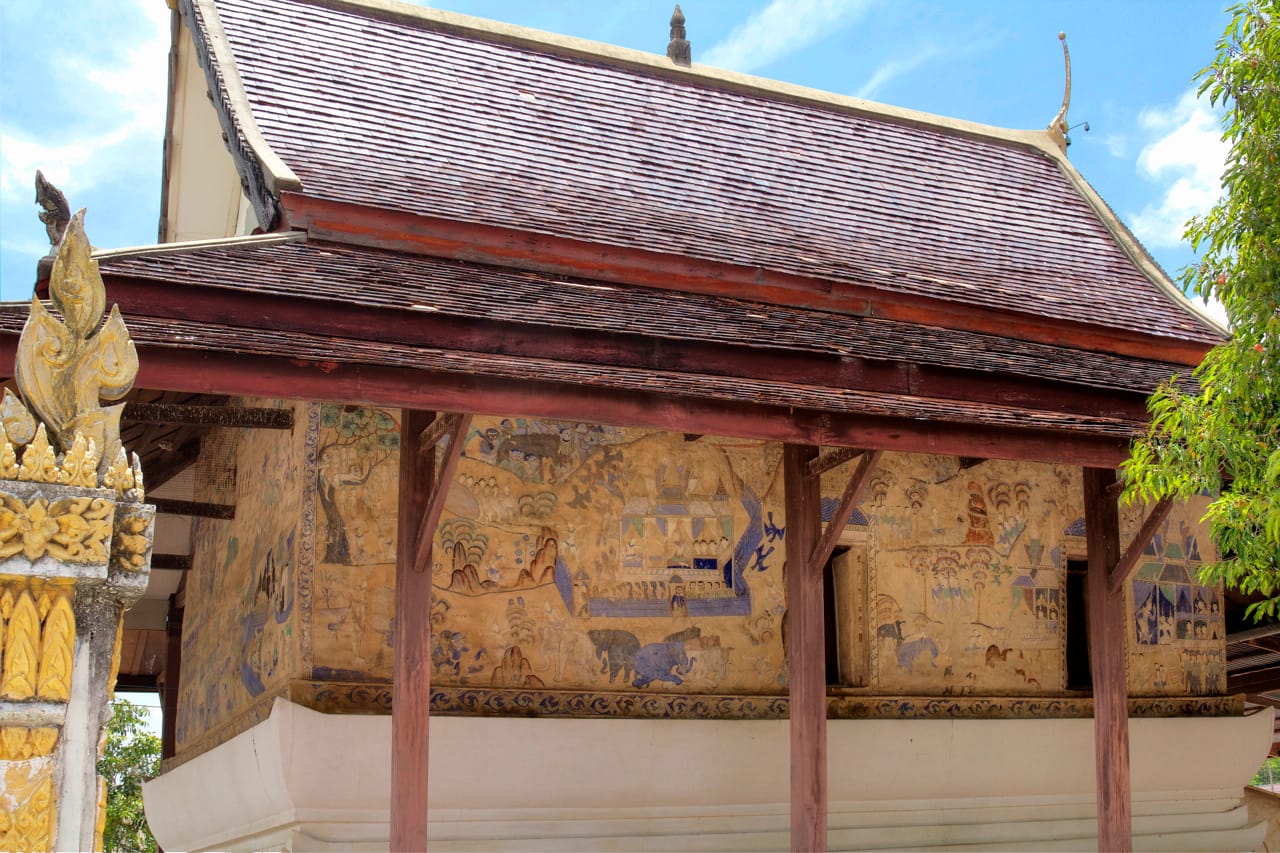
The town's principal temple, with a palm-leaf manuscript museum and an old scripture hall. You can pay your respects and look over the old artifacts in a short visit — a good thing to fit in early before heading out of town.
Ban Mo pottery village
A village where they still hand-make pots, jars and earthenware for real. You can watch the potters at work and buy pieces to take home — a kind of local craft that's hard to find in bigger cities.
Mahasarakham University (MSU)
The sprawling Kham Riang campus has a small market, coffee shops and green space you can wander through. In the evening the area in front of the campus comes alive with food stalls — good for anyone who wants to soak up the real student-town atmosphere.
What to eat
Maha Sarakham is true Isan, so the food leans bold — som tam, larb, koi, pla ra (fermented fish), jaew dips and seasonal dishes. Prices are low because it's a student town, and a meal of a few dozen baht to just over a hundred will leave you full. The things locals are proud of are their fermented sausage, homemade pla ra, and the homestyle sweets you find around the markets.
- Som tam, larb, koi — found all over town, in the markets and in front of MSU. Bold and fully seasoned, and cheap.
- Mookata — the go-to student dinner. The Kham Riang area has several spots, with buffets starting at just over a hundred baht.
- Fermented sausage (sai krok) — a tangy fermented snack you can buy at the markets and take home as a souvenir.
- Market breakfast — congee, rice soup and old-style coffee at the Maha Sarakham fresh market, open from the crack of dawn.
Rough daily budget
Maha Sarakham is genuinely cheap. Accommodation runs 500–1,000 THB a night, food for the whole day is around 250–400 THB, and nearly all the main sights are free. Your main spend is getting around the province — if you charter a car for a full day out to Na Dun, budget around 1,000–1,500 THB per vehicle and you'll be comfortable.
A 2-day, 1-night plan
This plan is built for first-timers who want to cover the stupa and Khmer ruins, the nature near town, and the student-town vibe all in one short trip. It assumes you have your own car or a chartered one, so adjust the timings to suit you.
Stupa and Khmer ruins in Na Dun district
In town, craft, and the Kosum Phisai monkeys
If you only have one day
If you're short on time and mostly staying in town, pick one of two routes. Either give the whole morning to Na Dun (the stupa plus Ku Santarat) and finish at Kaeng Loeng Chan in the evening, or — if you'd rather not drive far — string together Wat Maha Chai, Ban Mo and Kaeng Loeng Chan in town for an easy full day.
When to go
Isan gets fiercely hot from March to May, and walking the Khmer ruins under the midday sun will wear you out. The best window is November to February, when it's cool and comfortable enough to be outdoors all day. The rainy season (July to October) is when the rice fields turn lush green and the rice-field cafes hit their peak, but you'll need to plan around the rain. If you want the town at its liveliest, avoid MSU's long term breaks, when the eateries in front of the campus go quiet.