🔄 Updated 21 Jun 2026
If the picture in your head is Maha Sarakham as a university town that's all dorms and coffee shops, look at it from another angle. The city is ringed by several large reservoirs that have become the recreation spots for the whole province. In the evening the roads around the water fill with runners, cyclists and families who come to sit and watch the sunset. We've gathered the nature spots near town that are easy to reach, need little preparation, and suit anyone who wants a quiet day off.
Kaeng Loeng Chan — the reservoir where the whole town exercises
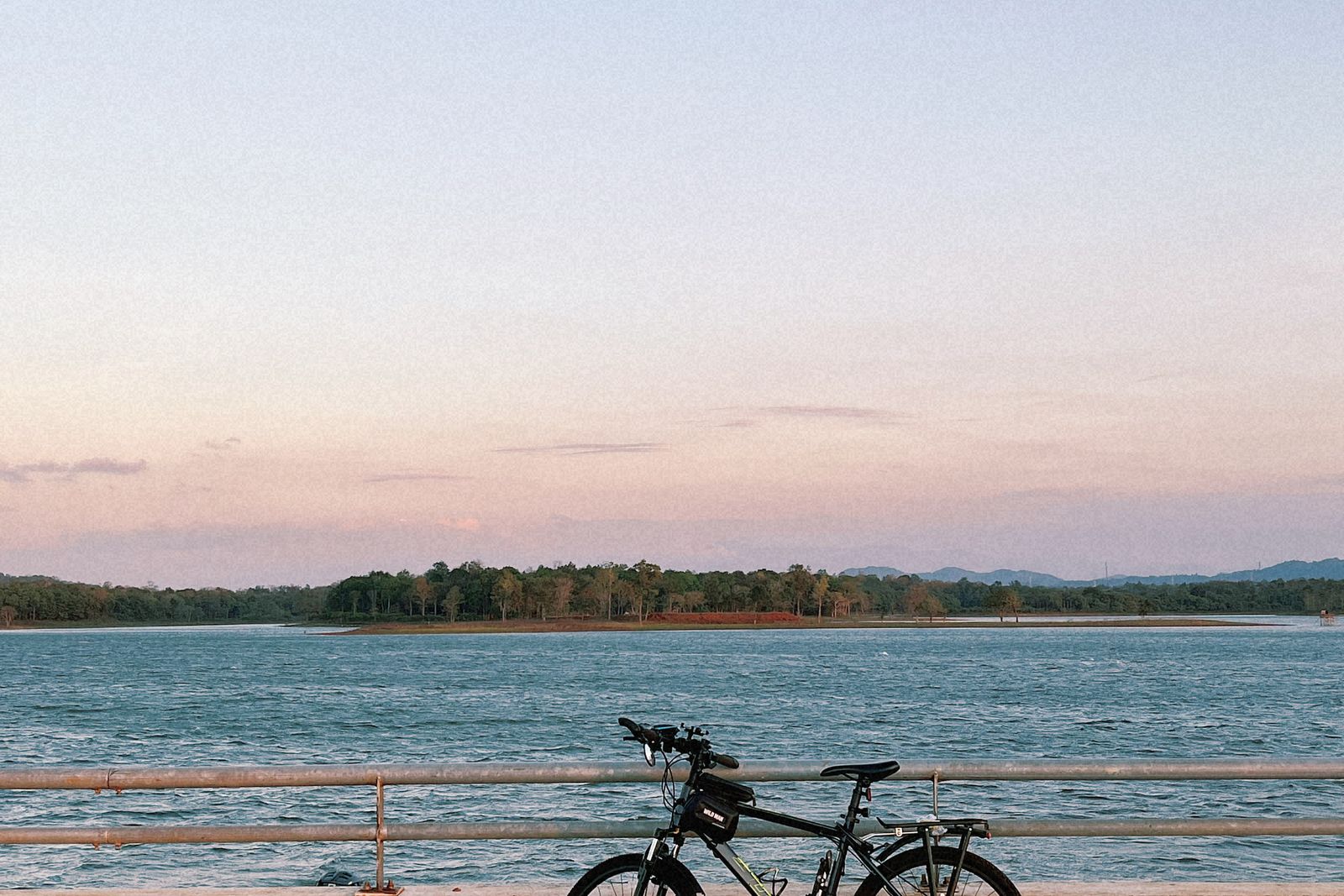
Kaeng Loeng Chan is the first place people in Maha Sarakham think of when they talk about somewhere to wander near town. It's a large reservoir to the west of the city, in Kaeng Loeng Chan subdistrict, Mueang district, about a 10-minute drive from the center. There's a paved road running along the water that's been set up for running and cycling, the evening breeze is pleasant, and it's one of the best sunset spots in the province.
- Cycling around the reservoir — there's a waterside road to ride. If you didn't bring a bike, you can rent one for around 20 THB.
- Lakeside pavilion and public park — quiet corners to sit and a big open lawn, good for bringing kids and family along.
- Freshwater aquarium — in the same area there's a fisheries station and freshwater fish tanks for the kids to look at.
- Waterside restaurants — places to sit, eat and catch the cool breeze, perfect for finishing the day after a ride.
When to go
The busiest, best-feeling stretch is roughly 4 PM until sunset, when the breeze picks up and the sun isn't harsh. In the cool season (November–January) it's especially pleasant, and there are occasional cool-season cycling events held here too.
Want more out of Maha Sarakham? Book tours & activities
Booking online ahead on Klook or GetYourGuide is usually cheaper than the gate and skips the queue. Pick only the experiences you actually want — prices and availability are shown live on each site.
Huai Khakhang Reservoir — quieter, windier
If Kaeng Loeng Chan starts getting crowded, Huai Khakhang Reservoir is the quieter alternative. It's out toward Khok Ko subdistrict, a little further from town. The setting is open fields and wide water with a strong breeze, good for a morning or evening stroll. There are restaurants along the shore and, in some seasons, water activities to do. Locals like coming here when they want to escape the bustle without driving far.
Loeng Nam Chan Park — a green space in the middle of town
For anyone who doesn't want to drive out of the city, Loeng Nam Chan Park is right in town. It's a lake and public park where people walk and run morning and evening, and lately a few new cafés have opened along the edge so you can sip coffee with a water view. It suits people staying in the city who just want somewhere close to stroll without much planning.
Kosamphi Forest Park — golden macaques by the Chi River
Head out of the city toward Kosum Phisai district, about 28 kilometers away, and you'll reach Kosamphi Forest Park, a riverside forest along the Chi River covering roughly 125 rai (about 20 hectares) that's home to several hundred macaques. What makes it special is that some of the macaques here have golden fur, which is a rare sight. The forest has big yang trees and tabaek trees for shade, plus "Kaeng Tat", a slab of bedrock in the middle of the Chi River that surfaces during the dry season.
- Entry — free admission, open daily with no fixed closing time, but go during daylight for safety and to see the monkeys clearly.
- Distance — about 28 kilometers from Maha Sarakham city, a drive of roughly 35–40 min.
- Kaeng Tat — the rock slab in the Chi River, clearly visible in the dry season around November to May, with shallow water you can walk in.
- Luang Pho Ming Mueang — an important Buddha image nearby that many people stop to pay respects to on the same trip.
Visiting the monkeys safely
Keep food and plastic bags well out of sight — the monkeys here are used to people and quick to snatch things. Don't tease them or reach toward baby monkeys. If you want to feed them, stick to fruit or rice that locals have prepared, not packaged snacks.
Don Pu Ta — community forests that faith kept alive
Don Pu Ta isn't an attraction with a gate and a ticket booth — it's a tradition spread across many Isan villages around Maha Sarakham. The term "don pu ta" refers to a small forest in or beside a village that locals believe is home to ancestral spirits: "pu" is the spirit on the father's side, "ta" on the mother's. This belief means no one dares cut wood or hunt within that zone, so the forest has stayed green for centuries even with bare rice fields all around it.
What's interesting about Don Pu Ta isn't postcard beauty — it's the sight of a forest that survived thanks to the faith of the community. Some have huge trees a hundred years old, a small spirit shrine, and an annual ceremony to honor the ancestral spirits. If you pass through a village with a Don Pu Ta, walk it quietly and with respect, and you'll understand how long Isan people have looked after their forests in their own way.
Etiquette when entering Don Pu Ta
This is a sacred space for the community, so dress modestly, keep your voice down, don't take branches or anything from the forest, and if you want to photograph a shrine, ask the locals first. It's a way of respecting the people who own this place.
Planning an easy day in nature
The nature spots around Maha Sarakham aren't far apart, so a half-day to two-day trip is easy depending on whether you want to relax in town or head out further to see the monkeys. Here are two sample plans.
In town — reservoirs and sunset spots
Out of town — golden macaques at Kosamphi
Best time of year to visit
- Cool season (Nov–Jan) — the best. Cool breeze, ideal for cycling and sunsets, and Kaeng Tat at Kosamphi starts to surface.
- Hot season (Feb–May) — hot midday, so skip noon and go morning and evening, but Kaeng Tat is at its clearest.
- Rainy season (Jun–Oct) — fresh and green, reservoirs full, but in heavy spells check the condition of the roads around the water first.
Plan a full Maha Sarakham trip — where to eat, what to see and where to stay
See the Maha Sarakham guide →