🔄 Updated 21 Jun 2026
When locals talk about Maha Sarakham souvenirs, the first two things that come to mind are plara bong and jaew bong. Both are intensely flavored fermented dips that sell well year-round, especially around New Year and Songkran when people heading home stock up to bring back for relatives. Beyond those, there are several other fermented items that are everyday fixtures in an Isan kitchen. We'll walk through them one by one and tell you exactly which shops and markets in town sell the genuine stuff.
What the local fermented foods are, and how they differ
A lot of people lump everything together as "plara," but Isan fermented foods actually come in several distinct types that look and taste clearly different. Understanding them first makes it easier to buy the right thing.
- Plara (pla daek) — fish fermented with salt and rice bran in earthen jars for 7–8 months or more. It's the base ingredient for everything, used to season som tam, curries, and soups.
- Plara bong — plara that's ground and pounded with aromatics: chilies, galangal, lemongrass, and roasted kaffir lime leaves. You can eat it straight with sticky rice, and it's the item most often made into a souvenir.
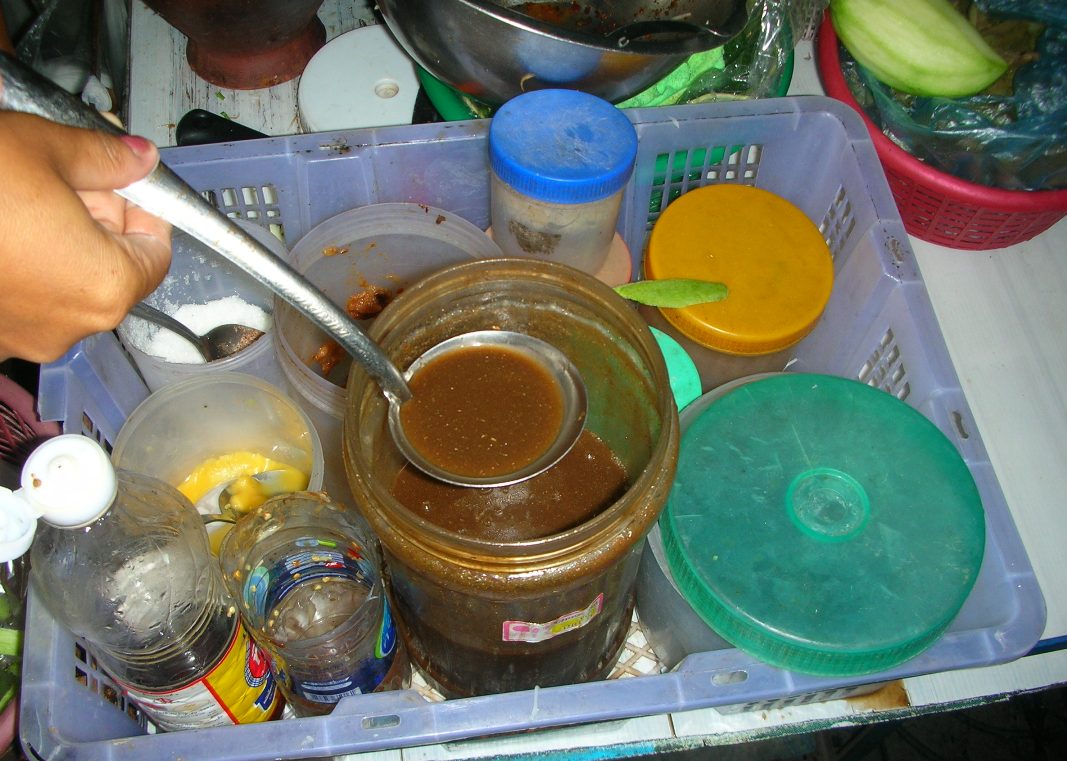
- Jaew bong — a thick plara-based chili dip, bold but balanced. Isan locals eat it with fresh or blanched vegetables, and many shops have their own signature recipe.
- Pla som — fish fermented with cooked rice and garlic until it turns sour, then fried or steamed. The flesh is firm with a mild tang.
- Mam — a fermented sausage made from ground beef and beef liver, naturally soured through fermentation. It's one of the city's signature items and sold by the link.
- Isan sausage / naem (som) — rice fermented with pork or beef until sour. Isan locals call naem "som": made from pork it's som mu, made from beef it's som wua.
How to pick good fermented foods
Good plara bong and jaew bong should lead with the smell of herbs and spices, not be so salty you can't eat it. Go ahead and smell it before you buy — the aroma should be roasted and fragrant, not the harsh stink of something that fermented badly. And if you're carrying it on a flight, ask for the vacuum-sealed version; it contains the smell far better.
Want to taste deeper? Try a Maha Sarakham food tour or cooking class
Half a day with a local who knows the lanes — or cooking a dish yourself — teaches you more than just eating. Book ahead on Klook or GetYourGuide.
Shops and sources where you can actually buy fermented foods in Maha Sarakham
We've picked shops and sources that locals genuinely use and that are still open, ordered from the city's standout down. The prices below are rough ranges and may shift with jar size and the fishing season.
Khun Nong Plara Bong (along the Wat Mahachai wall)
The most famous plara bong shop in town, set along the outer wall of Wat Mahachai in Tambon Talat, Mueang district. They pound it by hand with herbs and spices, and have won the province's annual plara bong competition several times. There's a range of spice levels and sizes, and out-of-town visitors drop by to buy all day long.
Je Toi Souvenirs (Nakhon Sawan Road)
A souvenir shop in the market area at 24 Nakhon Sawan Road, carrying plara bong, jaew bong, and a mix of Isan fermented and dried goods all under one roof. Handy if you want to grab several things in one stop before heading off.
Plara–Pla Som stalls, Maha Sarakham Municipal Fresh Market
The fresh market in the center of town along Nakhon Sawan Road is where locals actually buy fermented foods by weight. You'll find jarred plara, chopped plara, pla som, and plara liquid ladled to order — cheaper than buying the tubbed souvenir version.
Maha Sarakham Mam (original makers in town)
Beef mam is one of the city's signature fermented items, naturally soured and sold by the link. Several of the original makers sell around the market area and at souvenir shops. Grill or fry it and eat with sticky rice.
Mae Da Isan Sausage (Maha Sarakham branch)
A sour-fermented Isan sausage that locals order often, with just the right tang, firm texture, and a fragrant char when grilled. Eat it with sliced ginger, bird's eye chilies, and fresh cabbage. Good to eat on the spot or carry home.
Huean San Isan Sausage
Another Isan sausage maker that locals praise for its ingredients and cleanliness. Lightly sour with a touch of sweetness and a nice grilled aroma — a good snack while you're wandering around town.
Mae Prang Isan Sausage
An in-town shop for Isan sausage and grilled fermented meats, offering both sausage and naem. Bold, authentically Isan flavors — good for people who like a sour kick up front.
Ban Nong Lam Farmers' Housewives Group (OTOP ferments)
A community group that has developed plara-based products into OTOP goods — fermented plara liquid, plara bong, and plara chili dip. Made as a group to consistent standards, ideal if you want something neatly packaged to give as a gift.
Maha Sarakham Municipal Night Market
An evening market in the center of town with both ready-to-eat food and stalls of fermented and dried goods to take home. Walk through in the evening and you'll find jaew bong, plara chili dip, and plenty of ready-made Isan dishes.
Fermented-food stalls in the Ban Phaeng area (outside town)
The Ban Phaeng area is a community known for Isan food and fermented souvenirs. If you're driving through, there are stalls selling plara, pla som, and dried goods to stop for, at friendly local prices.
Buy smart and keep it fresh longer
Well-sealed tubs of plara bong and jaew bong keep for months in the fridge. Isan sausage and mam, on the other hand, are fresh items — eat them within a few days or freeze them. If you're buying by weight at the fresh market, bring a zip-lock bag or a leak-proof box; it makes traveling with them much easier.
How to eat these ferments the Isan way
Not every ferment is eaten on its own — each has its natural pairing. Try them the way locals do and you'll understand why people get hooked.
Jaew bong + fresh vegetables
Spoon jaew bong into a bowl and eat it with cabbage, yardlong beans, cucumber, or blanched greens — a simple, filling meal.
Plara bong + hot sticky rice
Roll a ball of sticky rice and dip it into plara bong bite by bite; the bold flavor cuts the richness of the rice. The most traditional way to eat it.
Grilled mam/sausage + sides
Grill until fragrant and eat with sliced ginger, fresh chilies, peanuts, and cabbage; the fermented tang cuts the fat.
Plara by the kilo
Buy it from the fresh market to make som tam, gaeng om, or boil it at home — you control the saltiness yourself.
Which market to hit if you only have half a day
If you want to round up all the fermented foods on a short trip, here's an easy in-town route. Every stop is close together within the municipal area.
Round up the ferments in the market area
Honest notes on smell and cleanliness
Fermented foods having a strong smell is completely normal, but if it smells off-sour or spoiled or has bubbles forming, skip it. Pla som and naem are raw ferments and should always be cooked through before eating. Buy from stalls that look clean and keep things chilled — it's safer.
Plan a full eat-and-explore trip in Maha Sarakham
See the Maha Sarakham travel guide →