Home Destinations Mukdahan 🧭 Plan Your Trip 🔎 Search About
HomeThailandMukdahanPhu Tai Culture in Nong Sung Ban Phu – Weaving – Local Food
🧵 Mukdahan Trip Plan

Phu Tai Culture in Nong Sung
Ban Phu – Weaving – Local Food

If you're tired of the riverside spots in town and want to see another side of Mukdahan, drive south to Nong Sung district, home of the Phu Tai people, who still speak their own language, hand-weave mud-fermented cloth, and welcome guests with a bai sri su kwan ceremony and a pa laeng feast. This is a 2-day, 1-night plan staying at Ban Phu homestay, where you sleep in a real village, watch the weaving up close, and eat Phu Tai food that's hard to find in town.

🧵 GI mud-fermented cloth💃 Phu Tai dance & welcome ceremony🍲 Phu Tai pa laeng feast
Phu Tai Culture in Nong Sung Ban Phu – Weaving – Local Food

🔄 Updated 21 Jun 2026

The Phu Tai people (also spelled Phutai or Phu Thai) crossed the Mekong and settled around the Phu Phan mountains more than a century ago. Nong Sung district is one of the Phu Tai communities that has kept its language, dress, and weaving skills most intact. The easiest place to visit, and the most welcoming to travelers, is Ban Phu in Ban Pao subdistrict, where tourism is run by the community itself, with homestays, learning stations, and cultural activities you can join. This plan has you drive up from Mukdahan town, stay one night, soak in the pace without rushing, and head back the next day.

Trip overview and getting there

  • Distance — Mukdahan town to Nong Sung district is about 50 km, roughly a 1-hour drive on Highway 2030/2370, a route that hugs the Phu Phan mountains.
  • Day 1 — Leave town mid-morning, stop at a temple in Nong Sung, arrive at Ban Phu, watch the mud-fermented weaving, then in the evening enjoy the Phu Tai dance and welcome ceremony, eat the pa laeng feast, and stay at a homestay.
  • Day 2 — Join the morning alms-giving in the village, walk the learning stations, buy woven cloth to take home, and stop at Phu Jok Ko or a viewpoint before driving back.
  • You'll want your own car — Nong Sung has no public transport to the village, so driving yourself or renting a car from town is the easiest option.
  • Book ahead — homestays and activities must be reserved in advance. Contact the Ban Phu community at 087-230-1599 (Khun Thawan, homestay chairperson) or 081-047-4218.

Always book before you go

Ban Phu is a real village, not a resort. Activities like the pa laeng feast, Phu Tai dance, and bai sri su kwan welcome ceremony need to be arranged at least 2–3 days ahead, because the villagers have to prepare both people and food. The bigger your group, the more important it is to call and sort out the details and price first.

🎟️

Book the activities in your Mukdahan trip ahead

Booking online ahead on Klook or GetYourGuide is usually cheaper than the gate and skips the queue. Pick only the experiences you actually want — prices and availability are shown live on each site.

🎟️ See all Mukdahan tours & activities (Klook)

Day 1 — Into the village, weaving, evening feast

Day 1

Nong Sung – Ban Phu – Weaving – Phu Tai Dance

09:00
Leave Mukdahan townFill up on fuel and grab water before you go. The drive up into the Phu Phan mountains is scenic but gas stations are sparse. Take it easy; it's about an hour to Nong Sung district.
10:00
Visit a temple in Nong SungStop at Wat Si Mantharam or Wat Phuttha Khiri, old temples of the Phu Tai community whose architecture and patterns differ from typical Isan temples. It's a good starting point for understanding the community's roots.
11:30
Arrive at Ban Phu, check in to the homestayBan Phu in Ban Pao subdistrict is a cultural tourism village. The homestay is an actual villager's house with a guest room set aside, and the hosts give you a warm Phu Tai welcome.
12:30
Lunch with local foodStart with a light Phu Tai spread: hot sticky rice with bamboo-shoot curry, steamed fish (mok pla), and chili dip with fresh vegetables. It's a taste of the village's home cooking before the bigger meal in the evening.
14:00
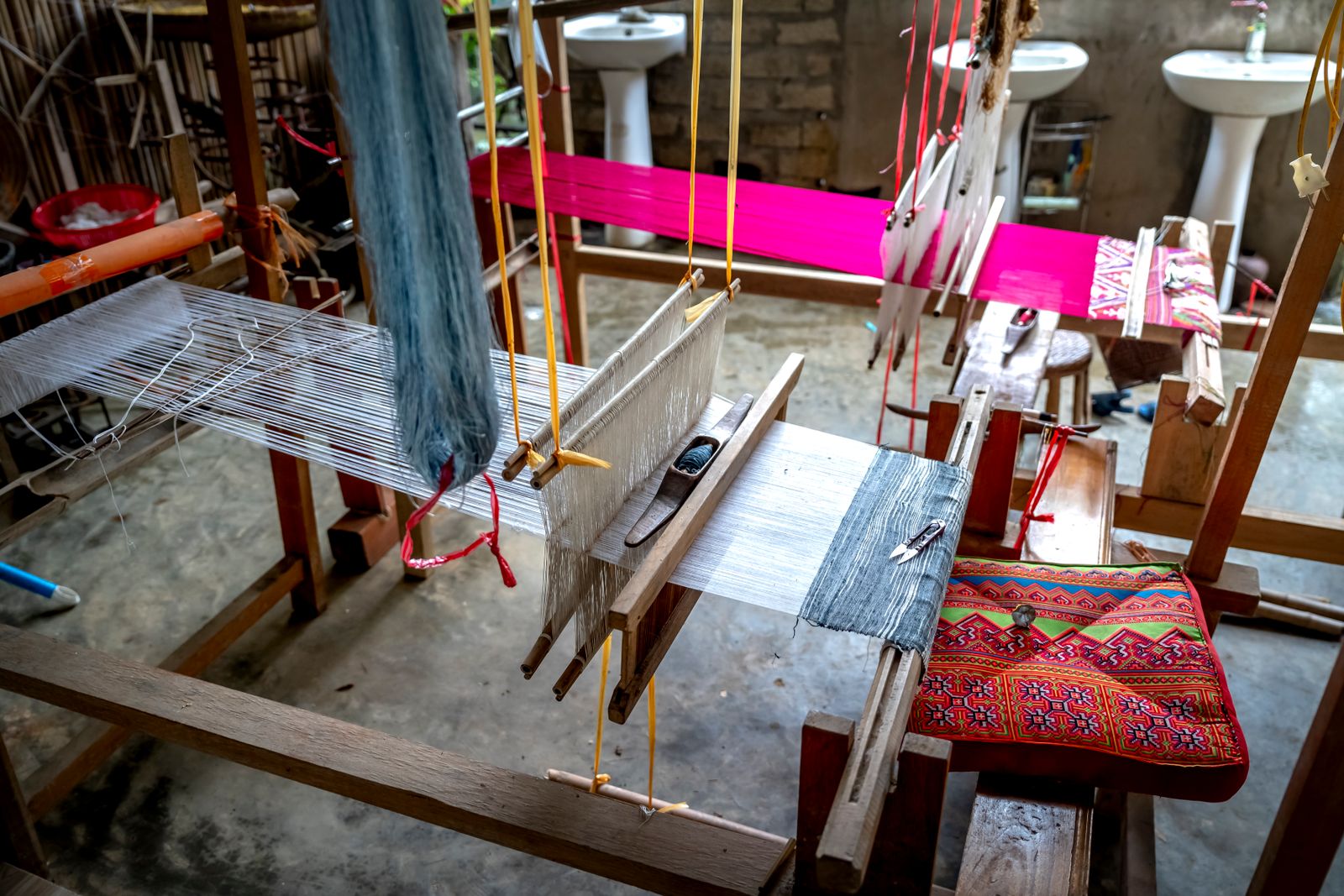
Watch the mud-fermented weaving demoVisit the Ban Phu weaving group and see everything from spinning cotton and natural dyeing to the mud-fermenting step that's unique to Nong Sung. You can try the loom yourself and buy cloth straight from the weavers.
16:30
Stroll around the villagePhotograph the wooden houses, rice barns, and everyday evening life. Villagers still speak Phu Tai in daily conversation. The mood is quiet and slow in a way you won't find in town.
18:30
Welcome ceremony + Phu Tai dance + pa laeng feastThe highlight of the trip. The hosts perform the bai sri su kwan ceremony, tying blessing threads around your wrist, followed by the Phu Tai dance and the pa laeng meal, where dishes are laid out on a woven tray and everyone eats together around it (this set of activities must be booked in advance).
21:00
Rest at the homestayNights in the village are quiet and pitch dark. On a clear sky you'll see plenty of stars. Get some rest so you're up for the morning alms-giving.

What is mud-fermented cloth?

Nong Sung's mud-fermented cloth is silk or cotton dyed with natural colors and then fermented in mud from an old village pond before weaving. The result is deep color, soft texture, dye that doesn't run, and a faint earthy scent. It's a registered GI product of Mukdahan, and the genuine article costs more than ordinary woven cloth because it takes so much time and skill.

Day 2 — Alms-giving, learning stations, buying cloth

Day 2

Alms-giving – Learning Stations – Phu Jok Ko

06:30
Morning alms-giving in the villageWake up and join the villagers giving alms to the monks. The morning air up here is cool and pleasant. It's a quiet, beautiful glimpse of Phu Tai life.
07:30
Breakfast made by your hostsRice soup, congee, or sticky rice with simple home-cooked dishes prepared by the hosts, eaten together like family before you head out again.
09:00
Walk the community's 6 learning stationsBan Phu has 6 self-sufficiency-economy learning stations, covering everything from cutting expenses and raising income to conserving resources and local wisdom. Walking through them shows how the village sustains itself.
10:30
Shop for woven cloth and souvenirsBuy mud-fermented cloth, khit-pattern cloth, mudmee, and cotton straight from the weaving group, at village prices and with the money going fully to the weavers.
12:00
Lunch before you leaveClose out the trip with one more Phu Tai spread. Try the seasonal dishes that are hard to find, like lap tao, rattan curry, or steamed bamboo shoot (mok no mai), if they have them.
13:30
Stop at Phu Jok Ko / a viewpoint on the way backOn the way back, stop at Phu Jok Ko or Phu Pha Khao within Nong Sung. The Phu Phan mountain views are lovely, and it's a good break before the drive down to town.
15:00
Drive back to Mukdahan townYou'll reach town in the evening. From there you can carry on with a riverside trip or stay another night in town before heading home, whatever suits you.

Phu Tai dishes worth trying in Nong Sung

Phu Tai food in Nong Sung stands out for its ingredients from the forests and fields around the village, rotating with the seasons. Many of them can't be found in town and aren't available every day. Most are eaten with hot sticky rice. Here's what to look for when you sit down to a pa laeng feast or a village meal.

1

Khao pa laeng (the shared feast)

Dinner · homestay activity, book ahead

The heart of the evening meal at Ban Phu. It isn't a single dish but a spread laid out on a woven tray that everyone gathers around and eats together, combining curries, steamed dishes, chili dips, and fresh vegetables based on whatever the village kitchen made that day. You eat and chat with your hosts.

Pa laengMust tryEaten together
Per-head price agreed with the community
2

Bamboo-shoot curry with yanang

Year-round · eaten with sticky rice

A home-style curry that almost every household makes. Fresh bamboo shoots simmered in green yanang-leaf juice with whatever vegetables and mushrooms are on hand. Mellow and fragrant with herbs, it's true Phu Tai home cooking.

CurryBamboo shootCooked in every home
Part of the pa laeng spread
3

Mok no mai / mok pla

Year-round · banana-leaf steamed dish

Curry paste mixed with bamboo shoots or fish, wrapped in banana leaf and steamed until fragrant. Firm, well-seasoned, and a steamed dish that has long been part of Isan and Phu Tai spreads.

MokBanana-leaf steamedLocal
Part of the pa laeng spread
4

Lap tao

Seasonal · hard to find

A rare dish made from tao (freshwater algae) mixed with fermented-fish chili paste, roasted rice, and herbs. Boldly sour and salty, it's seasonal, available when tao grows in the waterways. Try it whenever you see it.

Lap taoSeasonalRare
Part of the pa laeng spread
5

Rattan curry / om rattan

Seasonal · local bitter flavor

A faintly bitter curry made from wild rattan shoots, a dish that defines the Phu Phan region. Phu Tai people and folks from Sakon Nakhon have eaten it for generations. The lingering bitterness wins over anyone who loves wild greens.

Rattan curryWild greensRegional flavor
Part of the pa laeng spread
6

Wild pak wan curry

Early rainy season · wild pak wan

Tender wild pak wan shoots in a curry with red-ant eggs or grilled fish. The natural sweetness of the greens shines, and it's at its best in early rainy season when pak wan sends out new shoots.

Pak wanSeasonalForaged
Part of the pa laeng spread
7

Chili dip + fresh and blanched vegetables

Year-round · with sticky rice

Every Phu Tai spread has a chili dip with vegetables from around the house, both fresh and blanched, eaten with sticky rice. Simple but tasty, and it reflects the self-sufficient way of life.

Chili dipLocal vegetablesSimple
Part of the pa laeng spread
8

Freshly steamed sticky rice

Every meal · steamed in a bamboo basket

The base of every meal. Hot sticky rice steamed in a bamboo basket, shaped by hand and eaten with everything on the tray. Grown in the village's own paddies, it's fragrant and just the right chew.

Sticky riceStapleVillage-grown
Part of the pa laeng spread

Nong Sung weaving: what to see, what to buy

Nong Sung is one of Mukdahan's best-known weaving areas, especially for its mud-fermented cloth, a GI product, and there are village weaving groups like the Ban Phu weaving group that let you watch and buy directly. Coming all the way to the village has the advantage that you see every step and get to talk with the weavers.

GI standout

Mud-fermented cloth

Nong Sung's famous GI product. Deep color and soft texture from fermenting the threads in mud from an old village pond. It costs more than ordinary cloth because of the many steps involved.

Phu Tai patterns

Khit cloth / mudmee

Weaving patterns distinctive to the Phu Tai, picked out by hand one thread at a time. Used for sarongs, shawls, and premium souvenirs.

Affordable

Naturally dyed cotton

Hand-woven cotton dyed with local plants, comfortable to wear and easy on the wallet. A good buy as a scarf or a general souvenir.

How to buy the real thing

Genuine mud-fermented cloth has even, deep color, a soft feel, and a faint earthy scent. Buying straight from a village weaving group gives you more confidence than buying from a general stall, and the money reaches the weavers in full. Ask about the origin of the pattern and the process; the weavers are happy to tell you.

Who this trip is for, honestly

This trip suits people who want to see real life more than pretty photo spots, who enjoy talking with people, eating local food, and accepting the simplicity of sleeping at a village homestay. If you expect an air-conditioned hotel room, a stylish cafe, or a packed activity schedule, this isn't it. But if you want an experience you'll remember for a long time and a real connection to Phu Tai culture, Nong Sung does that very well. The things to know: you need to book ahead, have your own car, and keep an open mind that some dishes depend on the season.

Best time to go

Cool season (November–February) brings the most comfortable weather up here, ideal for walking the village and joining the morning alms-giving. Early rainy season has plenty of wild greens and pak wan, so you'll get a fuller range of seasonal dishes. Avoid the peak heat in April.

Want to stay in Mukdahan town before heading up to Nong Sung

See 10 Mukdahan hotels →

FAQ

Do I need to book ahead to visit Ban Phu in Nong Sung?

Yes, book at least 2–3 days ahead, because the homestay, pa laeng feast, Phu Tai dance, and bai sri su kwan ceremony require villagers to prepare both people and food. Contact the Ban Phu community at 087-230-1599 or 081-047-4218 to ask about availability and price, especially if you're traveling as a group.

How do I get to Nong Sung, and how far is it from Mukdahan town?

Nong Sung district is about 50 km from Mukdahan town, roughly a 1-hour drive along the road that hugs the Phu Phan mountains. There's no public transport to the village, so driving yourself or renting a car in town is recommended.

What is Nong Sung mud-fermented cloth, and where do I buy it?

It's silk or cotton dyed with natural colors and then fermented in mud from an old village pond before weaving, giving it deep color and a soft texture. It's a GI product of Mukdahan. You can buy it directly from the weaving groups in Ban Phu and Ban Nong Sung, getting the real thing at village prices.

What Phu Tai dishes stand out in Nong Sung?

The standout is the pa laeng spread, which includes bamboo-shoot curry with yanang, steamed bamboo shoot, steamed fish, chili dip with fresh vegetables, and sticky rice. Hard-to-find seasonal dishes include lap tao, rattan curry, and wild pak wan curry. Most use ingredients foraged from the forests and fields around the village.

How many days is ideal for a Nong Sung culture trip?

2 days and 1 night staying at Ban Phu is just right. You get to watch the weaving, join the bai sri su kwan ceremony, see the Phu Tai dance, eat the pa laeng feast, and join the morning alms-giving. If you also want to explore the riverside town, add one more night in town to make it 3 days for a more relaxed pace.

Copyright & Image Takedown Policy

Thailandaddict is created to review and share travel experiences. Where an image is sourced from elsewhere, we credit the source. If you are the copyright owner and prefer that your image not appear on this site, please contact us and we will gladly remove the image or correct the information.