🔄 Updated 21 Jun 2026
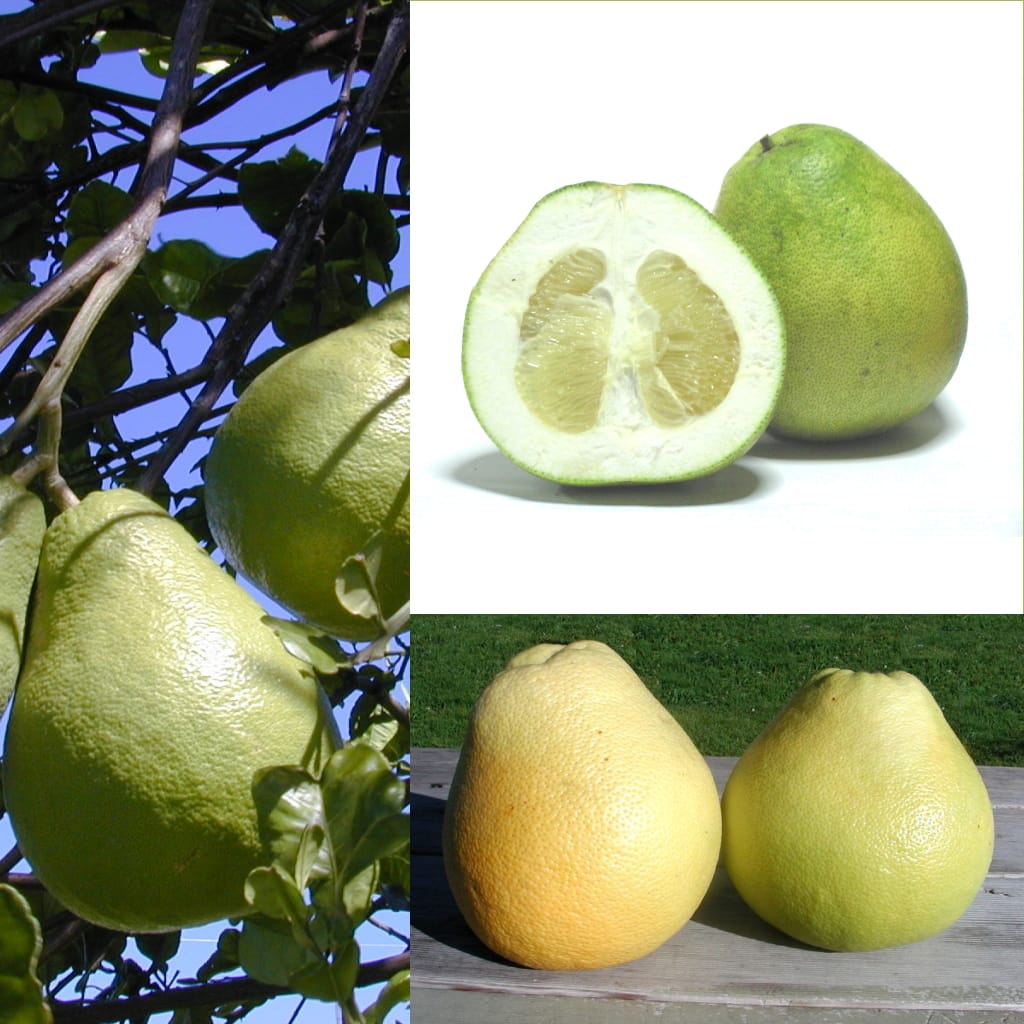
Nakhon Chai Si pomelo has held GI status (geographical indication) since 2004. What sets its flavour apart is the slightly salty alluvial soil along the Nakhon Chai Si River, which gives the flesh a dense, heavy feel and a sweetness that balances the sour just right. The real deal is grown in only three districts — Nakhon Chai Si, Sam Phran and Phutthamonthon. If you want the authentic taste, buying from a farm or a shop in this area is a safer bet than picking one up at a random roadside stall.
Pomelo varieties to know before you buy
Strictly speaking, Nakhon Chai Si pomelo under the GI label means two main varieties: Thong Dee and Khao Nam Phueng. These days many farms also grow Thabthim Siam because it fetches a good price. The taste and flesh colour are clearly different, so just pick whichever you like.
Thong Dee
The flagship variety of Nakhon Chai Si. The flesh is white tinged with pink and juicy, sweet up front with a touch of sour, never bitter or sharp. The segments are firm and crisp. This is the one most people buy to offer at temples or give as a gift.
Khao Nam Phueng
The flesh is white tinged with yellow, the colour of honey, with a sweet-sour taste, thin skin and a rounder, more domed shape. The oil glands are large. People who like a fresh, lightly tart bite tend to go for this one.
Thabthim Siam
Beautiful ruby-red flesh, sweet and juicy, with large fruit. It originally came from Nakhon Si Thammarat, but many Nakhon Chai Si farms now grow it successfully. It costs more than the first two varieties, making it a good pick for a special gift.
Khao Taengkwa
Another old-school variety you can still find. Its harvest cycle is slightly shorter than Thong Dee, the flesh is white and the taste is fresh and sweet. It's rarely sold at regular shops, so you'll need to ask at the farm directly.
How to pick a good pomelo
Lift one up — if it feels heavier than it looks, that means lots of juice and dense flesh. Skin that's turning a soft creamy yellow with a smooth, taut surface is ripe and ready to eat. If the skin is still deep green and the fruit feels light, it's usually not there yet. At most farms and markets you can ask the seller to peel one for a taste first.
Want to taste deeper? Try a Nakhon Pathom food tour or cooking class
Half a day with a local who knows the lanes — or cooking a dish yourself — teaches you more than just eating. Book ahead on Klook or GetYourGuide.
Season — which month gets you the best pomelo
Nakhon Chai Si pomelo bears fruit twice a year. The first crop is harvested around August–September — heavy yields, but it falls in the rainy season, so the sweetness may not match the other crop. The second crop is harvested around March–April, ripening in the dry season when the juice is more concentrated. Many growers agree this dry-season crop is richer and sweeter. If you can choose, late summer into the Songkran period is when pomelo tastes its best.
- March–April — the dry-season crop, the richest and sweetest, perfect to buy around Songkran
- August–September — the heavy crop, plenty of fruit at easy prices, though the taste can be a bit milder since it's the rainy season
- Off-season — you can still find some at farms and riverside markets year-round, but it's either stored stock or from other farms, so ask where it's from before buying
Pomelo farms you can actually walk through
If you want more than just bagging fruit to take home, the Nakhon Chai Si area has working farms that let you tour the orchard, taste fresh pomelo and buy on the spot. Prices at the farm are usually cheaper and the fruit fresher than at souvenir shops.
Thai Thawi Pomelo Farm (Nakhon Chai Si)
An organic farm about 50 years old, growing Thong Dee, Khao Nam Phueng and Thabthim Siam. The highlight is a boat ride out to see how the pomelo is harvested along the orchard channels, plus a small café serving drinks and pomelo to taste. Open 8:00–17:00; call ahead to book on 083-626-5499. Address: 42/4 Moo 5, Samphathuan, Nakhon Chai Si.
Farms around Sam Phran–Don Tum
The Sam Phran and Don Tum areas are old pomelo-growing land, with many small farms selling on site. Most don't have a formal storefront, so ask locals or watch for signs along the side roads — that way you get farm prices and can taste before you buy.
Before you head to a farm
Many of these farms aren't open as full-time shops, so it's best to call or message ahead, especially if you want to do the boat ride or come as a group. In the off-season some farms may not have any fruit to pick.
Where to buy souvenirs — Nakhon Chai Si riverside markets
If you don't have time to visit a farm, the markets along the Nakhon Chai Si River are a shortcut that gets you both pomelo and other souvenirs in one place — and they make a fun eat-and-stroll outing too.
Don Wai Floating Market
Sam Phran's famous riverside market. Beyond the pomelo sold by several vendors, there's five-spice braised duck, roast duck, sun-dried pork and Pa Khai's palm-sugar cakes, steamed fresh every day with real palmyra sugar. Plenty of room to eat and shop your way along.
Tha Na Market
An old fresh market on the Nakhon Chai Si River, over a hundred years old, with a genuinely local feel. It sells local fruit and veg, pomelo, old-style noodles and duck rice. Open daily 8:00–18:00, quieter than Don Wai and easier to stroll.
Souvenir shops along Phetkasem Road
Along the Phetkasem stretch through Nakhon Chai Si–Sam Phran, a row of souvenir shops sells pomelo alongside Chinese sausage, dried pork sheets and khao lam. It's an easy stop on the way home, but check where the pomelo is from and taste first, since roadside quality varies from vendor to vendor.
Nakhon Pathom souvenirs to buy alongside pomelo
- Pa Khai's palm-sugar cakes (khanom tan) — steamed fresh daily with real palmyra sugar, found at Don Wai
- Khao lam — a Nakhon Pathom signature, sticky rice roasted in bamboo with fragrant coconut
- Chinese sausage & dried pork sheets — souvenirs that keep well, sold all over the Nakhon Chai Si area
- Chilli dips & local sweets — Tha Na and Don Wai markets have plenty of vendors to choose from
Getting there and taking fruit home
- From Bangkok — drive the Phetkasem route or the Pinklao–Nakhon Chai Si road, about 40–60 min to the farm area; good as a morning-out, evening-back day trip
- Taking it home — whole pomelo keeps for several days in a cool spot; for shipping far, choose thick-skinned fruit, which travels better
- Souvenirs on the plane — whole pomelo can go in carry-on on domestic flights, but some destination countries ban fresh fruit, so check the rules first if you're flying abroad
Plan a full day of eating and sightseeing in Nakhon Pathom, food and attractions included
See the Nakhon Pathom travel guide →