🔄 Updated 21 Jun 2026
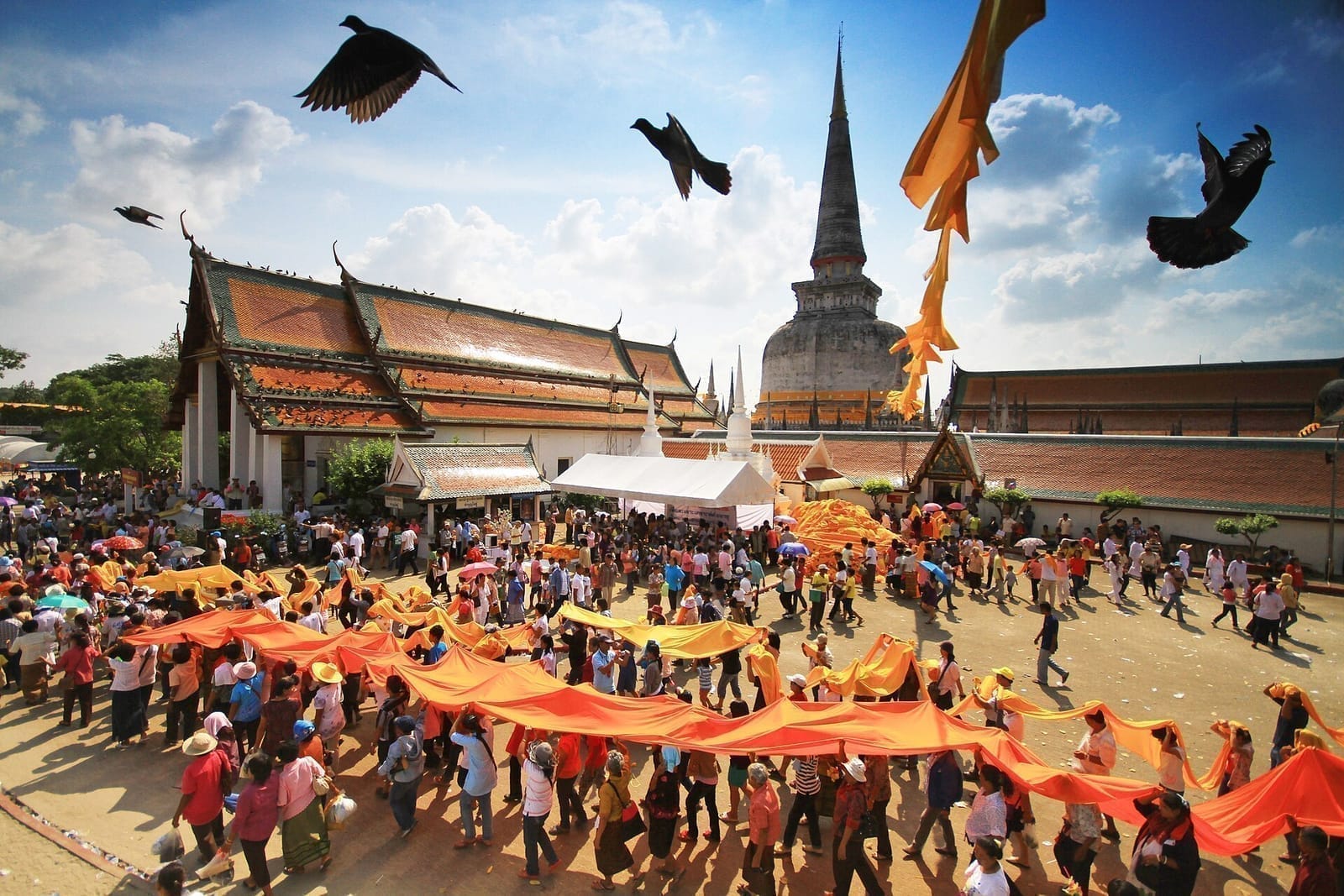
Nakhon Si Thammarat is a province with many different sides in one place. At its center is the old town, where Wat Phra Mahathat Woramahawihan has been the spiritual heart for over a thousand years. Around it you'll find spiritual districts like Sichon, home to Ai Khai at Wat Chedi, a quiet southern coast at Khanom with its pink dolphins, and the village of Khiriwong tucked in a valley and known for its fresh mountain air. The first thing first-timers need to understand: the main sights are spread out in different directions, with tens of kilometers between the town, Sichon and Khanom. Route your days well and you'll have a great trip without burning energy for nothing.
How to get to Nakhon Si Thammarat — pick your style
Muang Khon sits in the central part of southern Thailand, roughly 780–830 km from Bangkok depending on the route, too far for a day trip. Most people fly down to save time, but there are other options to suit your budget.
- Flight — the most popular and fastest way. Fly from Don Muang/Suvarnabhumi into Nakhon Si Thammarat Airport (NST) in about 1 hour 20 minutes. Several airlines serve it, including AirAsia, Nok Air, Thai Lion Air and Bangkok Airways, with fares from the high hundreds to a few thousand THB depending on the season. The airport is around 15–20 km from town.
- Train — from Krung Thep Aphiwat Central Station down to Nakhon Si Thammarat station, with express and rapid services taking around 13–15 hours. You can take a sleeper, which suits people who enjoy the ride and aren't in a hurry. The station drops you right in town.
- Coach — air-conditioned buses run daily from the new Mo Chit terminal, taking around 11–13 hours and sometimes cheaper than flying, which suits travelers on a tight budget.
- Driving yourself — about 9–10 hours from Bangkok via Phetchaburi–Chumphon–Surat Thani, good if you're planning a long trip across several southern provinces, though it's a fair distance, so plan stops along the way.
Getting around the province
Muang Khon has little public transport within the town, and the sights sit in different districts. If you fly down, we'd suggest renting a car and driving yourself, with pickup available at the airport and in town. It's the most worthwhile and flexible option. If you don't drive, you can hire a sedan or van with driver by the day, or book day tours along the temple-praying route.
Book the activities in your Nakhon Si Thammarat trip ahead
Booking online ahead on Klook or GetYourGuide is usually cheaper than the gate and skips the queue. Pick only the experiences you actually want — prices and availability are shown live on each site.
Ai Khai, the Phra That, the sea, the mountains — where they all are
The first-timer trap is assuming everything is close together. In reality it splits into clear zones, so get this rough map straight first and you'll route your days far more smoothly.
- In town — Wat Phra Mahathat Woramahawihan, the City Pillar Shrine, the Ratchadamnoen Road old town, the Suchart shadow-puppet house, and cafes around the city. This is the most convenient base for accommodation.
- Sichon–Tha Sala zone (north of town, roughly 40–70 km) — Ai Khai at Wat Chedi in Sichon, Wat Yang Yai (Ta Phran Bun), and Sichon Beach. A mix of spiritual sites plus sea, close to town.
- Khanom (furthest north, roughly 100 km from town) — a quiet southern coast, pink-dolphin boat trips, Nai Pret Beach and Thong Nod Beach. The furthest point in the province, so allow extra driving time.
- Khiriwong–Khao Luang (southwest, roughly 25–30 km) — Khiriwong village in a valley, Krung Ching Waterfall in Khao Luang National Park. Nature and cool air.
Route it to make it worthwhile
Ai Khai (Sichon) and Khanom lie in the same direction, north, so you can string them into one run. Khiriwong is the other way, west, so it's better as a separate day. Don't try to pair Ai Khai and Khiriwong on the same day, because you'll drive back and forth and waste a lot of time.
How to pray at Ai Khai and the Phra That — what first-timers should know
Nakhon Si Thammarat is a genuinely spiritual city. The two places almost every first-timer stops at are the Phra That in town and Ai Khai in Sichon. To make your visit go smoothly, there are a few things worth knowing.
- Wat Phra Mahathat Woramahawihan — on Ratchadamnoen Road in town, open roughly 08:30–16:30, free entry. The golden Phra Borommathat chedi is the city's symbol, and people commonly come to pray for health and success. Dress modestly and remove your shoes when entering the wihan area.
- Ai Khai at Wat Chedi (Sichon district) — a carved wooden figure of a boy that people believe answers their wishes, mostly for luck, work and gambling. The most popular offerings to fulfill a vow are fighting roosters, firecrackers, soldier outfits and red soda. The temple is open from morning to evening; weekends get very crowded, so allow time to find parking.
- Wat Yang Yai (Ta Phran Bun) — not far from town, popular with the spiritually inclined who pray about trade and luck, and often paired with the Ai Khai route.
- Make your wish clear — the local custom here is to state your name and exactly what you're asking for, and if your wish comes true, you must come back to fulfill the vow as promised. Don't vow beyond what you can realistically return to do.
How many days is enough in Muang Khon
It depends on how much you want to cover, since the sights are spread across several districts. 1 day is enough for the in-town spiritual sites plus a quick Ai Khai stop, good if you're passing through or short on time. 2 days, 1 night gets you the town, the spiritual sites, and either the Khanom coast or Khiriwong, pick one. 3 days, 2 nights is the sweet spot for first-timers who want it all, the town, the sea and the mountains, without rushing. That's the plan we recommend.
Our recommended first-timer plan — 3 days, 2 nights
This plan is designed specifically for first-timers, routed by zone so you never double back. Day one covers the town and southern food, day two runs north to Ai Khai then on to the Khanom coast, and day three swings west into Khiriwong for the cool air before you head home. Every day has food worked in to keep you full.
Old town + in-town spiritual sites + southern food
Ai Khai in Sichon + the Khanom coast + pink dolphins
Cool air at Khiriwong + souvenirs for the trip home
Adjust the plan to your energy
This plan leaves room to trim, you don't have to hit every stop. With only 2 days, drop the Khiriwong day and focus on the town, Ai Khai and Khanom. If you don't like long drives, swap Khiriwong in for Khanom on day two, which is easier since it's closer to town. Traveling with older relatives? Focus on the Phra That, Ai Khai and Khiriwong, where there's less walking.
When to go and when to avoid
Nakhon Si Thammarat is on the Gulf of Thailand side, where the rainy season comes later than the rest of the country, hitting hardest late in the year. First-timers often miss this.
- Best: Jan–Apr — clear skies, a calm sea at Khanom, great for dolphin boat trips and the beach. This is also when the crowds are biggest.
- May–Sep, sun and rain mixed — still good for travel, with waterfalls and Khiriwong lush and green, though the sea can get choppy at times.
- Oct–Dec, heavy rain — the real rainy season on this coast, with some years bringing flooding in town. Khao Luang National Park often closes the Krung Ching Waterfall trail during high water for safety. Avoid it if you can; if you come during this window, have an indoor backup plan.
About Krung Ching Waterfall
Krung Ching Waterfall in Khao Luang National Park is a long walk in and closes during high water late in the year. If you're set on the waterfall, always check the park's announcements first, so you don't drive all the way out and find it shut.
Food first-timers shouldn't miss
- Southern khao gaeng — the city's signature, with famous shops offering dozens of dishes: pork ribs in tom bai chamuang, gaeng tai pla, gaeng lueang, all bold and properly southern.
- Muang Khon khanom jeen — the original southern khanom jeen, topped with blue-crab nam ya, coconut nam ya or gaeng tai pla, eaten with a big pile of fresh veggies. Many shops only sell it morning to midday.
- Khanom–Sichon seafood — a seaside area with fresh seafood at local prices: shrimp, squid and blue crab in season.
- Khiriwong souvenirs — durian paste, mangosteen paste and natural-dye tie-dye cloth, picked up to take home from the village.
Ready to go? Check out the full Muang Khon guide, or sort out a well-located place to stay before you set off.
See the Nakhon Si Thammarat travel guide →