🔄 Updated 21 Jun 2026
Nakhon Nayok is a small province — easy as a day trip or a relaxed overnight. The main sights cluster in the same area around Mueang district and the Nakhon Nayok side of Khao Yai, with short drives between them. What makes or breaks the trip is the season you pick, because the waterfalls here run mostly on rainfall — so read the timing section before you decide.
When to Visit Nakhon Nayok
Each season in Nakhon Nayok gives you a different experience. None of them is wrong — but some suit what you want to do better than others.
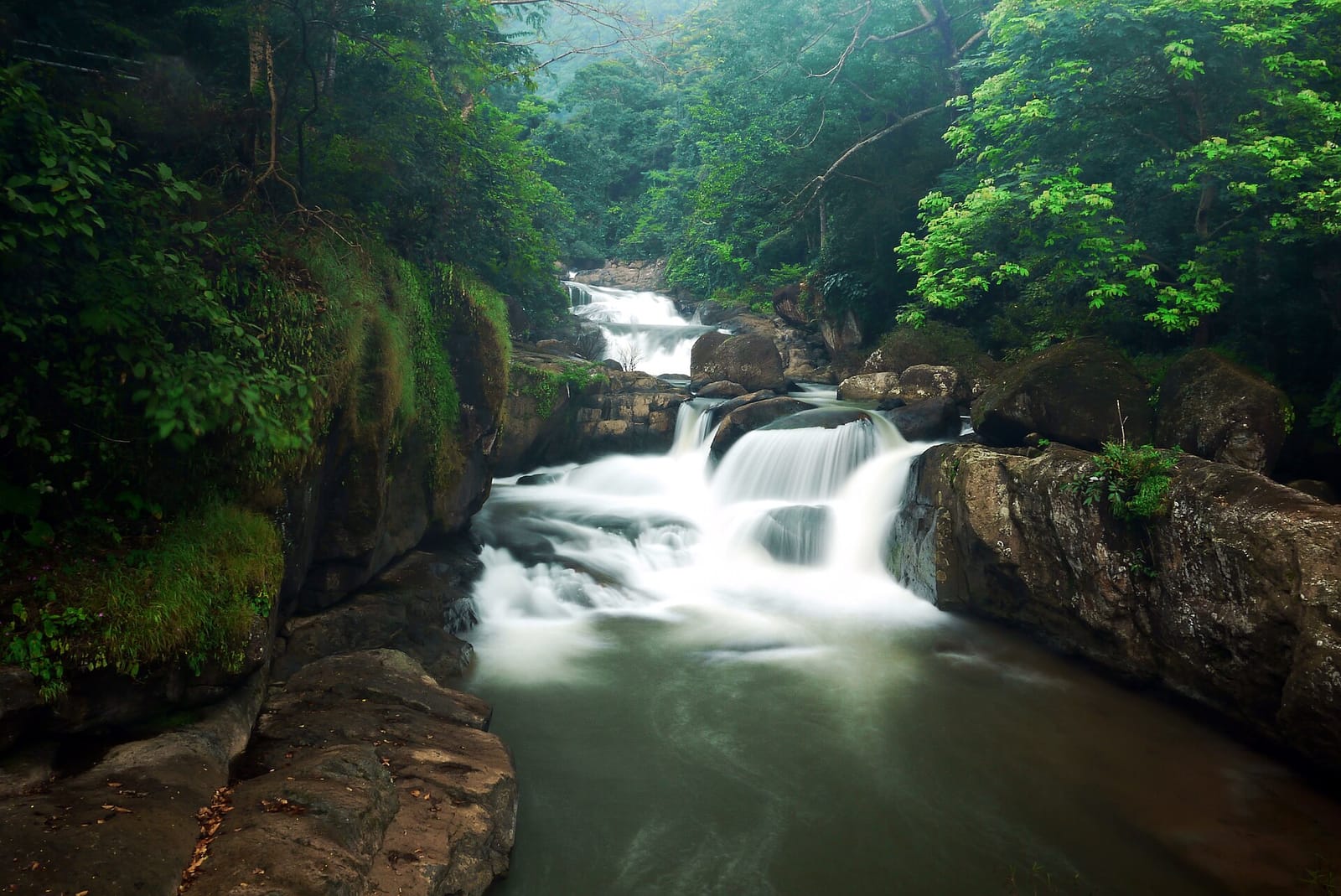
- Rainy season (Jun–Oct) — the waterfalls are at their fullest, water running strong and everything lush green. This is when people come to swim under the falls and go river rafting. Just check the ranger announcements first, because on some days the flow gets so heavy they close the falls to swimmers.
- Cool season (Nov–Feb) — comfortable, cool weather, ideal for riverside camping and cycling around the dam. The waterfalls start to ease off, but you can still play in them early in the season.
- Hot season (Mar–May) — the season for mayongchid and sweet maprang, the province's signature fruits. Some waterfalls start drying up around now, but you trade that for orchards opening up for tasting.
Quick takeaway
Want the waterfalls at full force? Come in the rainy season. Want to camp in cool air? Come in the cool season. Want to eat mayongchid fresh off the tree? Come February through April.
Book the activities in your Nakhon Nayok trip ahead
Booking online ahead on Klook or GetYourGuide is usually cheaper than the gate and skips the queue. Pick only the experiences you actually want — prices and availability are shown live on each site.
Rainy-Season Waterfalls — the Province's Headliner
Ask what Nakhon Nayok is known for and most people say waterfalls. There are only a few spots that draw the crowds, and they're not far apart — so pick based on your time and energy.
Sarika Waterfall
A long ribbon of water falling from a high cliff, visible right from the parking lot. There are several tiers to climb up and swim in, and it's the first waterfall most people think of in Nakhon Nayok. In the rainy season the flow is strongest and the falls are at their best.
Nang Rong Waterfall
Inside Khao Yai National Park on the Nakhon Nayok side, this one drops in tiers with pools you can wade into. It's an easy walk in, which makes it a good pick for families bringing kids along.
Wang Takhrai Waterfall
Set within a botanical garden, shaded by big old trees, with wide lawns where you can lay out a mat and picnic. Better suited to people who want to sit and chill by the water than to scramble up the higher tiers.
What first-timers often get wrong
The waterfalls really are beautiful in the rainy season, but it's also the most dangerous time for flash floods. If it rains hard up in the hills, the water comes down fast. Always watch the warning flags and listen to the rangers — don't push into the water if they tell you not to.
Khun Dan Prakan Chon Dam — Don't Skip This One
Khun Dan Prakan Chon is the longest roller-compacted concrete dam in the world, with a crest running about 2,720 meters. You can drive or cycle across the top, with green mountains on one side and a wide reservoir on the other. Mornings and evenings are when the weather is just right. Plenty of people come here to take photos and catch the breeze, then carry on to Nang Rong Waterfall nearby.
Winter Camping — Let's Get One Thing Straight
A lot of people hear the name "Khao Kitchakut" and assume it's in Nakhon Nayok. To be clear: the Khao Kitchakut with the sacred Buddha footprint and the pilgrimage tradition is in Chanthaburi, not Nakhon Nayok. If your plan is to camp in Nakhon Nayok, the better spots are the riverside campgrounds around Khlong Maduea and the area around Khun Dan Prakan Chon Dam.
Khlong Maduea Campground
Pitch your tent beside the stream under the trees, with a wooden bridge over the water that doubles as a photo spot. You can order food and eat right by the water, and it runs a few hundred baht a night — great for anyone who wants to fall asleep to the sound of running water.
Khun Dan Dam Campground
Open ground with views of the dam and mountains. Wake up early to thin mist and cool air. Good for people who like open space, and you can cycle around the dam afterward.
The cool season (November to February) is the most comfortable time to camp — cool air, fewer mosquitoes, and no rain to deal with. You can still camp in the rainy season, but be ready for rain and muddy ground.
Mayongchid — a Seasonal Specialty
Mayongchid (plum mango) and sweet maprang are Nakhon Nayok's signature fruits — orange-yellow, sweet with a touch of tartness, firm and crisp. They mostly come into season from February to March and can still be found into April. During this window many orchards open up for tasting and selling fruit fresh off the tree. The province usually holds a mayongchid and sweet maprang festival around March at the grounds by Khun Dan Prakan Chon Dam, so if you hit that window you can tour the dam and buy fruit in one stop.
Souvenirs to take home
Beyond fresh mayongchid, there's dried mayongchid, candied maprang, and mayongchid juice — all of which you can buy even if you visit outside the fresh-fruit season.
How to Get There From Bangkok
Nakhon Nayok is about 105 km from Bangkok. The main route is the Rangsit–Nakhon Nayok road (Highway 305), which takes roughly an hour and a half to two hours depending on traffic.
- Driving yourself — by far the most convenient way to get around Nakhon Nayok, since the sights are spread out beyond town and public transport doesn't reach many of the waterfalls. From Rangsit, just follow Highway 305 straight out.
- Minivan — vans run from Future Park Rangsit and Victory Monument, leaving frequently, about every 40 minutes, and drop you in Nakhon Nayok town. From there, take a songthaew or rent a motorbike to continue.
- No car — if you're not driving in, renting a car or chartering a songthaew for the day works out better, because the distances between the waterfalls and the dam are too far to walk.
Rough Budget
Nakhon Nayok can be done on the cheap. Your main costs are transport and accommodation, while waterfall and park entry runs only a few tens of baht per person. Here's a rough estimate for a 2-day, 1-night trip, per person.
- Budget — camping + driving yourself or taking a van, around 800–1,500 THB including food.
- Comfortable — a riverside resort or a hotel in town, around 1,500–3,000 THB per person, including accommodation and meals.
- Waterfall/park entry — generally tens of baht per person, with a small parking fee at some spots.
2-Day, 1-Night Plan (Rainy Season)
Waterfalls + Dam
Rafting + Souvenirs
Adjust the plan by season
Visiting in the cool season? Cut down on waterfall time and add more for camping and cycling around the dam. Visiting in the hot season during mayongchid time? Bump the orchards up to the highlight of the day.
Looking for a riverside stay or a mountain-view resort in Nakhon Nayok?
See the Top 10 Nakhon Nayok stays →