🔄 Updated 21 Jun 2026
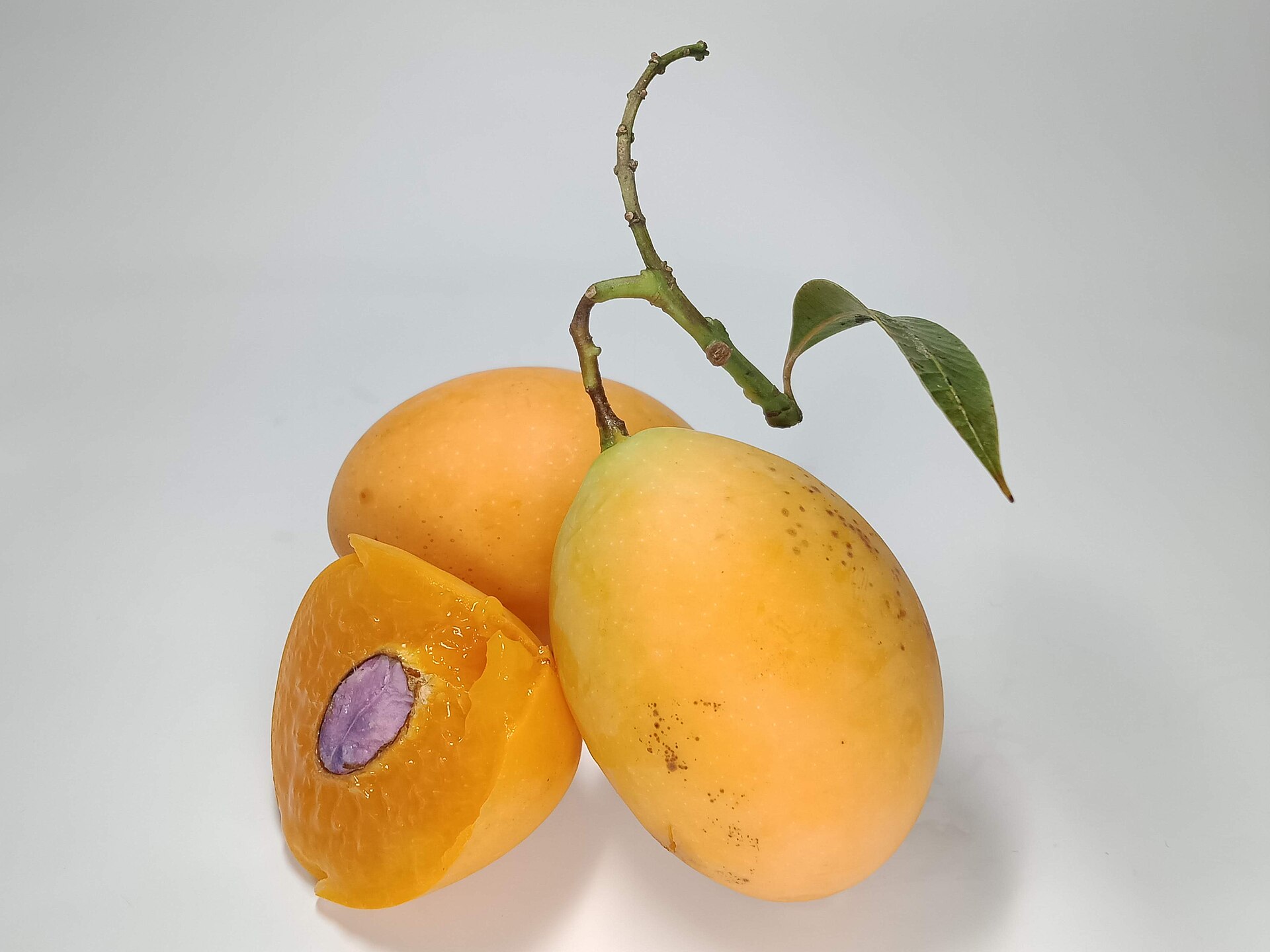
Marian plum and sweet maprang are some of the things Nakhon Nayok locals are proudest of. They're from the same family and look so alike that plenty of people can't tell them apart, yet the price differs by nearly double, and there's only a short window each year to eat them. If you're planning a trip to Nakhon Nayok in late winter or early summer, this is something not to miss, because eating it fresh from the orchard versus buying it off a roadside stall in Bangkok is a completely different experience.
Marian plum vs maprang: what's the difference
The two are in the same family, with oval, egg-shaped fruit that turn yellow-orange when ripe. But the things that set the price apart are taste and size. If you can't remember the rest, just go by tartness and fruit size.
- Marian plum (mayongchid) — larger fruit, firm and crisp flesh, small shrivelled seed, so you get plenty to eat. Sweet with a hint of tart, the tartness sitting in the skin, with a deeper orange colour. More expensive.
- Sweet maprang — smaller fruit, softer flesh, sweet all the way through the skin with no tartness, a paler yellow colour. The seed is fairly large, so there's less flesh. Cheaper.
- Toon Klao variety — the most famous marian plum strain in Nakhon Nayok. Large fruit, thick crisp flesh, fragrant, with sweetness around 18–22 Brix. If you see a sign saying Toon Klao, it means it's a top grade from that orchard.
An easy way to remember
Marian plum = big fruit, crisp flesh, sweet-tart, pricier · Sweet maprang = small fruit, soft flesh, pure sweet, cheaper. If you like a bold, layered flavour go for marian plum; if you prefer soft, easy sweetness go for sweet maprang.
Want to taste deeper? Try a Nakhon Nayok food tour or cooking class
Half a day with a local who knows the lanes — or cooking a dish yourself — teaches you more than just eating. Book ahead on Klook or GetYourGuide.
When is marian plum season
The marian plum and maprang season is very short. It usually starts in late February, peaks around March to April, then it's gone until next year. The window when the fruit looks best and there's the most of it is usually mid-March, so if you want to be sure of finding good fruit, aim for that stretch.
To be straight with you, the harvest isn't the same every year. In years with erratic weather, off-season rain or extreme heat, the fruit sets less and prices climb. Some years the stock runs out earlier than usual. So before driving a long way, call the orchard first to check that they still have fruit and are open to visitors, which is the safer move.
Annual festival
Every year the province holds a marian plum and sweet maprang festival from late February to early March on the grounds in front of Khun Dan Prakan Chon Dam. Entry is free and the well-known orchards set up stalls in one place, so if you visit during that time, drop by and you can taste fruit from several orchards at once. In 2026 some periods even had discounts when you bought above a set amount.
Real per-kilo prices by grade
Price depends on grade (based on size and the number of fruits per kilo), with bigger fruit costing more. These are the price ranges actually seen at the orchards in 2026, so treat them as a reference. They may shift depending on the year and how good the fruit is.
- Marian plum grade A — large fruit, around 12–13 per kg, roughly 300–350 THB/kg.
- Marian plum grade B — around 14–16 per kg, roughly 250–280 THB/kg.
- Marian plum grade C — around 17–19 per kg, roughly 180–200 THB/kg.
- Sweet maprang — generally cheaper than marian plum, around 150–200 THB/kg.
Buying smart
If you're eating it yourself on the trip, you don't need to insist on grade A. Grades B and C taste about the same, just with slightly smaller fruit, and the price is a lot better. Save grade A for gifts where it needs to look pretty, and pick the lower grades for snacking to save money.
Orchards open to visit and buy off the tree
Most marian plum orchards are clustered around Sarika subdistrict, Mueang district, along the road to Sarika and Nang Rong Waterfalls, and spread out toward Ban Na district. Many orchards open for orchard-side buying only during fruit season, and some let you walk among the trees. These are the named orchards in the area that genuinely open for sales.
Suan La-ong Fa 2
A long-running orchard in the Sarika area, known for large, firm-fleshed Toon Klao marian plums. They also have sweet maprang, longkong, grafted saplings, and processed products like marian plum cheesecake. A popular stop on people's routes.
Suan Si Thong
A Sarika-area orchard growing both Toon Klao marian plum and its own Si Thong line of sweet maprang. It has a Nakhon Nayok souvenir shop alongside, so you can buy fruit and pick up gifts to carry home in one place.
Suan Si Wichai
An orchard on Soi Kaeng Sam Chan in the Sarika area, focused on Toon Klao marian plum and sweet maprang picked fresh to order. Good for anyone who wants fruit straight off the tree. Call ahead when stock is low.
Marian Plum Orchard, Ban Na district
Over in Ban Na district there are also orchards open for tasting and picking during fruit season. The setting is shady and green, good for anyone coming via Ban Na who doesn't want to head into town. Check the orchard's page when the season opens before you go.
Roadside orchard stalls, Sarika–Nang Rong route
All along the road to Sarika and Nang Rong Waterfalls, growers set up stalls at intervals during fruit season. Prices are reasonable, making it handy to stop and buy on the way to the waterfalls, and you can taste before buying at several stalls.
Before you drive out
Many of these are family orchards that open only during fruit season and at irregular hours. Before going, check the orchard's Facebook page or call to ask whether they have fruit and are open that day, especially on weekdays, so you don't make the trip for nothing.
How to pick the genuinely sweet ones
A good-looking marian plum doesn't always mean a sweet one. Here's what the growers look for, worth remembering when you pick at the stall.
- Skin colour — choose fruit that's orange-yellow all over. If there's still a lot of green, it isn't fully ripe and the taste will lean sour.
- Taut, unbruised skin — pick smooth, taut skin with no dark bruises, because ripe marian plum bruises easily and doesn't keep long.
- Fresh stem — a stem still green and fresh means it was just picked; a dry, blackened stem means it's been sitting a while.
- Ask to taste first — most orchards and stalls let you taste. Try before deciding whether it's sweet enough for you. Don't be shy about it.
Keeping it fresh
Ripe marian plum only keeps a few days, so eat it within 2–3 days. Storing it in the crisper drawer of the fridge buys a little more time. Only wash it right before eating, don't wash it and leave it, because it bruises quickly. If you're buying it as a gift to carry far, choose fruit that isn't fully ripe yet, as it lasts better.
Processed products and gifts to take further
Beyond fresh fruit, many orchards make processed products from marian plum and maprang that keep longer, sold as gifts. Good for anyone who wants to carry something home but worries about fresh fruit bruising on the way.
Marian plum in syrup / preserved
Turned into a fruit-in-syrup dessert or a preserved paste, it keeps longer than fresh fruit and is easy to take home.
Marian plum cheesecake / bakery
Some orchards like La-ong Fa make marian plum cheesecake, an unusual gift that's hard to find elsewhere.
Toon Klao saplings
If you have space to plant, the orchards also sell marian plum and sweet maprang saplings to take home and grow yourself.
Pair it with a waterfall trip
The nice thing about marian plum season is that most orchards sit on the same road as Nakhon Nayok's famous waterfalls, so you can stop for fruit and then go swim at a waterfall on the same trip. Walk the orchard and taste fruit in the morning, head to Sarika or Nang Rong Waterfall in the afternoon, and it lines up perfectly.
Plan a Nakhon Nayok trip in fruit season, pairing orchards with waterfalls
See the Nakhon Nayok travel guide →