🔄 Updated 11 Jun 2026
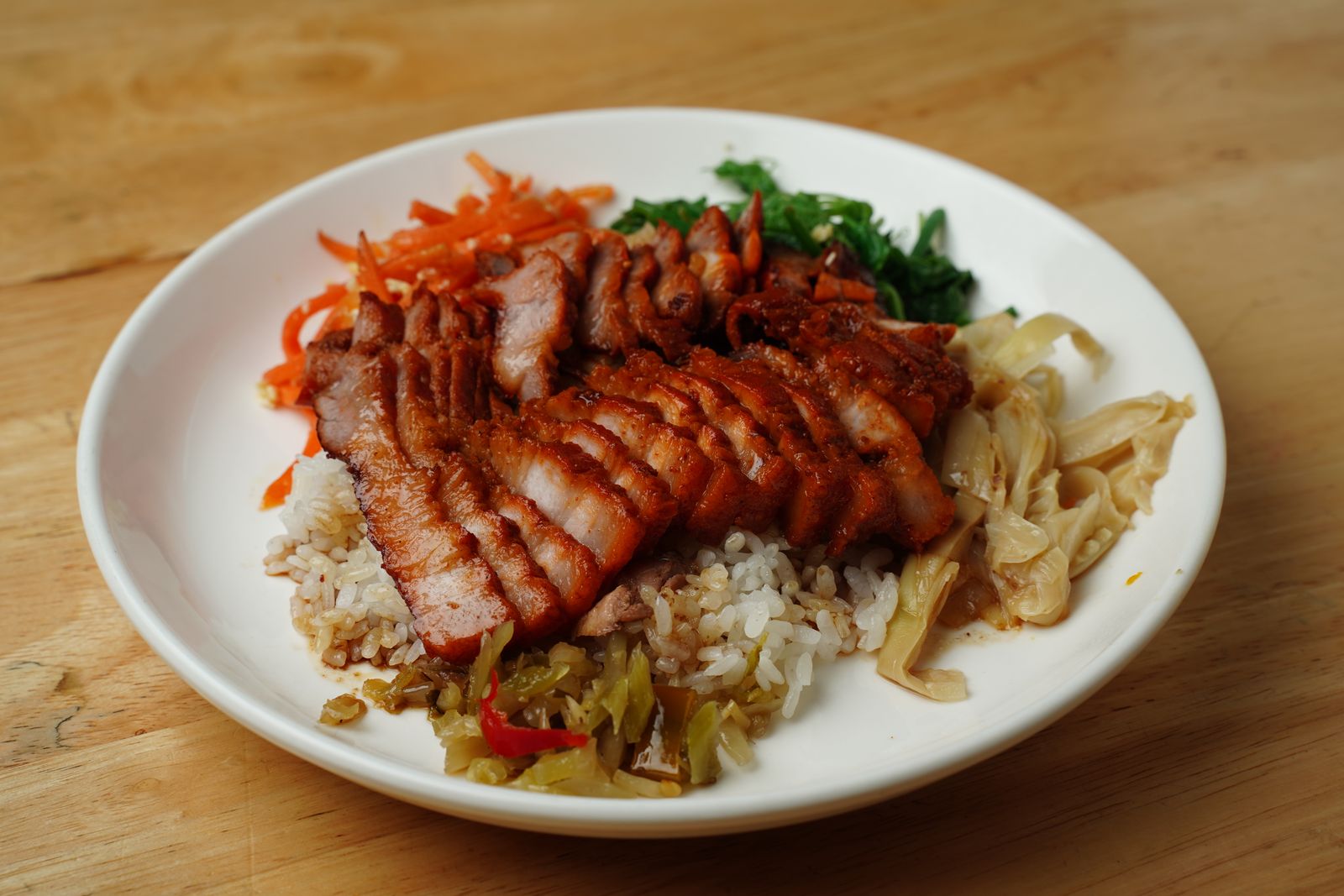
Ask anyone from Nakhon Pathom what the town's signature dish is and khao mu daeng is usually one of the first answers. There are shops here that have been open for decades — a couple pushing close to a hundred years — and many have been handed down through several generations. What makes Nakhon Pathom's version different is the gravy: thick, leaning sweet, simmered with spices until it's fragrant, and spooned on just enough so it never turns the rice soggy. It lands right on top of a plate of hot steamed rice.
Almost all the famous shops are within walking distance of each other around Phra Pathom Chedi, so you can pay your respects at the temple and follow it with a plate of khao mu daeng in one trip. Below we've ordered them by reputation, how long they've been around, and how consistent the reviews are — which doesn't mean the ones lower down are any worse. Each shop has its own character of gravy and pork.
Ranking the old-school khao mu daeng shops
Khao Mu Daeng Nai Chua (Lower Market, Soi 3)
A Nakhon Pathom legend, open more than 50 years, with a line of people both dining in and taking away. The red pork is sliced thick, the crispy pork has a good meat-to-fat ratio, and the gravy is thick without making the rice soggy. You can also add a bowl of offal soup or chicken rice.
Tang Ha Seng (the old shop), Lower Market
An old-timer nearing a hundred years, on the corner of Phaya Kong Road near the train station and Lower Market. The crispy pork is grilled with care — low on fat, crackly skin — and the sauce is simmered until it's deep and fragrant. This is usually the first name locals point out-of-towners toward.
Yong Seng Khao Mu Daeng
A regular spot for Nakhon Pathom locals, open nearly 40 years, on Phetkasem Road near Wat Khao Wang Thai. The crispy pork has puffy, crackly skin and the red pork is tender and juicy, with a well-balanced gravy. Beyond khao mu daeng they also have stir-fries and curries, so you can make a proper meal of it.
Som Khao Mu Daeng (Soi Ratchadamri Nok)
An old khao mu daeng and crispy pork shop that piles on generous portions for the price. It's only open from morning until about 2pm, and people in the area know it for being easy on the wallet. The pork comes loaded onto the plate — good for anyone on a budget who just wants to leave full.
Nakhon Pathom Khao Mu Daeng–Mu Krob
A shop whose name says exactly where it's from. The crispy pork is cut to a good size, the rice is on the softer side, and the gravy isn't overdone. It's consistent and easy to find — a safe pick when you don't want to gamble on whether you'll like it.
Tang Ha Seng (the in-market shop)
Another branch — or another shop under the Tang Ha Seng name — tucked inside the market district. Open more than 30 years, with khao mu daeng and crispy pork as the headline dish too. Good for a stop while you're walking the morning market: the food is still hot and turns over fast.
Khao Mu Daeng shops by the chedi (Upper Market)
On the Upper Market side around the chedi there are several khao mu daeng carts and old shophouses that people nearby eat at regularly. Prices are easy on the wallet and they're good for a quick stop after the temple — you can compare their gravy against the Lower Market shops on the same day.
Tip
A lot of the popular shops sell out before afternoon — Nai Chua and Som Khao Mu Daeng especially. To be safe, go before 11am, and bring cash, because many of these old shops still don't take bank transfers or cards.
Want to taste deeper? Try a Nakhon Pathom food tour or cooking class
Half a day with a local who knows the lanes — or cooking a dish yourself — teaches you more than just eating. Book ahead on Klook or GetYourGuide.
How the gravy and crispy pork differ from shop to shop
The heart of Nakhon Pathom khao mu daeng is the gravy. Old-guard shops like Tang Ha Seng simmer their sauce until it's thick and fragrant with spice, leaning sweet but not cloying, while the crispy pork goes for puffy skin and low fat. Other shops run a thinner gravy that's more clearly sweet — good if you like a rounder, milder taste. Order the combined red pork and crispy pork on one plate and you can compare both in a single bite.
- The gravy — old shops simmer it thick and fragrant with spice; some run it thinner and sweeter, so taste it before adding chili-vinegar.
- Crispy pork — look for puffy, crackly skin and not-too-thick fat; the good ones stay crisp instead of turning chewy after they're cut.
- Red pork — thickly sliced, with red color that comes from marinating rather than food coloring alone.
- Sides — many shops have a bone broth or offal soup you can order alongside to cut the richness.
Pairing khao mu daeng with a temple visit
Since the famous shops are clustered around Phra Pathom Chedi, the cleanest plan is to visit the temple in the morning before it gets hot, then walk down to the Lower Market side for a late-morning plate of khao mu daeng. If you're in a group, order from different shops and share — that's the easiest way to see how each one's gravy differs. Finish with dessert or fruit from the market.
Lower Market
The hub for the old shops — Nai Chua and Tang Ha Seng are around here, within walking distance of each other and close to the train station.
Upper Market
Across from the chedi, with carts and old shophouses, easy on the wallet and good for a quick stop.
Plan a full day of eating and sightseeing in Nakhon Pathom — the chedi, the markets, and the riverside
See the Nakhon Pathom travel guide →