🔄 Updated 21 Jun 2026
The nice thing about pairing Nakhon Pathom with Ratchaburi is that they really are close. Damnoen Saduak is a district of Ratchaburi that sits right up against the Nakhon Pathom border, so anyone starting from Nakhon Pathom — or even from Bangkok — can get there in a single morning. The two provinces stand out in different ways: Nakhon Pathom is a town of merit-making and good food, while Ratchaburi is known for its old floating markets and dragon-jar pottery. Put them together and you come away full in body and spirit, with souvenirs in hand. We've planned it around driving yourself, which is easiest, but you can do it without a car too — there's a how-to below.
Who this trip is for
- Genuine floating-market fans — you want to walk several old floating markets in one trip: Don Wai on the Nakhon Pathom side, plus Damnoen Saduak and Lao Tak Lak in Ratchaburi.
- People who love bringing souvenirs home — these two provinces are packed with them, from Nakhon Chai Si pomelos to mini dragon jars, sweet pickled radish, and Ban Pong rice noodles.
- Families travelling with elders — not much walking, some temples, a boat ride, riverside food — an easy, relaxed pace.
- Bangkokians escaping the city on weekends — head out early, cover two provinces, and one night in Nakhon Pathom or Damnoen Saduak is enough.
Book the activities in your Nakhon Pathom trip ahead
Booking online ahead on Klook or GetYourGuide is usually cheaper than the gate and skips the queue. Pick only the experiences you actually want — prices and availability are shown live on each site.
How to get there (self-drive / van / train)
For a two-province trip like this, driving yourself is the smoothest option, because the Ratchaburi floating markets sit off the main public-transport routes. But there are still ways to go without a car.
- Self-drive (recommended) — from downtown Nakhon Pathom to Damnoen Saduak is about 40–50 km, taking Phetkasem Road onto Highway 325, roughly 50 minutes to 1 hour. It gives you the freedom to move between markets and souvenir shops that are spread out.
- Van / minibus — there are vans from Bangkok (the new Southern Terminal) to Damnoen Saduak; from the drop-off, take a songthaew or a motorcycle taxi into the market. The total fare runs to a couple of hundred baht.
- Train + onward ride — take a Southern Line train from Thonburi to Nakhon Pathom (a 3rd-class ticket is just a few tens of baht), see the chedi first, then catch a van/songthaew to Damnoen Saduak. Good for those focusing mainly on the Nakhon Pathom side with a half day in Ratchaburi.
A tip on timing
Damnoen Saduak floating market is liveliest in the early morning, 07:00–10:00, when plenty of vendors are paddling their boats and the sun isn't fierce yet. By late morning the crowds thin out and it gets hot. If you're heading to Damnoen Saduak, it's worth staying overnight around Nakhon Pathom or Damnoen Saduak and going first thing — the atmosphere is far fuller.
2 days, 1 night — Nakhon Pathom first, then cross to Ratchaburi
The structure we like: day one fills up the Nakhon Pathom side — the chedi, red pork rice, Don Wai market — then stay the night around Nakhon Pathom or move closer to Damnoen Saduak. Wake up early on day two and hit Damnoen Saduak while the crowds are still thin and the mood is good, then close the trip with dragon-jar souvenirs. If you only have one day, drop day two and just do the Nakhon Pathom side — it's plenty of fun on its own.
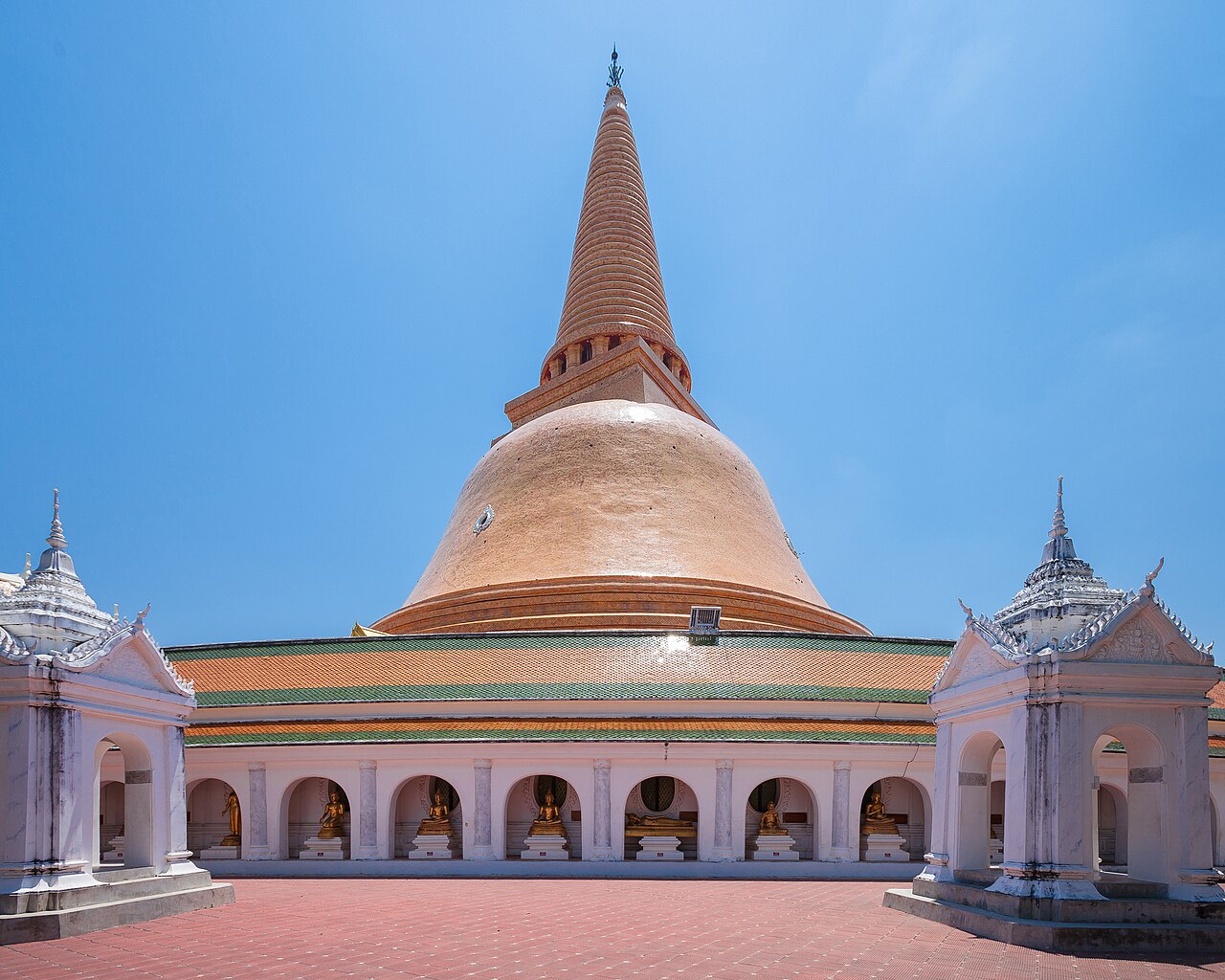
Nakhon Pathom — the chedi + red pork rice + Don Wai market
Ratchaburi — Damnoen Saduak + Lao Tak Lak + dragon-jar souvenirs
Which floating market to choose on this trip
This trip offers several floating markets to choose from, differing in their open days and atmosphere. If you're short on time, just pick a couple. Here are the three main ones, in route order.
Don Wai Floating Market (Nakhon Pathom)
An old market on the Tha Chin River, next to Wat Don Wai, open daily, with loads of food — five-spice braised duck, salted mackerel, Thai sweets — and boat rides for the view. A good stop on day one while you're exploring the Nakhon Pathom side.
Damnoen Saduak Floating Market (Ratchaburi)
A floating market over a hundred years old, famous abroad. Open daily, busiest in the early morning 07:00–10:00, with paddle boats selling goods, boat noodles and old-style coffee, plus paddle-boat canal tours.
Lao Tak Lak Floating Market (Ratchaburi)
Ratchaburi's first original floating market, with old Chinese wooden houses right beside Damnoen Saduak. A retro Thai-Chinese atmosphere, busy on weekends roughly 08:00–14:00, great for photos.
Straight talk
Damnoen Saduak draws a lot of foreign tourists, and some corners sell touristy souvenirs. If you want a more local feel, walk further into the canal lanes or cross over to Lao Tak Lak — you'll find local shops and friendlier prices.
Souvenirs worth carrying home
The two provinces have different styles of souvenir. Nakhon Pathom is strong on fresh food, while Ratchaburi shines with handicrafts and dried goods that keep well. We've ranked them by what people actually buy.
Dragon jars / mini ceramics (Ratchaburi)
Ratchaburi is Thailand's dragon-jar town. The big jars are hard to carry, but there are mini dragon jars and small dragon-pattern ceramics to buy as cute keepsakes — sturdy and long-lasting. Look for them at ceramic shops along Phetkasem Road and in town.
Sweet pickled radish (Ratchaburi)
Sweet pickled radish is a Ratchaburi signature, and the Chada brand is the one people know. Sweet-salty and well balanced, it's great stir-fried with egg or eaten with rice porridge. Small packs are easy to carry and keep a long time.
Nakhon Chai Si pomelo (Nakhon Pathom)
The famed pomelo of the Nakhon Chai Si–Sam Phran area: juicy flesh with a sweet-tart balance that's just right. Find it at Don Wai market and roadside fruit stalls; pick heavy fruit with taut skin.
Dragon-brand Ban Pong rice noodles (Ratchaburi)
Handmade dried rice noodles from Ban Pong district, Ratchaburi, known for their chewy texture. Stir-fry them or blanch them in water — a good souvenir for anyone who cooks, and they keep a long time.
Ban Bua Hom Chinese pastries (Ratchaburi)
A long-established Ratchaburi maker of well-filled Chinese pastries — thin, soft pastry with mung bean and salted egg fillings. They box up nicely as a gift, and people stop to buy them regularly.
Braised duck & salted mackerel (Don Wai, Nakhon Pathom)
The stars of Don Wai market: five-spice braised duck in rich sauce and sweet salted mackerel. They box up to take home and go straight with hot steamed rice back at the house.
Old-style Thai sweets & thong muan (Nakhon Pathom)
Around the chedi and the markets there are plenty of old-style Thai sweets to choose from — thong muan, khanom buang, khanom tan, thong yip and thong yot — at local prices. They make a tidy little gift set.
A tip on buying souvenirs
Fresh, savoury items like braised duck and salted mackerel are best bought at the end of the trip just before you leave, so you don't lug them around all day. Dried goods like pickled radish, rice noodles and mini jars can be bought any time, since they keep well.
If you want to stay overnight, where to sleep
There are two ways to stay on this trip: sleep in Nakhon Pathom town and drive to Damnoen Saduak in the early morning, or move closer to Damnoen Saduak–Ratchaburi to make the early-morning market easier.
- Stay in Nakhon Pathom town — hotels in town come in a range of tiers, close to the chedi and the food, starting around ฿600–1,200 per night. Good for a full first day on the Nakhon Pathom side.
- Stay around Damnoen Saduak — there are canalside resorts and homestays with a floating-market vibe; wake up and walk straight to the market. Good for people focused on hitting the floating market in the morning.
- Stay in Ratchaburi town — if you want another day exploring Ratchaburi, such as Khao Ngu or Suan Phueng, staying in Ratchaburi town makes it easier to branch out to other spots.
Rough budget per person
- Transport — self-drive, count fuel + tolls around ฿500–800 per car · van/train round trip around ฿200–400 per person.
- Food for 2 days — around ฿400–700 (red pork rice, riverside food at Don Wai, boat noodles at Damnoen Saduak, the night market).
- Boat ride & entry — a paddle-boat canal tour at Damnoen Saduak is a couple of hundred baht per boat (split it) · temple offerings are up to you.
- Souvenirs — set aside around ฿200–500 and you'll come home with plenty — pickled radish, rice noodles, mini jars, Chinese pastries.
- One night's accommodation — starting around ฿600–1,200 per night · on a budget, 2 days and 1 night comes to around ฿900–1,500 per person.
If you only have one day
With a single day, focus on the Nakhon Pathom side — the chedi, red pork rice and Don Wai market already fill a day. Damnoen Saduak is only worth it if you go truly early, and to cover both provinces in one day you'd need to set out at 5am.
Plan your stay before you set off
See Top 10 Nakhon Pathom hotels →