🔄 Updated 21 Jun 2026
Before the details, it helps to understand the logic of the plan. Nakhon Phanom is a Mekong town that faces east, which means the town side is better for sunrise than sunset. If you're hoping for a sun-sinking-behind-the-water shot like the Andaman coast, you'll be let down — but the evening light hitting the Laos mountains and the lit-up naga plaza at dusk is beautiful in its own way. So we built this around morning and evening shots, while during the harsh midday light you head indoors or to the stupa, where the upward angles work all day.
Who this plan is for
It suits anyone shooting for Instagram or Facebook who wants a variety of angles on a short trip. A phone is plenty; if you have a camera with a wide-angle lens you'll fit the whole naga and clock tower into the frame more easily. Having your own car or a rental is the smoothest option, since Phra That Phanom sits about 50 km outside town.
Overview of the 2-day photo plan
- Day 1 (Mekong waterfront in town) — catch the changing sky and sunrise at first light, shoot the old riverside cafes through the morning, rest out of the sun in the afternoon, then wait for golden hour before moving on to the night lights at the naga plaza and clock tower.
- Day 2 (Phra That Phanom + heading south) — leave early, drive south to shoot the white Phra That Phanom while the sun is still soft, stop at Phra That Renu Nakhon for shots of Phu Tai life, then loop back.
- Where to stay — pick a hotel in town near Sunthon Wichit Road so you can walk out to shoot at first light and in the evening without driving.
- Rough budget per person — one night at a mid-range hotel runs about 700–1,200 THB, 3–4 meals about 600–900 THB, fuel/transport about 300–500 THB, and almost all the main photo spots are free to enter.
Book the activities in your Nakhon Phanom trip ahead
Booking online ahead on Klook or GetYourGuide is usually cheaper than the gate and skips the queue. Pick only the experiences you actually want — prices and availability are shown live on each site.
The 4 main photo spots you can't miss
If you're short on time and want shots that instantly read as Nakhon Phanom, these are the four spots ranked by how photogenic and how easy they are to capture, with the best light times and where to stand at each.
Phaya Sri Sattanakharat (the 7-headed Naga)
The signature shot of Nakhon Phanom: a brass seven-headed naga coiling its tail, about 15 meters tall including the base, facing out over the Mekong. The best angle is to stand low and shoot upward so the naga's heads cut against the sky. In the morning the golden light catches the front; in the evening the decorative lights give it a completely different mood.
Vietnamese Memorial Clock Tower
A downtown landmark built by the Vietnamese community in 1960, with a classic shape that looks retro from any angle. In daytime shoot it against a clear sky; at night it's lit up and you can capture car light trails with a slow shutter. It sits at the head of the walking street, so you can keep shooting all the way down to the naga plaza.
Phra That Phanom (That Phanom district)
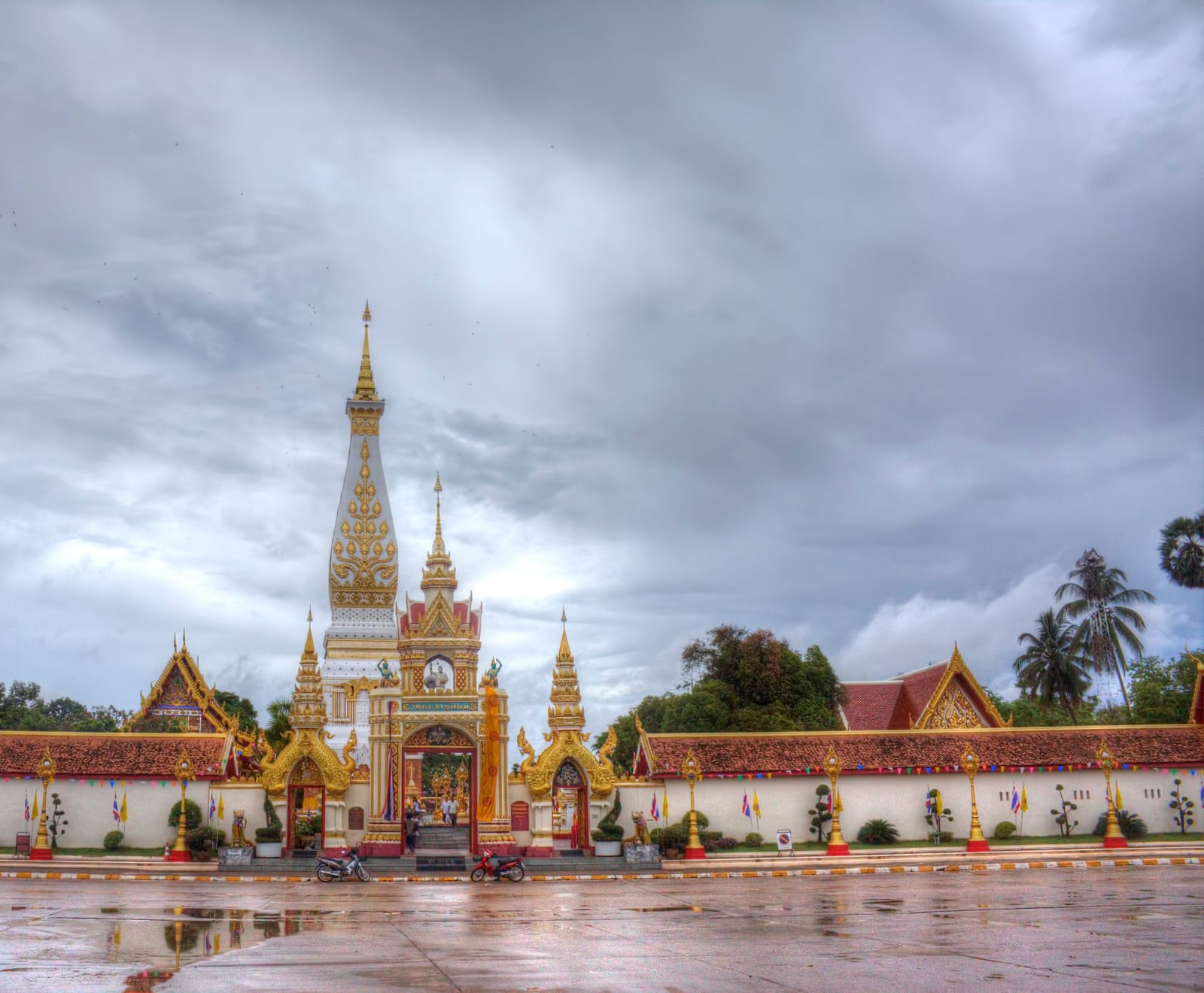
A tall white stupa topped with gold that captures the feel of riverside Isan well. Shoot upward from the front plaza so the spire cuts against the sky. Go early when the light is still soft and the crowds are thin, so the white surface doesn't blow out and lose detail. It's about 50 km south of town.
Mekong waterfront on Sunthon Wichit Rd (Laos mountain view)
A long riverside stretch with the limestone mountains of Khammouane province on the Laos side as a backdrop. Great for shots of people walking, cycling, or portraits turned side-on so you catch the water and mountains. The changing sky at first light and the soft light of late afternoon are the most flattering. In the cool season the clear sky makes the mountains stand out.
Straight talk on light direction
Nakhon Phanom faces east, and the sun rises right over the Laos mountains, so a silhouette of the naga backlit at dawn looks great. But if you want the naga fully lit, you'll need to wait for the light to bounce back around 7–8 a.m. The sunset on this side drops behind the town, not behind the water, so don't set your hopes on a sun-over-the-river shot.
Day 1 — morning light and evening glow on the Mekong in town
The first day stays in town all day, with almost everything within walking distance. Focus on first light and the evening, when the light is best, and during the harsh midday sun rest in a cafe or walk in the shade — that way you're not worn out and you save both your battery and yourself for the evening round.
Sunrise in the morning · naga plaza lights at night
Tips for shooting at night
The light at the naga plaza and clock tower isn't bright in the evening, so handheld phone shots can come out blurry. Turn on night mode and find something to rest on or lean against — like a bridge railing — to keep steady. If you carry a small tripod, try a slow shutter to turn the cars into light trails by the clock tower; it's a shot most people don't come away with.
Day 2 — the white Phra That Phanom in the morning
Day two starts early, heading south to Phra That Phanom. The reason to go early is that the stupa is white — go at midday under blazing sun and the detail washes out in the glare. Go in the morning while the light is still soft and the white surface keeps its depth, and the crowds are still thin enough to shoot freely.
South to Phra That Phanom · Renu Nakhon
Straight talk on the crowded period
During the Phra That Phanom homage festival from late January to early February it gets extremely crowded — you can barely get a clear shot of the stupa, and rooms fill up fast. If you're coming for photos, avoid that week. But if you want shots of the big merit-making festival atmosphere with the crowds, that's a different kind of powerful image. It depends on which feel you're after.
Extra photo spots if you have time left
If you set out early or come back late and have time to spare in spots, these are photo stops you can add to the trip without breaking the main plan. Pick based on which direction is closest to your route.
Third Thai-Lao Friendship Bridge
About 8 km north of town, with a viewpoint to shoot the bridge against the Khammouane mountains, lovely in the soft evening light. If you want to shoot on the bridge itself you need permission from officials and can only shoot at the start of the bridge on the Thai side.
Phra That Tha Uthen
A tall white stupa resembling a scaled-down Phra That Phanom, about 26 km north. The standout angle shoots the stupa with the Third Friendship Bridge spanning the Mekong behind it. A good add-on if you set out early on day two.
Ho Chi Minh Memorial, Ban Na Chok
About 5 km outside town, with a replica wooden house where Uncle Ho once stayed. Open daily 8:00–17:00, free entry with donations as you wish. Quiet and shady in the morning, with the wooden house and trees giving a retro feel.
Getting ready before you head out to shoot
- Best light times — first light to 8 a.m. and the soft late-afternoon light are the golden hours by the Mekong. Midday from 11:00–15:00 is harsh, so save that for resting or shooting in the shade. The night lights at the naga plaza and clock tower come on after sunset.
- Best season — the cool season from Nov–Feb has clear skies that make the Laos-side mountains stand out for a nice backdrop. Around the end of Buddhist Lent in October there's the illuminated boat procession on the Mekong, which makes for striking night photography.
- Gear — a phone handles almost every spot; a wide-angle lens helps you fit the whole naga and clock tower in frame. A small tripod is very useful for the night lights, and bring a spare battery since you'll be shooting all day.
- Temple etiquette — at Phra That Phanom, Renu Nakhon, and Tha Uthen, dress modestly, take off your shoes where required, don't stand with your back to the stupa for selfies in front of people who came to pay respects, and be considerate of anyone praying.
Want a full Nakhon Phanom itinerary or a riverside hotel by the Mekong?
See the Nakhon Phanom travel guide →