🔄 Updated 21 Jun 2026
If you're already flying or driving into Nakhon Phanom, carrying on to Sakon Nakhon is a smart use of time, since the two towns sit on the same Highway 22. It's about 93 km from downtown Nakhon Phanom to downtown Sakon Nakhon, roughly an hour and a half. Along the way you pass Ban Tha Rae, the largest Catholic village in Thailand, which makes a natural stop just before you reach Sakon Nakhon town. So the drive isn't just shifting between towns; there's a worthwhile stop along the way too.
This plan keeps Nakhon Phanom for the first day at an unhurried pace, focusing on Phra That Phanom and the riverfront in town. Day two you cross over to Sakon Nakhon for the city's main stupa and a forest-tradition temple, and day three is a nature day up in the Phu Phan hills before looping back. Every location and distance is measured from each province's town centre so your timings stay accurate. If you only have 2 days, drop day three, or fold the Phu Phan leg into day two if you start early.
Why pair Nakhon Phanom with Sakon Nakhon
The main reasons are the short distance and the fact that the two towns have characters that complement rather than repeat each other. Here's what each one gives you.
Nakhon Phanom — Mekong stupas
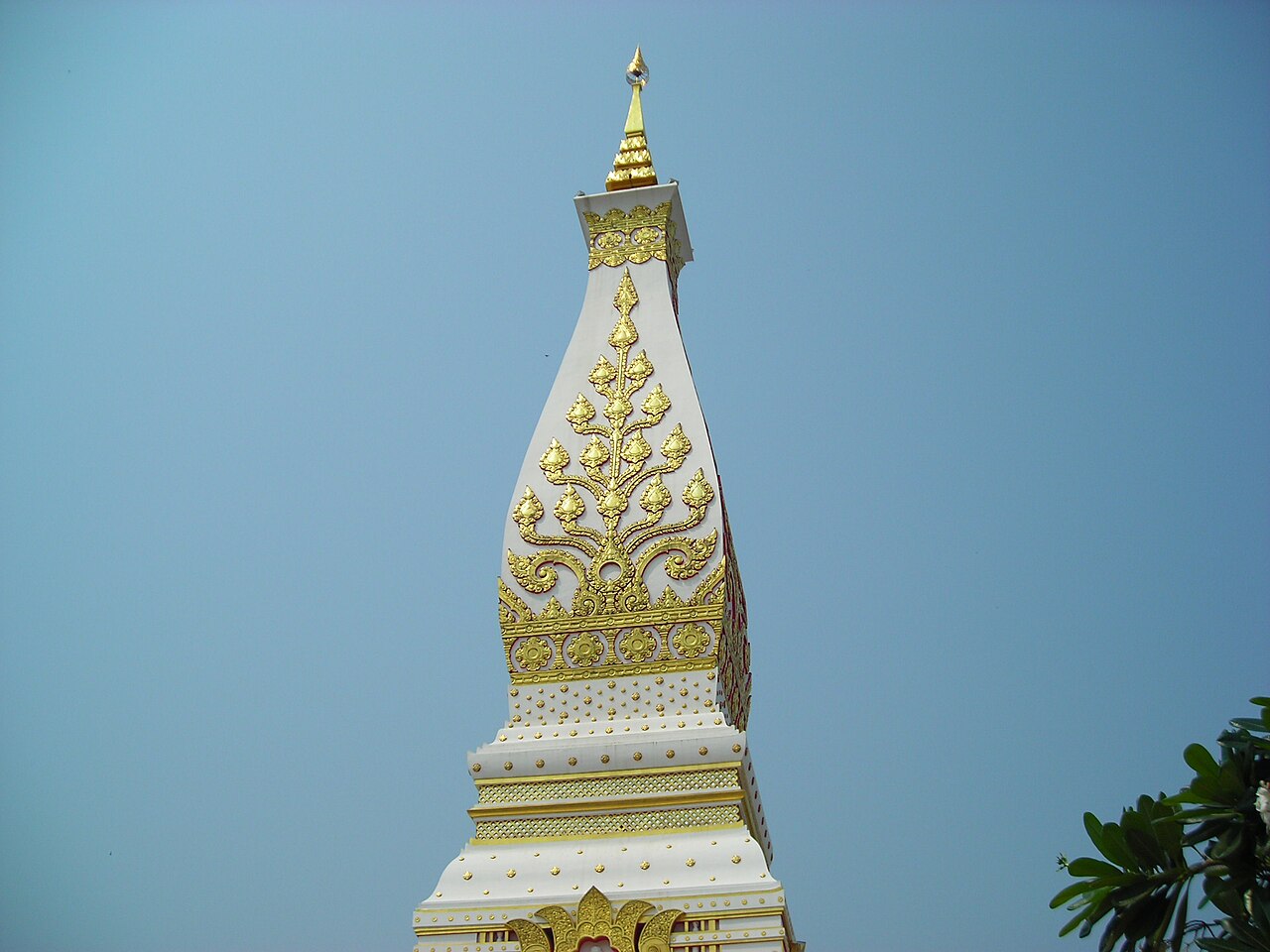
Known for its Mekong River views and Phra That Phanom, the principal stupa of the upper Isan region. The town has an easy riverside promenade, a Vietnamese clock tower, and good Vietnamese food from the old community. A nice way to open the trip with a riverside mood.
Sakon Nakhon — temples & Phu Phan
Home to Phra That Choeng Chum, the city's own stupa, Wat Pa Sutthawat with its relics and Luang Pu Mun museum, plus nature up in the Phu Phan hills like Wat Tham Pha Daen and Nong Han, a large freshwater lake. A good way to close the trip with a mix of merit-making and nature.
Connecting road — Highway 22
About 93 km links the two towns, roughly an hour and a half. The road is good and traffic is light, passing the Catholic village of Ban Tha Rae before Sakon Nakhon, so the drive has a stop to break it up and never gets dull.
Which direction drives best
If you're using your own car or a rental, do Nakhon Phanom first because the airport is in Nakhon Phanom; finish in Sakon Nakhon, then loop back to Nakhon Phanom to fly out. Or if you've driven in yourself, you can end the trip in Sakon Nakhon and head straight back toward Udon Thani. Highway 22 runs on to Udon, so there's no need to double back.
Book the activities in your Nakhon Phanom trip ahead
Booking online ahead on Klook or GetYourGuide is usually cheaper than the gate and skips the queue. Pick only the experiences you actually want — prices and availability are shown live on each site.
Day 1 — Nakhon Phanom: Phra That Phanom and the Mekong
Day one stays entirely on the Nakhon Phanom side. In the morning head south to pay respects at the main Phra That Phanom; in the afternoon loop back into town to walk the riverfront and see the key spots; in the evening catch the sunset over the water. It's a day that combines merit-making with an easygoing riverside-town atmosphere.
Nakhon Phanom: That Phanom–Mekong
Want to add more Nakhon Phanom stupas
If you're specifically into the birthday-of-the-week stupas, Nakhon Phanom has all seven spread across its districts. On this first day you could slot in Phra That Renu Nakhon (Monday) on the same road near That Phanom. But if you're crossing to Sakon Nakhon on day two as this plan does, it's better to stick to just the main one so your timings don't blow out.
Day 2 — Across to Sakon Nakhon: Phra That Choeng Chum and Ban Tha Rae
Day two is the crossing-over day. Leave Nakhon Phanom in the morning and drive along Highway 22 toward Sakon Nakhon, stopping at Ban Tha Rae to see the Catholic village and its ship-shaped cathedral, then into Sakon Nakhon town to pay respects at Phra That Choeng Chum and to honour Luang Pu Mun at Wat Pa Sutthawat. It's a culture-and-merit day that shows you several sides of Sakon Nakhon.
Across to Sakon Nakhon: Choeng Chum–Tha Rae
Ban Tha Rae and special dates
Ban Tha Rae is especially lively during the Christmas Star Procession festival in late December, when villagers make decorative stars for the parade across the whole village. Come then and you'll catch an atmosphere that's hard to see otherwise, but it's crowded and rooms fill up fast, so book ahead. On an ordinary weekday you can wander the village and take photos at ease without booking anything.
Day 3 — Phu Phan nature: Wat Tham Pha Daen and Nong Han
The last day switches to nature up in the Phu Phan hills. In the morning head up to Wat Tham Pha Daen, with its cliff-face carvings and large naga-hooded image, plus views of Sakon Nakhon town from the hill. In the afternoon come down to Nong Han, Isan's large freshwater lake, before looping back. It's a day of both high views and water views to close the trip on an easy note.
Phu Phan: Pha Daen–Nong Han
Allow time for the climb up Phu Phan
The final stretch up to Wat Tham Pha Daen is a narrow, steep hill road. In a sedan, use a low gear and drive slowly. During the rainy season the road can get slippery, so go in the morning while the sun is still gentle and the road is dry. If you'd rather not drive yourself, there are songthaews and guided tours from town that can take you up; ask your accommodation or TAT Sakon Nakhon ahead of time.
Add these if you have more time in Sakon Nakhon
If you stretch the trip to 4 days or want to go deeper into Sakon Nakhon, there are several more merit and nature spots you can add depending on your interests.
- Phu Phan Ratchanivet Palace — a royal residence set in the Phu Phan forest, open to visitors only when there is no royal stay; check the opening schedule before you go. The grounds and atmosphere are shaded and cool.
- Ajahn Fan Ajaro Museum — at Wat Pa Udom Somphon in Phanna Nikhom district, a lotus-petal-shaped chedi holding the relics and belongings of Ajahn Fan; forest-tradition followers often go here after Wat Pa Sutthawat.
- Phu Pha Yon / Phu Phan National Park — hiking trails and waterfalls in the Phu Phan hills, good for a full nature day. Bring hiking shoes and ask about trail conditions beforehand.
- Sakon Nakhon indigo and natural-dye cloth — Sakon Nakhon is famous for hand-dyed indigo cloth, with weaving communities and shops where you can buy it as a souvenir you'll only find locally.
What to eat across the two provinces
The Nakhon Phanom–Sakon Nakhon route has two styles of food to try. The Nakhon Phanom side is strong on Mekong fish and Vietnamese food, while the Sakon Nakhon side is strong on local Isan dishes and the eats in the Tha Rae community. Here are places that are actually open and that locals go to.
- Khrua Rim Khong View, That Phanom — a riverside Mekong-fish spot about 2 km from Phra That Phanom, open 9.00 am–8.30 pm. Big plates of fried fish at reasonable prices, good for lunch on day one.
- Vietnamese food in Nakhon Phanom town — the town has long-running Vietnamese restaurants from the old community; naem nueang, mu yo and khao piak are the must-tries. Good for dinner on day one.
- Francisco old-style khao piak, Ban Tha Rae — a shop in a century-old colonial house in the middle of the Tha Rae community, known for its local-style khao piak noodles. A good late-morning stop while crossing between provinces.
- Local food in Sakon Nakhon town — Sakon Nakhon town has Isan restaurants and the well-known mu tap wan (sweet pork liver), found in town. Good for lunch on day three, before or after coming down from Phu Phan.
Getting around and what to prepare
- Rent a car / drive yourself — the best way to control your timing for a cross-province trip like this, since the sights are spread out and some are outside town. Highway 22 is an easy drive on a good road.
- Intercity buses — buses and vans run between Nakhon Phanom and Sakon Nakhon every day, good if you don't drive, but in the destination town you'll need to catch a songthaew or hire a ride.
- Fly into Nakhon Phanom — the airport is in Nakhon Phanom with daily flights from Bangkok; renting a car on arrival is convenient, which fits opening the trip in Nakhon Phanom as this plan does.
- Carry cash and offerings — flowers, incense and candles can be bought in front of the temples, but many places still don't take transfers, so keep cash and drinking water in the car.
- Dress modestly at temples — at Phra That Phanom, Phra That Choeng Chum and Wat Tham Pha Daen, no tank tops or shorts above the knee, and remove shoes before stepping onto the stupa terrace.
Want a detailed full-trip plan for Nakhon Phanom
See the Nakhon Phanom travel guide →