🔄 Updated 21 Jun 2026
Nakhon Sawan sits halfway between central and northern Thailand, a little over three hours' drive from Bangkok. It's an easygoing place to explore — no need to rush. The draw is the combination of nature (a wide lake and limestone hills) and the old Pak Nam Pho quarter, where Chinese families settled long ago and gave the town a distinct cultural feel. We've sorted the sights into three groups so they're easy to slot into your trip.
The top things to see in Nakhon Sawan
If you're short on time, these three are the places people rarely skip. Together they cover the city, the nature and the photo spots in one go.
Pasan — the landmark at the source of the Chao Phraya
Set on the Ko Yom headland, right where the Ping, Wang, Yom and Nan rivers merge to become the Chao Phraya. The building is a modern, curving structure stretching along the water, and you can walk up for a view of the two-tone confluence. Late afternoon, the sunset reflecting off the water is lovely. It's the first thing most people picture when they think of Nakhon Sawan.
Bueng Boraphet — Thailand's largest freshwater lake
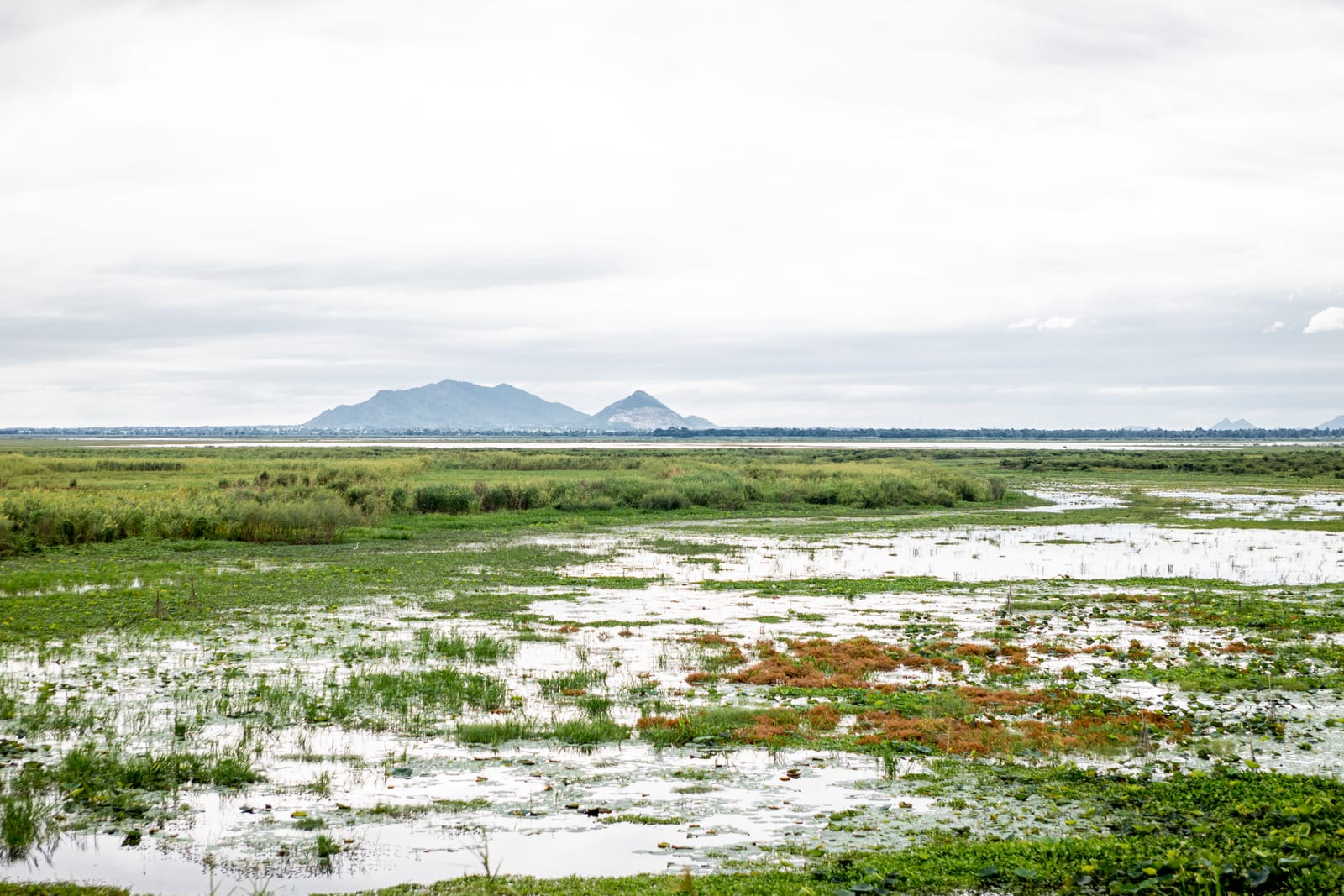
A freshwater lake spanning more than 100,000 rai, great for birdwatching and nature boat trips. There's a royally sponsored aquarium with a walk-through fish tunnel. From late in the year into early the next, migratory birds arrive in numbers, and the red lotus fields around Tha Tako district look their best in the cool season. If you like quiet nature, this delivers.
Sawan Park — the public park in the city centre
A large park of about 314 rai in the middle of town, with a lake, lawns, fountains and the heavenly dragon statue that's become its symbol. Good for a stroll, a bike ride, or just sitting and relaxing in the evening — locals come here to exercise. Free entry and easy to reach.
Tip
Pasan and Sawan Park are both in town and close together, so you can easily do them on the same day. Pasan looks best in the late afternoon near sunset — go once the sun softens and you'll get better photos without the heat.
Want more out of Nakhon Sawan? Book tours & activities
Booking online ahead on Klook or GetYourGuide is usually cheaper than the gate and skips the queue. Pick only the experiences you actually want — prices and availability are shown live on each site.
For nature lovers — lakes, hills and forest
Nakhon Sawan has several kinds of nature to choose from, from limestone hills near town that you can climb for the view, to big forest out near the provincial border that takes a bit more preparation.
Khao Nor – Khao Kaeo
Two limestone hills in Banphot Phisai district. Khao Nor has steps up to a viewpoint and a cave with a Buddha image, and at dusk you'll see millions of bats stream out of the cave in a long ribbon — the sight many people come specifically to watch.
Mae Wong National Park
Big forest straddling the Kamphaeng Phet–Nakhon Sawan border, with the Chong Yen viewpoint, rapids, Mae Rewa Waterfall, and Mokoju peak for serious trekkers. It's cool late in the rains into early winter — good for forest fans and campers.
Red Lotus Field, Ban Rang Bua
Part of Bueng Boraphet in Tha Tako district. In the cool season the red lotuses bloom across the water, and you can take a boat out for a closer look. The morning light is lovely and the weather just right.
Straight talk
The red lotus field and the birdwatching at Bueng Boraphet both depend on the season. Come at the wrong time and you might find low water or no blooms. If you're coming specifically for these two, check the latest conditions with the site's page or local people before you set off.
Culture and temples — the Pak Nam Pho quarter
Pak Nam Pho is the cultural heart of Nakhon Sawan — an old riverside Chinese quarter with shrines, markets and long-running shops. It's busiest during Chinese New Year, with the Pak Nam Pho gods' procession that runs for several days and nights. It's the annual event the whole town looks forward to.
- Chao Pho Theparak – Chao Mae Thapthim Shrine (Pak Nam Pho) — an old Chinese shrine in the middle of the quarter and the focus of local faith. It's packed during Chinese New Year.
- Wat Woranat Banphot (Wat Khao Kop) — an old temple on Khao Kop hill. Climb up to pay respects and take in 360-degree views of Nakhon Sawan, with the river and town spread out below.
- Wat Khiri Wong — a hilltop temple in town with the Chulamani chedi and city views. You can walk up or drive.
- Pak Nam Pho Old Market — a riverside walk for Chinese–Thai street food, with long-running shops and souvenirs like mochi and local sweets to choose from.
If you come during Chinese New Year (around February), you'll see Nakhon Sawan at its liveliest — processions, dragons, lions and crowds filling the streets. It's a cultural experience that's hard to find elsewhere.
How to plan a Nakhon Sawan trip
The main sights fall into two zones: in town (Pasan, Sawan Park, Pak Nam Pho, Khao Kop, Khao Kaeo) and out of town (Bueng Boraphet, Khao Nor, Mae Wong). Here's one way to lay it out.
In town + the source of the Chao Phraya
Nature out of town
Add forest (if you have time)
Getting around
Nakhon Sawan is easiest with your own car, since nature spots like Khao Nor and Mae Wong are out of town and hard to reach by public transport. If you don't have a car, stick to the in-town zone (Pasan, Sawan Park, Pak Nam Pho, Khao Kop) and you can still have a fun day.
Plan a full Nakhon Sawan trip — where to stay, eat and explore
See the Nakhon Sawan guide →