🔄 Updated 21 Jun 2026
If you want Nakhon Sawan at its liveliest, come during the Pak Nam Pho Chinese New Year. This isn't just praying at a shrine — it's a full god parade festival that pulls in the whole town plus visitors from all over the country. This year (2026) is the 110th edition, running from 10–21 February 2026, a full 12 days and 12 nights, under the theme "110 Years of Colourful Chinese New Year, City of Five Languages." The two days everyone waits for are the big parades: the night parade (Chiu Sa) on 19 Feb and the day parade (Chiu Si) on 20 Feb. So this plan has you arriving the evening before the parades and staying two nights to catch both.
One note before we start: the Chinese New Year dates shift with the lunar calendar every year, usually landing somewhere between late January and February. If you're reading this in a different year, check the latest schedule from the "Pak Nam Pho Chinese New Year" page or TAT Nakhon Sawan before planning. The main events and the order of ceremonies stay much the same year to year.
What is this festival, and why is it the biggest in Thailand?
Going back over a hundred years, the Pak Nam Pho market was hit hard by a cholera outbreak — a lot of people died. The Chinese community in the market brought the city gods out and paraded them around town to drive away the disease. When the outbreak settled, that act of faith turned into a tradition that has carried on every year since. Several Chinese groups — Cantonese, Hakka, Teochew, and Hainanese — each brought their own art forms, which is why the Pak Nam Pho parade has lion dances, dragons, Eng Kor, drum-and-cymbal troupes, and the bowl dance all in one festival.
The main deities the people of Pak Nam Pho honour are Chao Pho Thepharak, Chao Pho Guan Yu (Guan Gong), Chao Mae Thapthim, and Chao Mae Sawan. They sit in two shrines: the Chao Pho Thepharak shrine on the Chao Phraya River by the Pak Nam Pho market, and the Chao Mae Na Pha shrine on the Ping River just north of the market. These two shrines are the heart of the festival. On parade days the deities are carried out of the shrines on palanquins and paraded along the streets so people can pay their respects and pray from the roadside.
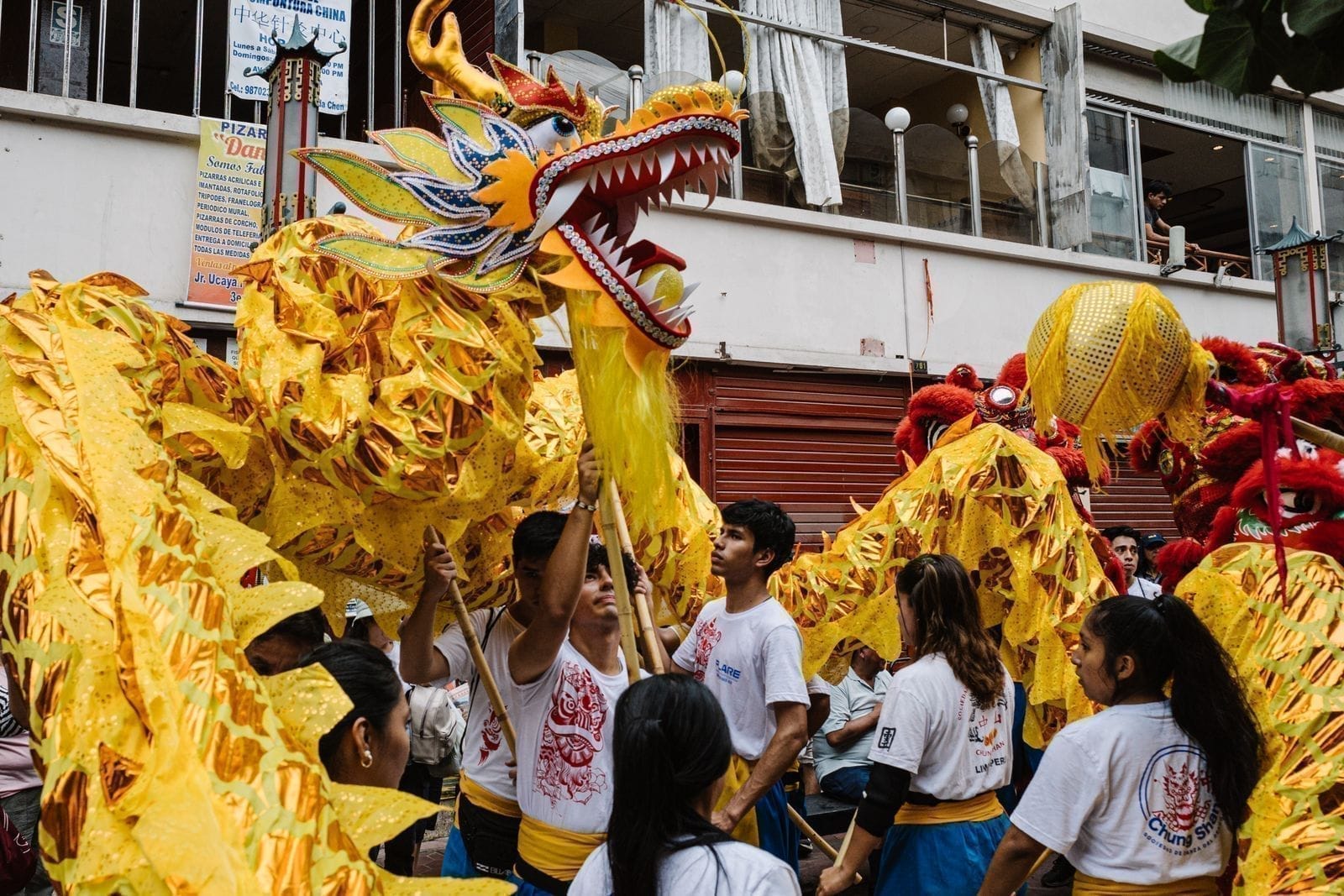
- The golden dragon — the highlight everyone waits for. A dragon dozens of metres long winding down the street, handlers running in sync with the drums, with fire-breathing in some stretches. Fun for kids and adults alike.
- The lion dance — several lion troupes leaping for ang pao (red envelopes) and climbing flower-pole stacks. Every move keeps you on edge.
- The Eng Kor — performers paint their faces to channel Chinese heroes, carrying staffs and marching in formation with a fierce stance. It's a signature of this festival.
- Drum troupes and the Hainanese bowl dance — drum and cymbal bands set the rhythm for the whole parade, while the Hainanese bowl dance (rum thuai) is an old performance you'll rarely see anywhere else.
- The deity palanquins — the gods are carried on palanquins down the street, with people lining both sides at altar tables waiting to greet the procession.
Book the activities in your Nakhon Sawan trip ahead
Booking online ahead on Klook or GetYourGuide is usually cheaper than the gate and skips the queue. Pick only the experiences you actually want — prices and availability are shown live on each site.
Day 0 — Arrive the evening before, walk the shrines, taste the Chinese food
Arriving a day before the parades makes everything easier. You check in before the crowds pile in, explore the town, scope out a viewing spot, and pray at the shrines without being shoulder to shoulder with the crowd. By this point the Pak Nam Pho market is already decked out in red lanterns — it photographs beautifully.
Evening before the parade — pray, walk the market, taste Chinese food
Tip for praying at the shrines
If you're serious about coming to pray, you can bring your own incense, candles, fruit, and red envelopes — or just buy a ready-made offering set at the shops in front of the shrine. Avoid the late morning of parade days because it's packed; come to pray the evening before for a calmer atmosphere.
Day 1 — The night parade (Chiu Sa), the highlight night
The night parade, or "Chiu Sa" (19 Feb in 2026), is the one a lot of people love most, because the lit-up dragons and lions run through the dark with fireworks and coloured lights — a real spectacle. Rest during the day to save your energy, eat your way through the festival stalls, then go claim a viewing spot from early evening.
Rest in the morning, walk the festival in the afternoon, watch the night parade
Making the most of the night parade
If you're bringing young kids or older relatives, pick a spot with a seat or a kerb where you can stand for a long stretch. Bring water and a hand fan, because standing for a long time in a crowd can get hot. To get a good shot of the lit-up dragon, turn on your phone's night mode and find a spot where the street lights don't glare back into the camera.
Day 2 — The day parade (Chiu Si), then grab some souvenirs
The day parade, or "Chiu Si" (20 Feb in 2026), is a big procession where you see the details more clearly than at night — the bright costumes, the outfits, the Hainanese bowl dance, and the deity palanquins passing by for people on both sides to pay their respects. If you like photos where you can actually see faces, the day parade is easier to shoot.
Watch the day parade, make a farewell prayer, buy souvenirs to take home
On parking and getting around during the festival
During Chinese New Year, many streets in town are closed for the parades — cars can't get through and parking fills up fast. If you're driving in yourself, park outside the festival zone and walk in, or stay at a hotel with its own parking. Check the road-closure announcements from the festival page ahead of time so you can plan your parking better.
Festival Chinese food you have to try
The Pak Nam Pho Chinese New Year is heaven for anyone who loves to eat, between the festival stalls and the old-school shops in the market. Here are the Chinese dishes people recommend most when you come during the festival.
Knife-fish ball noodles
The town's signature. Bouncy fish balls made from real knife fish, in a clear broth — even better with a side of knife-fish cake. This is the first dish Pak Nam Pho locals will point you to.
Ko Yom steamed rice-skin dumpling noodles
Soft rice skin wrapped around a generous filling, steamed fresh, dressed with dipping sauce and crispy pork. A local specialty that's hard to find elsewhere — try the tom yum version too.
Dim sum — dumplings & steamed buns
Old dim sum shops in the Pak Nam Pho market, served piping hot with tea in the morning. During Chinese New Year the queues are long.
Red pork rice & roast duck rice
Shops passed down over generations. Sweet, fragrant red pork with a rich sauce, and tender five-spice braised duck — homestyle Chinese food the locals actually eat.
Pak Nam Pho mochi & daifuku
The town's signature souvenir — soft mochi dough with mung bean, sesame, or custard filling. The original shops are around Sawan Withi Road, perfect to take home as a Chinese New Year gift.
Sticky rice cakes, khanom thian & Chinese pastries
Auspicious Chinese New Year sweets, sold all over the market during the festival — both to eat and to offer to the gods. The mung bean and salted egg pastries are fragrant and rich.
Where to stay during Chinese New Year
Chinese New Year in Pak Nam Pho is the town's high season — hotels in the centre fill up fast and prices climb above normal. If you're coming, book several weeks ahead. The best location is in the town centre near the parade route, because you can walk to the festival and don't have to gamble on traffic.
In town near the Pak Nam Pho market
Walk to the shrines and the parade route, and get back to your hotel easily after the night parade. The best fit for this plan, but rooms are hard to get — book quickly.
Hotels with their own parking
Parking is very scarce during the festival. A hotel with its own lot cuts out a big headache if you're driving in.
Which part of the festival suits whom
- Night parade (Chiu Sa) — for people who love the atmosphere, fireworks, lights, and energy. The lit-up dragon is the most dazzling, but it's crowded and hot.
- Day parade (Chiu Si) — for people who like detailed photos: costumes and the bowl dance are clearer, and it suits older relatives and kids, but you'll need sun protection.
- Weekdays during the festival (10–18 Feb) — for people who don't want the crowds. You can pray, walk the market, watch the stage performances, and taste the food more comfortably, and rooms are easier to find than on the two parade days.
- Coming with a big family — stay in town, focus on walking around, avoid driving into the festival zone, and set a meeting point in case anyone gets separated in the crowd.
Rough cost per person
Here's a rough two-night budget per person during Chinese New Year, not counting travel to Nakhon Sawan. Accommodation costs more during the festival, around 900–1,800 THB per room per night (cheaper once split). Food and festival snacks for the whole trip run around 600–1,000 THB. Offerings and souvenirs are up to you, around 300–600 THB. All in, two nights comes to roughly 1,800–3,000 THB per person, depending on how early you managed to book your room.
Want the full rundown on where to stay and eat across the city?
See the Nakhon Sawan travel guide →