🔄 Updated 21 Jun 2026
Ask anyone from Nakhon Sawan what you have to eat here and most answers circle back to the Chinese-style food in the Paknampho quarter — featherback fish balls, noodle soup, congee with side dishes, rice porridge, and the mochi sweets that have become the city's signature souvenir. The nice part is that most of the shops are within walking distance of each other in one quarter, and prices are still easy on the wallet like a smaller city. We've put the dishes worth trying and the areas worth walking all in one place.
Paknampho dishes worth trying
These are the dishes most tied to the Paknampho name, running from the famous must-try ones down to the snacks and local sweets. The prices below are rough figures from typical street-food shops around town and will move up or down depending on the shop and the time of year.
Featherback fish ball noodles
The city's most famous dish. The featherback fish balls are bouncy and chewy, made fresh, and you'll find them boiled, in noodle soup, and as fried fish cakes (tod man pla krai). A well-known spot, Nai Ti Featherback Fish Balls 3 Rod, is on Sawanwithi Road and stays open from late morning to evening.
Mochi sweets
Nakhon Sawan's signature souvenir — soft, chewy dough with a generous filling, in plenty of flavors from peanut and black sesame to cream and newer varieties. Several original shops sit around Sawanwithi Road, and they work just as well as a snack or something to carry home.
Congee with side dishes (khao tom kui)
A late-night meal in the Chinese-Thai tradition: hot rice congee eaten with several small plates of side dishes. An old-school spot like Khao Tom Nai Chuea has been around for decades, with standouts like canned-fish salad, crispy pork, fish cakes, and various stir-fries.
Pork congee with fermented tofu
A breakfast staple in a Chinese-heritage town: smooth rice porridge with minced pork and a soft-boiled egg, eaten with deep-fried dough sticks. Some shops have fermented tofu and offal to add on. Easy to find around the morning market and the municipal market.
Pork satay
A popular snack at the riverside market in the evening — marinated grilled pork with a fragrant char, dipped in peanut sauce with cucumber relish. Easy to graze on while you wander the market, and just a few baht a skewer.
Fried oyster omelette (hoy tod / or suan)
Crisp on the outside, soft inside, with oysters, bean sprouts, and egg, served with seafood dipping sauce. Another dish you'll find at the stalls in the riverside market, and it's best eaten hot right off the griddle.
Rad na / stir-fried noodles (kuay tiew kua)
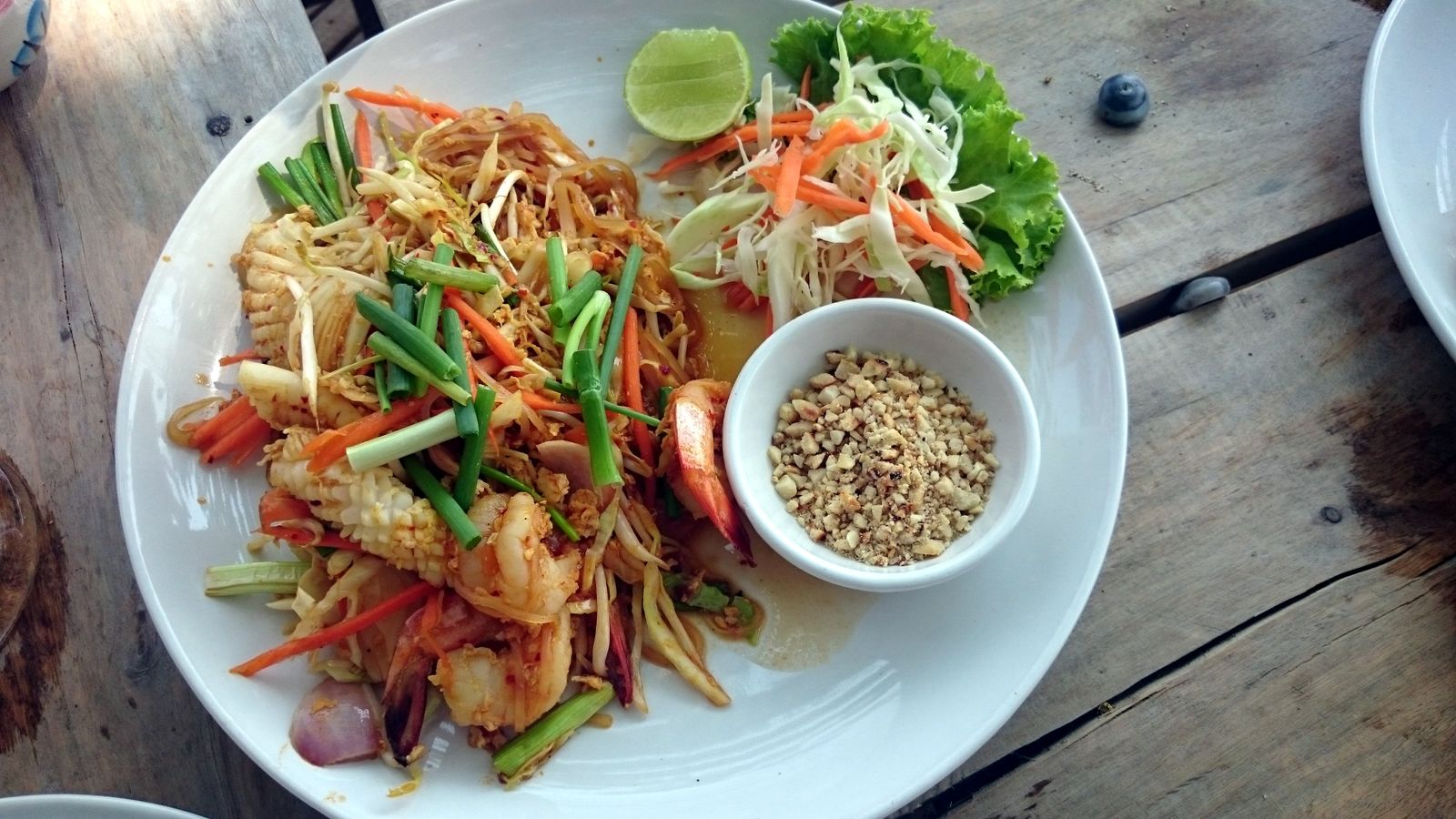
Wide rice noodles wok-fried over high heat with a thick gravy, or dry-fried with egg — an easy plate sold at the noodle stalls in the market. Quick to order and filling, a good main meal while you walk.
Khanom tuay & local Thai sweets
Finish with something sweet — khanom tuay, little coconut-cream cups with a salty-rich topping, plus Thai sweets like khanom piakpoon and khanom kluay sold at stalls in the fresh market and the riverside market. Cheap and easy to snack on.
Tip
A lot of the Chinese-style food in Paknampho splits into two windows — breakfast (congee, rice porridge, noodles) and the late evening into night (khao tom kui, street food at the riverside market). If you want to eat the full range, plan to come twice, morning and evening, and you'll catch two different sets of dishes.
Want to taste deeper? Try a Nakhon Sawan food tour or cooking class
Half a day with a local who knows the lanes — or cooking a dish yourself — teaches you more than just eating. Book ahead on Klook or GetYourGuide.
Eating areas in Paknampho
Paknampho is an old quarter where the markets cluster close together — you can walk between them or hop a short ride. These are the main areas where locals go to eat, each with its own opening rhythm.
100-Year Riverside Market (evening riverside market)
An evening eating area along the Chao Phraya River around Daowadueng Road, with hundreds of street-food stalls — savory dishes, sweets, and snacks. Open roughly 5–10 PM, it's perfect for trying lots of things in one meal.
Nakhon Sawan Municipal Fresh Market
The fresh market in the center of town, packed with breakfast options — congee, rice porridge, noodles, Thai sweets — plus fresh produce. This is where locals shop and eat breakfast for real.
Talat Lao (old trading quarter)
An old riverside shophouse quarter that was once the trading hub. Wander past old buildings and long-standing shops, with old Chinese eateries tucked down the alleys — good for anyone who likes the feel of an old town.
Sawanwithi Road
The street of the city's famous shops — featherback fish balls, original mochi makers, and souvenirs. You can find food and things to carry home all on one street.
Paknampho at Chinese New Year
The busiest time of year in Paknampho is the Chinese New Year festival. The city has held its Chao Pho Chao Mae Paknampho procession for more than a hundred years, and it's the Chinese New Year celebration this city is known for. The festival runs about twelve days around Chinese New Year (roughly late January to early February, depending on the Chinese calendar each year), and the whole quarter fills up with food stalls, processions, lion and dragon dances, and lights.
- Festival food court — during the festival there are hundreds of food and sweet stalls combined, both the city's famous shops and general street food, and you can graze the whole way through.
- The deity procession — the highlight is the procession with lion and dragon dances. This is the most crowded stretch, so come early in the evening to get a good spot.
- Chinese New Year offerings — in the days before Chinese New Year, the Paknampho market buzzes with ritual offerings: pork, chicken, fruit, khanom keng and khanom tian. If you want to see the real Paknampho Chinese way of life, this is the time.
Planning around the festival
Chinese New Year draws big crowds and hotels in town fill up fast, so if you're set on coming during the festival, book your hotel ahead and allow extra time for parking and walking — many streets in the quarter close off for the event.
A 2-day Paknampho eating plan
If you've got time to stay one night, here's a pace that hits the morning and evening food without rushing. Swap shops for whatever's open on the day.
Morning at the fresh market, evening at the riverside
The old town and things to take home
Plan a full eat-and-explore trip across all of Nakhon Sawan
See the Nakhon Sawan guide →