🔄 Updated 21 Jun 2026
Nakhon Sawan sits about 230 kilometres from Bangkok, roughly a 3-hour drive or coach ride, which makes it a neat fit for a short 1- or 2-night trip. But what sets Nakhon Sawan apart from your average drive-through town is that its main draws are tied tightly to the season — go in the wrong month versus the right one and the experience is completely different. So this guide starts with timing first.
When is the best time to visit Nakhon Sawan?
The short answer is November through February. This is the cool season for the upper central plains: comfortable weather, the rain is done, and it's when the town's two big draws line up at the same time — the migratory bird flocks at Bueng Boraphet and the Pak Nam Pho Chinese New Year festival. If you have the freedom to choose, aim for this window.
- Nov–Feb (cool season · peak) — cool, comfortable weather, waterbirds fill Bueng Boraphet, the red lotus lake is in bloom, and the views from Khao Kop and the city tower are crisp. The best value of the year.
- Mar–May (hot season) — very hot with harsh midday sun, the birds start heading back, and the red lotuses fade. Better suited to in-town sightseeing, temples and cafes than baking by the marsh.
- Jun–Oct (rainy season) — lush and green but with frequent rain, high water levels in the marsh and some spots that are awkward to walk. Good for travellers who don't mind the rain and want to dodge the crowds.
Winter birdwatching at Bueng Boraphet — how to actually see the birds
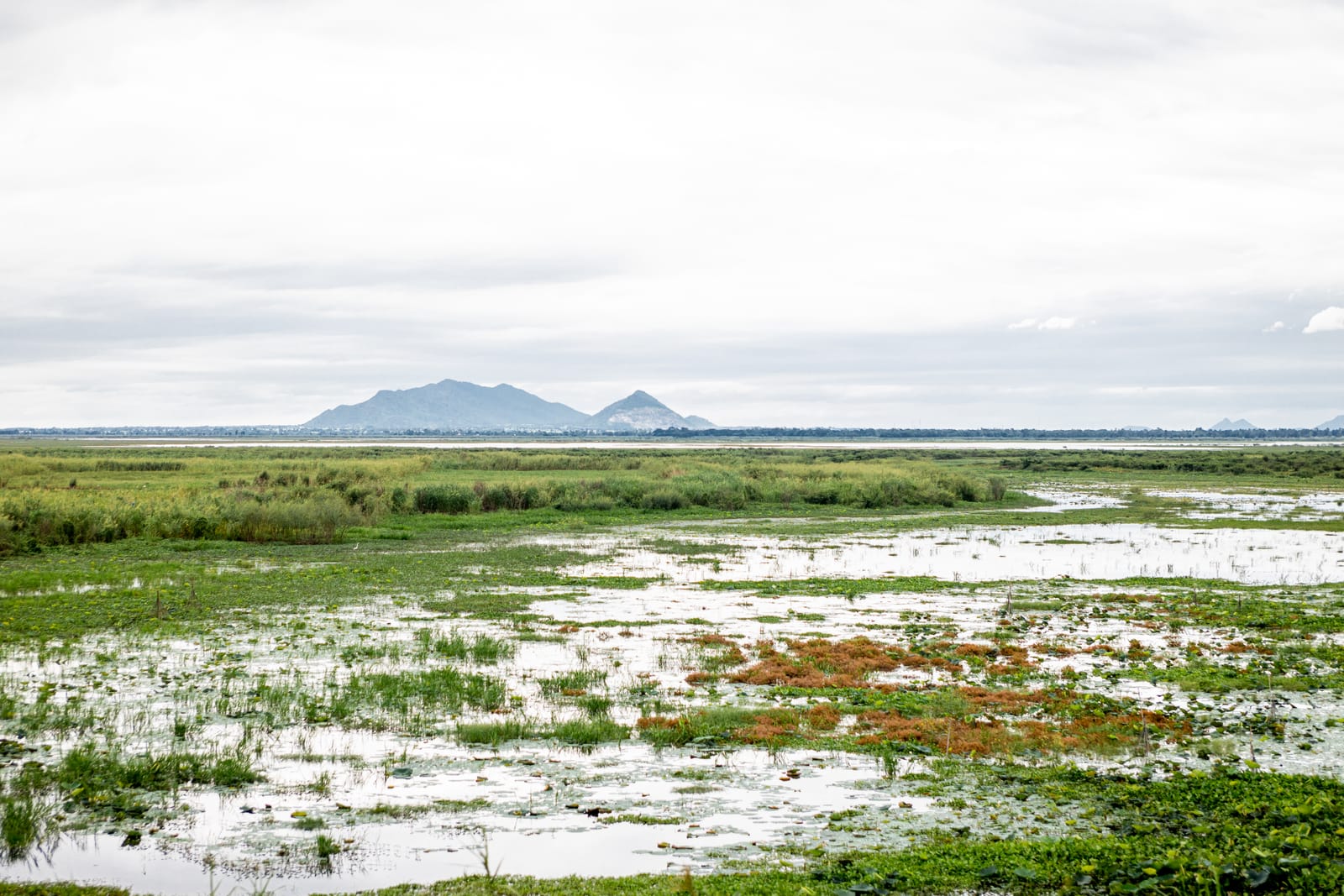
Bueng Boraphet is Thailand's largest freshwater marsh, covering more than 100,000 rai. When the cool season arrives, ducks and migratory birds from colder regions fly down to rest here in big numbers. The peak for bird numbers runs roughly November to March, with the real high point in January–February. Birds you'll often spot include lesser whistling ducks, coots, oriental pratincoles, pelicans, and several kinds of shorebird.
When the birds are out feeding
To see plenty of birds, you have to time it right. In the morning the birds leave their roosts around 06:00–09:30, and in the evening they head back around 16:30–18:00. In the harsh midday sun the birds take cover, so a noon visit rarely turns up much. Aim for early morning or late afternoon.
Beyond the birds, the same window is red lotus season. The lotus fields on the Ban Rang Bua–Tha Tako side turn the whole expanse pink, and you can take a boat out to see them in the morning — a sight most people who come to Nakhon Sawan in the cool season don't skip.
Pak Nam Pho Chinese New Year — the big annual festival in Jan–Feb
If there's one event the whole country knows Nakhon Sawan for, it's the Pak Nam Pho God and Goddess Procession, usually just called the Pak Nam Pho Chinese New Year. It's been running for over a hundred years and is one of the longest and largest Chinese New Year celebrations in Thailand, with dragon and lion dances, Eng-Kor performers, deity processions, light and sound shows, and fireworks.
2026 schedule
The 2026 festival (its 110th year) runs February 10–21, 2026, for 12 days and 12 nights. The highlight is the night procession (Chiwsa) on the night of February 19. If you're going during this period, book your accommodation several weeks ahead, because in-town hotels fill up fast and prices climb.
On procession days the crowds are intense and many roads are closed. It's best to park a bit further out and walk in, or stay somewhere in town within walking distance for the easiest time. Bring water and a hand fan, and make your peace with the parking situation in advance.
Budget — how much does a Nakhon Sawan trip cost?
Nakhon Sawan isn't an expensive town: food is cheap and there's accommodation at every level. The figures below are rough budgets per person per day (not counting getting there from Bangkok) to use as a planning starting point.
Budget
Stay at a guesthouse or small in-town hotel, eat street food and local spots, and stick to free sights like Sawan Park, Khao Kop and the source of the Chao Phraya River. Get around town by motorcycle taxi or a rented scooter.
Comfortable
Stay at a 3-star in-town hotel with breakfast, mix sit-down restaurants with street food, rent a car or take a taxi out to Bueng Boraphet, and leave room for a boat trip, cafes and souvenirs.
No limits
Stay at the best hotel in town or a riverside resort, eat at well-known restaurants and try the river fish, have your own car or a full-day rental, and budget for plenty of souvenirs and cafes.
Add to your budget for Chinese New Year
If you go during the Pak Nam Pho Chinese New Year, in-town room rates usually rise above normal — sometimes double. Budget more for accommodation than on a regular day, and book as early as you can.
How to get to Nakhon Sawan
- Private car — from Bangkok, take Phahonyothin Road onto Highway 32 through Ayutthaya, Ang Thong, Sing Buri and Chai Nat, about 240 km and roughly a 3-hour drive. The most flexible option if you're heading out to Bueng Boraphet and spots outside town.
- Coach / van — departs from Mo Chit with several runs a day, taking about 3 hours. Fares run roughly ฿290–600 depending on the company and seat class.
- Train — the northern line stops at Nakhon Sawan station, taking about 4 hours, with fares starting in the low hundreds of baht. Slower than the road but with more atmosphere — good if you're not in a hurry.
Public transport within Nakhon Sawan town is limited. If you arrive without a car, it's best to rent a car or scooter, use a ride-hailing app, or take a motorcycle taxi for short hops. For sights outside town like Bueng Boraphet, getting around on your own is far more convenient.
What to wear for a comfortable trip
What you wear mostly comes down to the season you go in — the cool season and the hot season are almost two different stories. Plan your clothes along these lines and you'll be most comfortable.
Cool season (Nov–Feb)
Warm and pleasant by day, genuinely cooler in the early morning and evening — especially by the marsh at dawn. Pack a light jacket or sweater you can keep on hand, with a short-sleeve top underneath so you can peel off layers.
Hot season (Mar–May)
Hot with strong sun. Go for breathable clothing, a hat, sunglasses and sunscreen, drink water often, and avoid being outdoors around midday.
Visiting temples / shrines
Nakhon Sawan has both temples and Chinese shrines. If you plan to go in and pay respects, wear a top with sleeves and knee-covering trousers or a skirt — better to err on the modest side.
Shoes matter more than you'd think
A Nakhon Sawan trip involves more walking than you'd expect — the 400 steps up Khao Kop, walking around Sawan Park, and the Chinese New Year festival. Sneakers or comfortable walking shoes help a lot. Avoid brand-new shoes you've never broken in.
What to pack
- Camera / zoom lens — if you're set on birdwatching at Bueng Boraphet, a long zoom lens or a pair of binoculars helps a lot, since the birds are far from shore.
- Sunscreen + hat + sunglasses — the sun is strong by the marsh and up on the hills, so you'll want these even in the cool season.
- A light jacket or sweater — for cool-season mornings and evenings, and for chilly air-con on the road.
- Mosquito repellent — the marshside and red lotus fields have mosquitoes in the early morning and evening.
- Cash — many local shops and street food stalls take cash or PromptPay transfers, so keep some cash on hand.
- A water bottle + folding umbrella — protection against both sun and end-of-season rain, making a full day of walking easier.
How many days should you set aside?
There are several ways to do Nakhon Sawan, depending on whether you just want the in-town sights or want to head out into nature too. Have a look at these rough itineraries before you plan in detail.
1 day, morning to evening
2 days, 1 night
Want a detailed, hour-by-hour itinerary?
See the Nakhon Sawan travel guide →