🔄 Updated 21 Jun 2026
Nan souvenirs split neatly into two camps. On the fruit side there's makfaichin (wampee), which you can eat fresh in season (roughly June–August) and find in processed forms year-round. On the food side there are local staples like sai ua (herby grilled sausage) and crispy pork that travel well and go perfectly with sticky rice back home. We've ordered everything below, with real shop locations and the prices we actually saw.
Makfaichin — the Nan fruit you have to buy
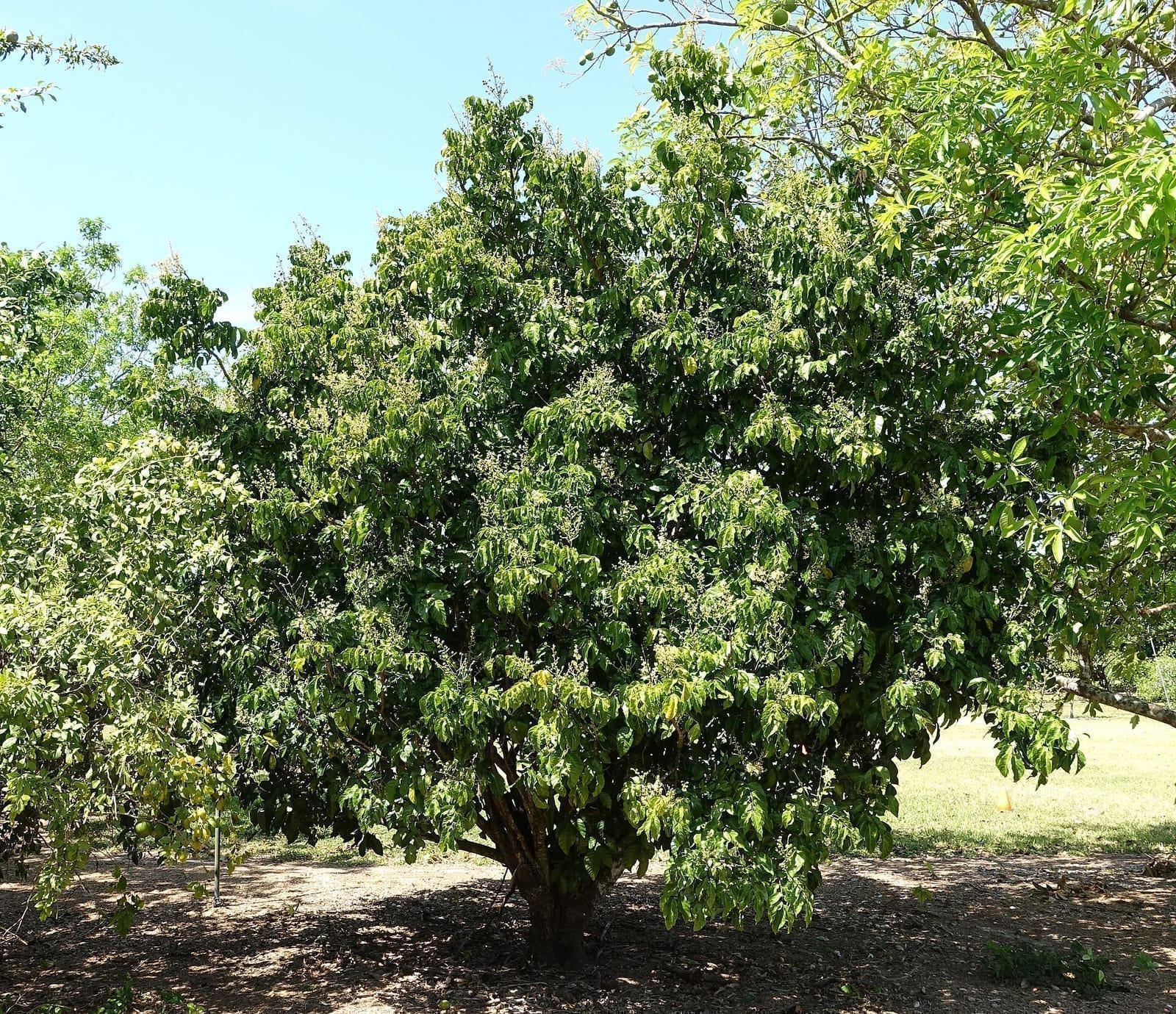
Makfaichin (wampee) is in the same family as langsat and longkong, but the fruit is bigger, the flesh firmer, and the flavour a refreshing sweet-sour. Nan grows a lot of it around Phu Phiang district and the edges of town. Fresh fruit comes out mid-year, but if you visit out of season you can still take home processed versions — dried, candied, jam, and makfaichin juice.
Fresh makfaichin
In season roughly June–August, sold at the morning market and roadside fruit stalls around Phu Phiang. Pick fruit with taut, golden-yellow skin and plenty of flesh — sweet with a sour edge. It tastes best straight from the orchard.
Dried makfaichin
The easiest one to bring home as a gift — it keeps for ages and packs easily. The flesh is chewy and the sweetness more concentrated; some makers still dry it over a low charcoal fire the traditional way, which gives it a distinctive aroma. Sold in small taster sachets and big bags alike.
Candied / makfaichin jam
Candied makfaichin is simmered in sugar until chewy and syrupy-sweet — good as a snack or in desserts. The jam version is smooth and spreadable on toast. A slightly more unusual souvenir than the dried fruit.
Makfaichin juice
Juice pressed from makfaichin — sweet-sour and refreshing, great served cold. Some community enterprises bottle it, so you can take it home as a drink-style souvenir, but it has a much shorter shelf life than the dried fruit, so drink it soon.
How to pick good makfaichin
For sweet fresh fruit you have to time the season — if you come to Nan outside mid-year, fresh makfaichin is hard to find, so go for dried or candied instead. With the dried kind, you can ask for a taste before buying at almost every shop; choose the ones that are chewy rather than hard and dry.
Want to taste deeper? Try a Nan food tour or cooking class
Half a day with a local who knows the lanes — or cooking a dish yourself — teaches you more than just eating. Book ahead on Klook or GetYourGuide.
Sai ua + crispy pork — local eats
Nan-style sai ua differs from the Chiang Mai version in that many makers add makwaen (a fragrant local peppercorn), giving it a deep, aromatic smell and a gentle heat that doesn't sting. The rest of the mix is all there too — galangal, lemongrass, kaffir lime leaf. Take it home, grill or fry it, and eat it with sticky rice, paired with thin, crunchy crispy pork.
- Herb sai ua — minced pork mixed with curry paste and makwaen, usually around ฿40 per 100g or roughly ฿400/kg at the market. Freshly made at the shop is more fragrant than the pre-packed kind.
- Crispy pork — comes with fat (kap mu) or without (kap mu khai), in thin crunchy sheets. Eat it with chilli dip or just snack on it; it keeps longer than sai ua and is easy to pack.
- Nam phrik num / nam phrik ta daeng — the natural pairing; many sai ua shops sell these alongside, perfect for dipping crispy pork.
- Jin som (fermented pork) / mu yo — for fans of sour fermented pork; the bigger souvenir shops usually carry these all in one place.
Bringing it home
Sai ua and makfaichin juice are fresh items. If you're travelling far or flying back, ask the shop to vacuum-pack them or use a cool box, then get them into the fridge as soon as you're home. Crispy pork and dried makfaichin pack easily — no need to worry about those.
Where to buy
There are basically three options. The morning market if you want fresh goods at good prices; souvenir shops in town if you want everything in one place, nicely packed and ready to gift; and the OTOP centre if you want processed products straight from the community enterprises.
Nan Morning Market (Tang Chit Nusorn Market / Kat Chao)
The morning market in the centre of town, with sai ua, crispy pork, chilli dips and seasonal fruit. Fresh goods are usually around 20–30% cheaper than the souvenir shops. Stalls like Pa Jum's sell crispy pork, sai ua and nam phrik num — go early while everything's still in stock.
Souvenir shops along Ratsamnuay Road / in the old town
Sai ua and souvenir shops in town that make their own herb sai ua, around ฿40 per 100g or roughly ฿400/kg, plus pork floss, crispy pork, jin som and several chilli dips. Open daily, around 09:00–17:00.
Baan Thua Lisong (peanutnan.com)
A long-running Nan souvenir shop with dried makfaichin in several sizes, starting around ฿40 up to big bags, plus roasted peanuts, honey rice crackers (khao taen) and other processed goods. Buy in store or order online.
Sai Ua Khun Ya (Nan Nakhon Airport)
A souvenir spot near the airport, handy to swing by before your flight home — sai ua, crispy pork and Nan souvenirs to grab before you board.
Nan OTOP Centre / Phiang Tawan brand
Processed goods from community enterprises — Phiang Tawan dried makfaichin, Doi Suan Ya Luang coffee, Bo Kluea salt and woven textiles. Buy direct and support the community.
Other Nan souvenirs worth grabbing
- Doi Suan Ya Luang coffee — coffee grown on Nan's highlands; take it home as beans or ground, around ฿150–400 per pack.
- Bo Kluea rock salt — mountain salt from Bo Kluea district, available as ground salt and as soap / salt-based products, roughly ฿80–250.
- Nam lai weave / Tai Lue textiles — distinctive woven patterns from Ban Nong Bua and the Tai Lue communities, priced from a few hundred to a few thousand baht depending on the detail.
- Nan silverware — silverwork in local patterns, good for a small keepsake.
Plan a full eat-and-shop trip around Nan
See the Nan travel guide →