🔄 Updated 21 Jun 2026
Nasi dagae (Nasi Dagae) comes from the local Malay dialect and loosely means "trader's rice" — rice that travelers carried to eat on the road. The dish traces its roots back to the Malaysian side and became a regular breakfast across Thailand's three southern border provinces. In Pattani you'll find it at tea shops and morning-market stalls, eaten with a glass of hot tea or pulled tea.
What is nasi dagae, and how do you eat it?
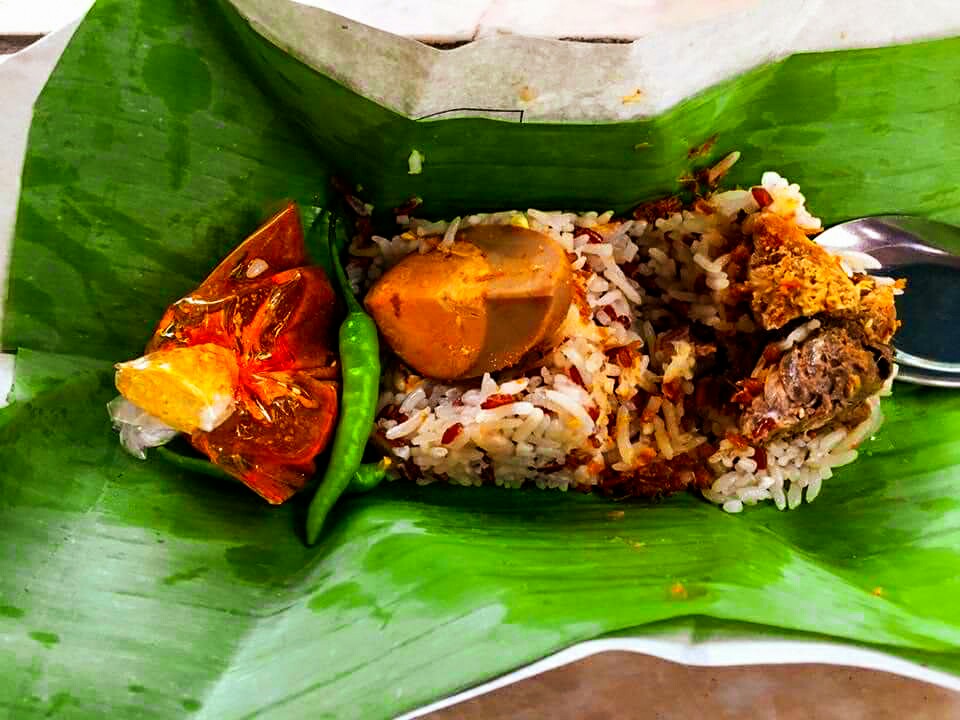
The heart of the dish is rice cooked with thick coconut cream, ginger, shallots, and mild spices, then steamed twice so the grains soak up the coconut aroma all the way through. Some cooks mix white rice with sticky or red rice to get a few different textures in one plate. It's served with a rich coconut curry — the star is tuna curry (some shops offer chicken curry too) — and finished with three side dishes you can't skip.
- Tuna curry — a southern-style coconut curry, deep and fragrant with spice. The tuna is tender and a little oily, which rounds the curry out. Some shops swap in short-bodied mackerel or chicken curry instead.
- Saman — minced shrimp simmered with coconut milk and palm sugar until it's almost caramel, sweet-salty to cut the richness. It's the quiet hero that Pattani locals ask for by name.
- Boiled egg — halved and set beside the rice to fill you up a bit more.
- Braised banana peppers — peppers simmered until soft, mild in flavor, helping cut the richness of the coconut.
The local way to eat it is to mix the rice and curry together, then take it bite by bite with the saman, alternating with the egg and peppers. The flavor leads with sweet, fragrant coconut, followed by a soft salty-spicy note from the curry paste. It's a breakfast that fills you up without sitting too heavy.
Get there in time
Nasi dagae really is a morning-only thing. Many shops open around 6 a.m. and sell out before nine. If you want to try a well-known shop, going before 8 a.m. is the safer bet — show up late and you risk a "sold out" sign.
Want to taste deeper? Try a Pattani food tour or cooking class
Half a day with a local who knows the lanes — or cooking a dish yourself — teaches you more than just eating. Book ahead on Klook or GetYourGuide.
Nasi dagae shops in Pattani that locals go to
We've picked shops that are still open and that people keep talking about, ordered by reputation and how easy they are to reach. Prices are rough ranges and may shift with ingredient costs, so it's worth a quick call ahead if you're traveling a long way.
Nasi Dagae Sabarang
The famous spot in town, behind Benchamarachuthit School on Sabarang Road. It's been open for over thirty years, selling nasi dagae as its main dish alongside other local breakfasts. The tuna curry is rich and fragrant with curry paste — this is the shop people think of first when nasi dagae in Pattani comes up.
Mamayah Nasi Dagae (the old shop)
A long-running Muslim shop in the Sateng Nok area, known among people who love local food. The flavors are old-school, with saman that's sweet and fragrant in just the right balance. Worth a stop if you're staying on the outskirts of town.
Prajan Nasi Dagae
Another old-timer that's been open for over thirty years, a name Pattani locals know well. It sells rice-and-curry plates and nasi dagae in the morning, with bold, properly southern curry-paste flavor.
Nasi Dakae di Fathoni
A shop out-of-town reviewers often mention, focused on nasi dagae. The coconut rice is fragrant, with a thick piece of mackerel curry, a boiled egg, and banana peppers. It opens at 6 a.m. and usually sells out before 8:30.
Tea shops around Tesawiwat Market
The in-town market area has several tea shops that sell nasi dagae in the morning. Order it with pulled tea or old-style coffee. The vibe is locals sitting and chatting before the day starts — good if you'd rather try it without hunting down one specific shop.
Nasi dagae stalls at the municipal morning market
At the in-town morning market, vendors carry trays of nasi dagae and sell it by the packet, easy to take back to your room. Prices are friendly, and it's perfect if you're already an early riser walking the market.
Nasi dagae shops around Yarang
If you drive out of town toward Yarang district, there are several Malay breakfast spots serving nasi dagae alongside dishes like nasi kerabu and roti. Good to stop at on the way to sights outside town.
Tea shops in the Rusamilae area
Near Prince of Songkla University, Pattani campus, there are tea shops where students and locals stop for breakfast. Some mornings they have nasi dagae with the full set of sides, in an easygoing setting.
A note on the shops
The opening hours and prices above are rough ranges from the latest info we could find. Small shops and market stalls may adjust their hours by day or during the fasting month, so it's worth checking the shop's page or asking a local again before you head out.
What to drink with nasi dagae
The classic pairing is hot tea or pulled tea (milk tea pulled until it foams), whose sweet creaminess plays well against the salty curry. If you don't drink things very sweet, hot tea without milk works just as well. And if you're still hungry, most tea shops have roti and local sweets you can add on, so you can stretch it into a long, lazy breakfast.
What to know before you go to Pattani
- Respect Muslim-Malay culture — Pattani is a predominantly Muslim city and most shops are halal. Dress modestly and keep covered, especially near mosques or in residential communities.
- During the fasting month (Ramadan), many breakfast shops close or shift their hours. If you're visiting then, check ahead.
- Breakfast sells out fast — plan to wake up early enough to catch it; don't count on a late-morning meal.
On safety and travel
Pattani is in Thailand's southern border region. Before you actually travel, follow the news and up-to-date safety advisories from official agencies in case you need to adjust your plans. For the most part, life in town runs as normal and locals are friendly, but checking the latest information first makes for an easier, calmer trip.
Want to eat your way through Pattani's Malay food in full?
See the Pattani Malay food guide →