🔄 Updated 21 Jun 2026
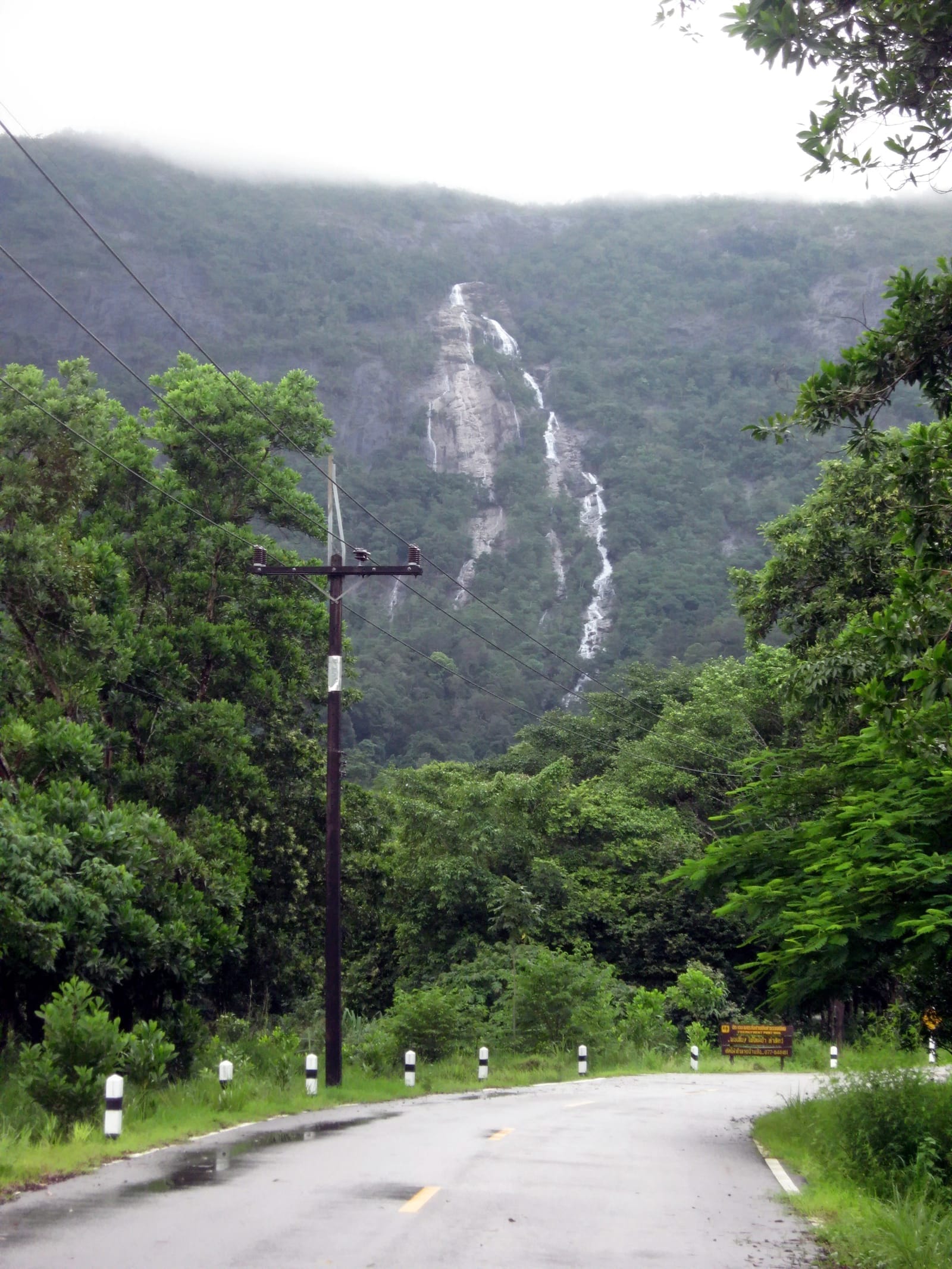
Ngao Waterfall sits inside Ngao Waterfall National Park in Ngao subdistrict, Mueang Ranong district. It tumbles down the steep cliff face of a mountain range at around 500 meters above sea level. One thing locals in Ranong are proud of is that you can see Ngao's water from a distance along Phetkasem Road — drive past and you'll spot the white line of water draped over the green mountain, so you know how big it is without even reaching the falls. Turn off the main road into the side lane for another 700 meters or so and you're at the park headquarters and parking lot.
Another thing that gives Ngao a name among nature lovers is that it's home to the Phu Phan crab, a freshwater crab species first discovered in the world right at this waterfall. It has striking colors — white, purple and blue — and it's rare, found only around here. Your best chance of seeing one is early in the rainy season when the crabs come out along the streams. That's what sets Ngao apart from your average waterfall: it's not just water to splash in, it's an ecosystem people still haven't fully explored.
Swimming in Shallow Pools, Good for Families
The main thing most people come to do is get in the water. From the parking lot, a short walk along the path brings you to a pool you can swim in — clear, cool water flowing down from the springs up on the mountain. The water level in the swimming area isn't very deep, so kids can get in with an adult close by. It's where Ranong families come to cool off on their days off. The pool is ringed by shady forest, with boulders to sit on and set your things down, and the air is noticeably cooler than in town because you're right up against the forest with mist in the air. After a swim you can easily settle in for a packed lunch.
Swim safely
The boulders around the pool are very slippery, especially where there's moss. Wear strap-back sandals or rubber shoes for better grip than flip-flops. Don't climb in close under the cliff where the water drops straight down — the force of the water and falling rocks are dangerous. In the rainy season, if heavy rain falls up on the mountain the water can surge down fast, so if you see it turning murky or running unusually strong, get out of the pool right away. And keep an eye on kids at all times.
Want more out of Ranong? Book tours & activities
Booking online ahead on Klook or GetYourGuide is usually cheaper than the gate and skips the queue. Pick only the experiences you actually want — prices and availability are shown live on each site.
Nature Trail and the Upper Tiers
Besides swimming, the park has a nature trail that follows the stream up to the higher tiers of the falls. The lower stretch is an easy walk for anyone; the further up you go, the steeper and more slippery it gets, so it suits people who are a bit more into proper hiking. Along the way you'll hear the water, see big trees, and with some luck spot butterflies and forest birds on the path. Some points have signs naming the plant species if you feel like reading. If you'd rather not walk far, just sticking to the lower zone to swim and rest is plenty enjoyable — but if you're a hiker, the trail keeps going.
Entry Fees, Opening Hours and Facilities
- Entry fee — around 20 THB for adults, about 10 THB for children, plus roughly 30 THB per car for parking (this is the Thai rate; foreigners are charged separately)
- Opening hours — open daily roughly 08:00–16:30. Aim for morning to early afternoon so you have time to swim and walk comfortably
- Swimming — the swimming pool isn't deep, so it's good for families and kids. Highest water is in the rainy season; in the dry season there's less but you can still get in
- What's in the park — parking lot, restrooms, the nature trail, camping ground, and park bungalows for overnight stays
- Food — there are food and drink stalls near the turn-off and inside the park on weekends; on weekdays there may be fewer, so it's best to bring your own water and snacks
A note on prices and hours — the park's entry fees and opening hours can change with National Park Department policy and the season. During periods of strong flooding, staff may close the swimming zone for safety. If you're coming specifically to swim, check the weather first, and follow the warning signs and the staff's advice on the day above all else.
Getting to Ngao Waterfall
Ngao Waterfall is easy to reach because it's right by the main road. From Ranong town, take Phetkasem Road (Highway 4) heading south for about 13 km and you'll reach the turn-off to Ngao Waterfall in Ngao subdistrict. On the way you'll see the falls itself up on the mountain to your left. Turn into the paved side lane for another 700 meters or so and you're at the park headquarters and parking lot. It's only about a 20-minute drive from town. If you fly into Ranong Airport you're a bit further out — roughly half an hour by road.
Driving / rental car
From town, head south on Phetkasem Road for about 13 km — the signs are clear, then a short turn into the lane to the parking lot. Easiest option and you control your own timing.
Songthaew / motorbike taxi
No car? You can still go — charter a round trip from town and agree on the price with the driver first, since there's no regular service running into the park very often.
Join a tour / car with driver
Good for anyone who wants to see several spots in one day — you can pair Ngao Waterfall with the hot springs and the old town on a single trip.
When to Go
You can visit Ngao Waterfall year-round, but it looks different by season. The fullest, best-looking water is in the rainy season, roughly May to November, when the falls cover the whole cliff and look spectacular — though you have to watch for flooding and slippery trails. In the dry season, around December to April, the water drops and the falls aren't as full, but swimming in the pool is more comfortable and safer. October through December is also a good window for forest wildflowers and lush green nature. If you want to see the Phu Phan crab, come early in the rains when the crabs come out along the streams. We'd suggest arriving from morning to early afternoon, since you'll have more time to swim and the light is nicer than in the late afternoon.
Pair it with a hot spring in one trip
Near Ngao Waterfall, the Porang hot spring is about 7 km away — a natural hot spring that's less visited than the ones in town. After cooling off at the falls, you can stop in for a warm soak the same day, or loop back into town to soak at Raksawarin hot spring. It's a half-day nature trip that gives you both cold water and warm water in one go.
What Else to See Near Ngao Waterfall
- Porang hot spring — a natural hot spring about 7 km from the falls. It's a quieter spot people haven't all found yet, good for a warm soak after swimming at the waterfall
- Raksawarin hot spring — a hot spring in the middle of Ranong town with a free foot soak; loop back into town and stop by the same day
- Ranong Old Town — a district of old buildings with Sino-Southern architecture, good for walking, photos and finding a bite in town after the falls
- Khao Fachi / the grass mountain — scenic nature viewpoints around town that round out a nature-focused trip
Plan a full nature trip around Ranong
See the Ranong travel guide →