🔄 Updated 21 Jun 2026
Nong Bua Lamphu is one of Isan's smallest provinces — few people, a quiet town, and only a handful of big markets. But that's exactly why the morning food is still the real thing. The khao jee here is still grilled fresh, one ball at a time, and the local sweets are still handmade and seasonal, not factory stuff. If you like waking up early and grazing your way through a market, Nong Bua Lamphu suits you well, because the good food is clustered in just a few markets you can reach on foot.
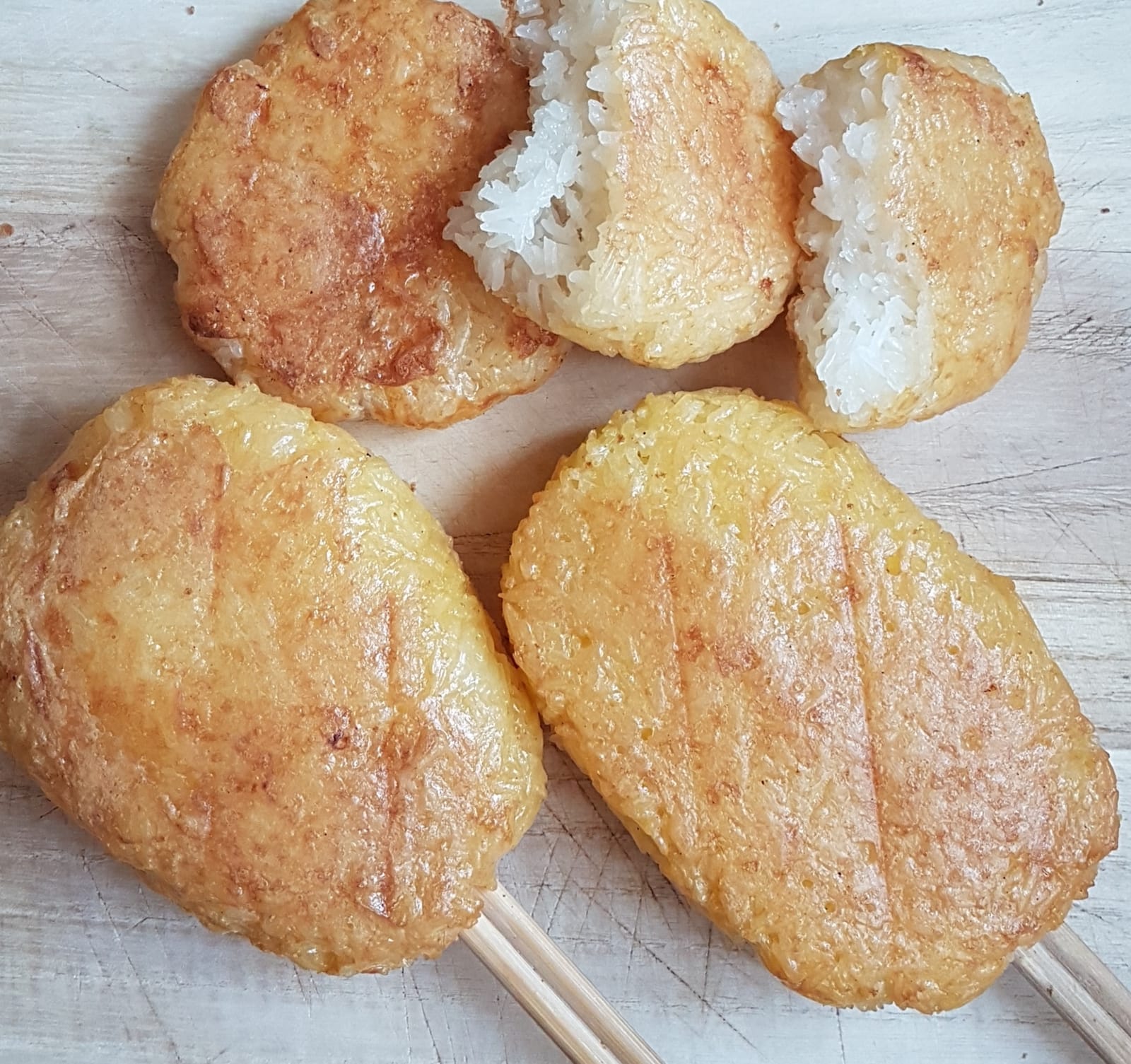
Egg-glazed khao jee — the star of an Isan breakfast
Khao jee is steamed sticky rice pressed into a ball on a skewer, brushed with salt, and grilled until the surface is crisp and fragrant. Just before it's done, it's dipped in beaten egg, brushed with another layer, and grilled again until the egg turns golden. You get a ball that's crisp outside, soft inside, smelling of fire and egg. It's good plain, or dipped in a little sugar the Isan way — a cold-season food that warms you up, and it costs just a few baht a ball.
- Egg-glazed khao jee — the classic and easiest to find, dipped in egg and grilled golden, around ฿5–10 a ball
- Plain khao jee (no egg) — just salted and grilled, with that toasty sticky-rice smell, eaten with a little sugar
- Cane-sugar khao jee — some stalls brush it with cane juice before grilling, leaving a sweet finish on the tongue
How to eat khao jee at its best
Khao jee is best hot off the grill. If you bag it up and leave it too long, it turns soft and loses its aroma. Buy a ball or two at a time and eat them right there at the grill. The cool season (November–January) is when khao jee sells best and is easiest to find.
Want to taste deeper? Try a Nong Bua Lamphu food tour or cooking class
Half a day with a local who knows the lanes — or cooking a dish yourself — teaches you more than just eating. Book ahead on Klook or GetYourGuide.
Morning markets worth grazing through
Nong Bua Lamphu's morning food is concentrated in two main markets. The in-town market is easy to reach if you're up early enough, while Huai Duea market takes a short drive out of town but rewards you with forest and country foods you won't find anywhere else.
Nong Bua Lamphu Municipal Fresh Market
The main morning market in the town center, open from 3am to 9am. It has everything — fresh meat and produce, ready-cooked food, and stalls of breakfast snacks: khao jee, banana sticky-rice parcels, steamed sticky rice, and local sweets. Easy to reach on Wiriyothin Road, near the night plaza and across from the post office.
Ban Huai Duea Market (forest-food market)
A well-known forest-food market at the foot of the hills in Non Than, along Route 210 between Udon Thani and Nong Bua Lamphu. Spread across several buildings, it sells seasonal country foods — wild mushrooms, bamboo shoots, honey, frogs, insects — plus steamed sticky rice, khao jee, grilled khanom jeen dough, and local snacks to eat there or take home. Wide parking lot and restrooms.
Pick the market by time of day
If you're up very early and staying in town, start at the municipal market — the snack stalls get going before sunrise. Once it's later in the morning, drive over to Huai Duea for the forest foods and souvenirs, since Huai Duea stays open until the evening and there's no need to rush.
Sticky-rice parcels & local sweets to try
Beyond khao jee, Nong Bua Lamphu's morning markets have plenty of handmade sweets to choose from. Most are traditional Thai–Isan treats made from sticky rice, coconut, and sugar — good alongside your khao jee, or to grab and take with you.
Khao tom mat (banana sticky-rice parcels)
Coconut-sweetened sticky rice wrapped in banana leaf, filled with banana or beans, steamed until fragrant. Eaten warm in the morning it's soft and just sweet enough — an Isan morning-market staple you'll find at almost every sweets stall.
Steamed sticky rice + grilled snacks
Hot sticky rice in a woven basket, paired with khao jee or the grilled chicken and pork skewers sold right next to it — a simple breakfast the way locals do it.
Handmade Thai sweets at the stalls
Banana cake, palm-sugar cake, steamed coconut cups, khao tom luk yon, and seasonal Thai sweets the vendors make themselves — the lineup rotates by the day, so ask the seller what's new today.
Grilled khanom jeen dough
A hard-to-find country snack sold at Huai Duea market — khanom jeen noodle dough grilled over fire until fragrant, fun to nibble on. It's an oddity outsiders rarely come across.
Edible souvenirs to take home from the market
Nong Bua Lamphu's souvenirs aren't fancy, but they're genuine country foods you can buy straight from the morning market. Stick to dried goods or things that keep a bit longer — they're easier to carry home.
- Dried wild mushrooms / pickled bamboo shoots — from Huai Duea market, they keep well and you can cook with them back home
- Wild forest honey — sold at the forest-food stalls, a souvenir people love
- Sticky rice / local rice — buy a bag to take back, easy on the wallet
- Thai sweets in banana leaf — if you're not traveling far, grab some khao tom mat and banana cake, but eat them within a day or two
Straight talk
Nong Bua Lamphu is a small town, and the market food rotates with the season and with whichever vendors show up that day. Something here today might be gone tomorrow, so if you spot something you like, buy it then and there. Bring cash too — most market stalls still don't take transfers.
Make the most of a morning market walk
From the town market out to Huai Duea
Want to spend a full day in Nong Bua Lamphu? Read the city guide next
See the Nong Bua Lamphu guide →