🔄 Updated 21 Jun 2026
Ask anyone in Nong Bua Lamphu where to grab dinner and the answer usually isn't a mall or a fancy restaurant — it's the market near their house, a day market, or the walking street lined with food stalls. This town still eats the proper Isan way: grilled meat and som tam are the stars, sticky rice is the sidekick on every plate, and almost everything costs only a few tens of baht. You can graze across a bunch of stalls and still spend just a couple hundred.
Night Markets and Walking Streets Worth a Stroll
Nong Bua Lamphu is small, so there aren't many spots to walk and graze — but the ones that exist are the real deal, the kind locals go to themselves. Here's a breakdown of which days and times each one runs, and what mood each suits.
Nong Bua Lamphu Walking Street
Opens Monday evenings, roughly 4:00–9:00 PM. It's downtown near the GSB bank, beside King Naresuan Park, with homestyle food, crafts, OTOP local products, and often free mor lam or folk dance performances. The crowds pick up after 6 PM.
Nong Bua Lamphu Municipal Fresh Market
A central fresh market along Route 228. From late afternoon into the evening you'll find stalls of grilled meats, fried snacks, som tam, and bagged curries to take away. Good if you want food fast at market prices — not somewhere to sit and linger.
Huai Duea Market (Non Than)
A thatched-roof market set among gardens off Highway 201 in Non Than subdistrict, open roughly 7:00 AM–6:00 PM. It sells foraged and seasonal local produce — wild bamboo shoots, mushrooms, and wild fruit like mak mao. Worth a stop in the afternoon before heading back into town. It's a fair way out, so you'll need a car.
Time Your Visit Well
If you're here on a Monday, save your appetite for the walking street in the evening. On other days, lean on the municipal fresh market and the roadside grill stalls around town. This is a small town and stalls close early — don't show up much past 9 PM, because plenty of them will already be packing up.
Want to taste deeper? Try a Nong Bua Lamphu food tour or cooking class
Half a day with a local who knows the lanes — or cooking a dish yourself — teaches you more than just eating. Book ahead on Klook or GetYourGuide.
Grilled Meats — The Star of Dinner
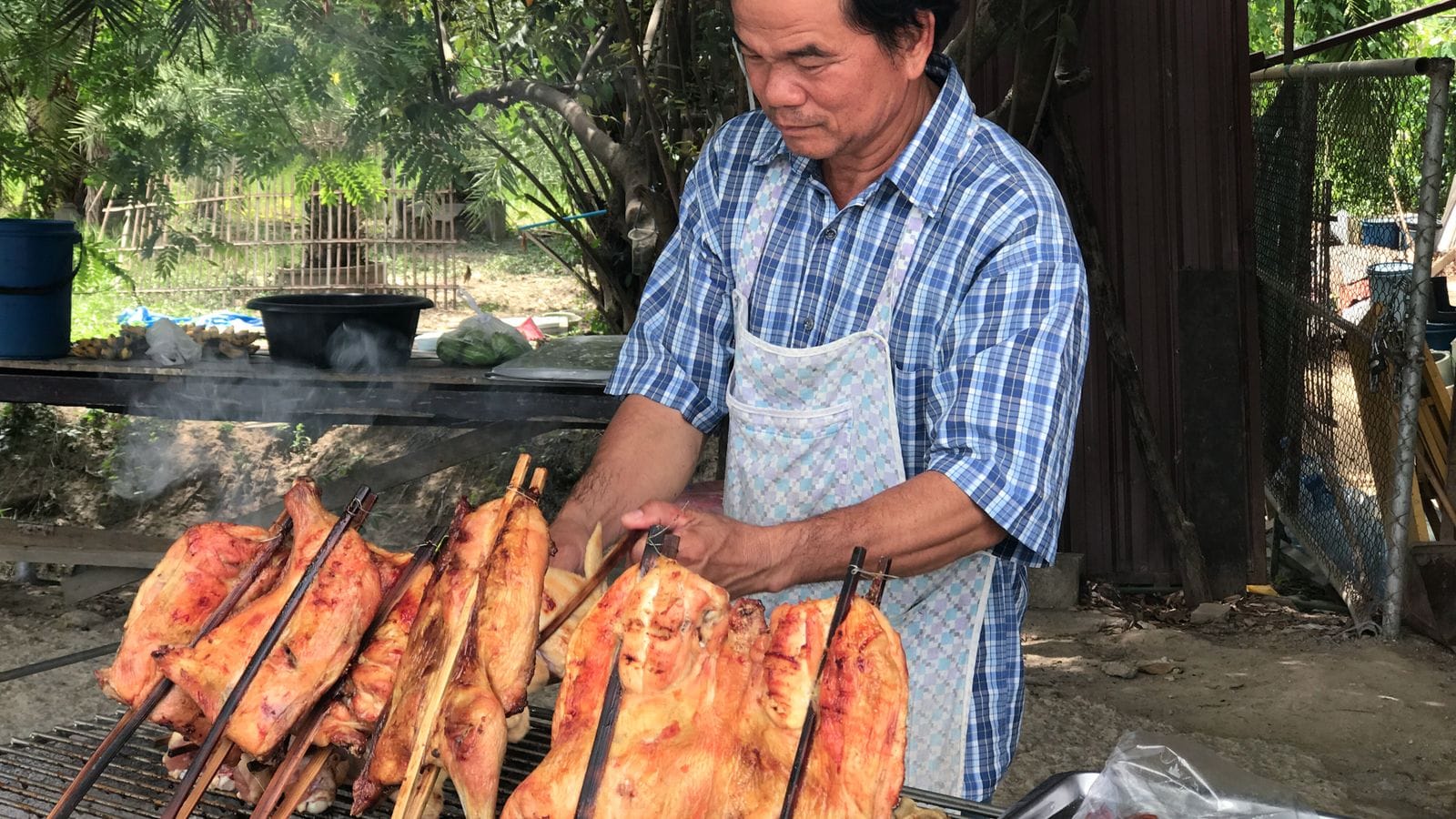
Walking the night market here, the smell that always stops you first is the grill — gai yang chicken, grilled pork neck, and skewers cooked fresh right at the stall. Eaten with sticky rice and a punchy jaew or dipping sauce, this is the dinner Isan folks know best.
Crispy-Skin Grilled Chicken (Gai Yang)
Grilled low and slow until the skin turns golden and crisp while the meat stays juicy — the one grilled dish every market has. Popular shops in town like Som Tam Nai Kok grill it right out front. Pair it with som tam and sticky rice for a full meal on one plate.
Grilled Pork Neck – Nam Tok
Grilled pork neck sliced into bite-size pieces, tossed nam tok style with toasted rice powder and chili flakes — a snack-with-drinks dish people order all the time. Som Tam Bun Rod in town makes a nam tok grilled pork that's bold and well seasoned.
Salt-Crusted Grilled Fish (Pla Pao)
Tilapia stuffed with lemongrass, rubbed all over with salt, and grilled until the skin crisps up while the flesh stays soft and juicy. Pick it apart and eat with seafood dipping sauce or jaew — a big grilled dish good for sharing among a few people. Found at Isan restaurants and market stalls.
Grilled Skewers
Meatballs, pork skewers, liver, and grilled intestines, skewered and cooked fresh at the stall for just a few baht each. Perfect to grab and eat as you wander the market — a snack the kids love.
Isan Sausage – Mam
Tangy fermented Isan sausage made in-house, plus mam (cured beef sausage), grilled until fragrant and eaten with sliced ginger, bird's eye chilies, and peanuts. A staple Isan-market snack you can't skip.
Hot Fried Snacks Straight from the Pan
Next to the grill there's usually a wok of bubbling oil. Fried food at Isan markets is all about being easy to eat and easy to buy — a few baht a bag, fried fresh and hot straight from the pan. Perfect to take back to your room or to snack on as you walk.
- Fried chicken & fried pork — fried fresh by the piece with crisp skin, tossed with hot sticky rice for a cheap, filling quick meal. Prices start at a few tens of baht per piece.
- Fried banana & fried taro — crispy battered snacks, sweet and just rich enough, around ฿20 a bag. You'll find them at almost every market in the late afternoon.
- Fried spring rolls & fried tofu — fried crisp and served with a sweet dipping sauce, a light nibble while you wait for the grill.
- Fried khao jee — sticky rice patties dipped in egg, then grilled or fried until golden; some stalls dust them with sugar or brush on egg. A homestyle snack you'll find at both morning and evening markets.
Bring Cash
Most market stalls and food carts take cash only. A few have QR codes but not all of them, so carry small bills to keep things smooth — items here cost only a few tens of baht, and paying with a big note can leave vendors scrambling for change.
Sweets and Homestyle Desserts
Finish the meal with something sweet. Isan has loads of homestyle desserts built on sticky rice and coconut, easy to find at evening-market stalls for just a few baht a piece — sweet enough without being cloying.
Khao Lam (Bamboo Sticky Rice)
Coconut sticky rice roasted inside a bamboo tube, fragrant with both bamboo and coconut. The tube is split open and you eat it in sticks; some stalls add black beans or taro. An easy-to-find homestyle dessert at the markets.
Khao Tom Mat
Coconut sticky rice wrapped in banana leaf with banana or beans inside, steamed until fragrant. Unwrap it and it's soft, sweet and rich from the coconut milk — a dessert Isan folks have paired with the morning and evening markets for ages.
Khanom Krok & Sponge Cakes
Coconut khanom krok poured fresh into the griddle, slightly charred at the edges, alongside freshly baked sponge cakes. These fried-and-baked sweets are made right at the stall for just a few baht a bag.
Bingsu & Cold Desserts
If you want something cold to beat the heat, there are a few shops in town doing bingsu and shaved ice with condensed milk. Great after an evening market walk — the Isan heat makes a cold treat go a long way.
Local Specialties Worth Trying Once
If you want to taste something that's truly Nong Bua Lamphu, there are a few signature dishes you won't easily find elsewhere. Look for them at homestyle restaurants and the province's local-products fairs.
- Miang Kham Lamphu — a local take on miang kham that uses lotus petals to wrap instead of the usual leaves, filled with things like wild betel leaf, lime and tamarind, and drizzled with fermented fish sauce. It was chosen as the province's signature dish and is a good way to taste what makes Nong Bua Lamphu its own place.
- Som Tam with Fermented Fish (Nua) — som tam pounded fresh with pla ra in every mortar, bold and fully seasoned the Isan way. Several popular shops in town are worth a try; eat it with gai yang and sticky rice.
- Jaew Hon — a hot pot of rich herbal broth for dipping meat and vegetables, a warm dinner that several Isan restaurants in town make to an old-school recipe.
- Seasonal Foraged Food — late in the rainy season, Huai Duea market has wild bamboo shoots, mushrooms, and foraged produce to choose from. Cooks even drive over from Udon Thani to buy it. If you want to see genuine Isan ingredients, this is the place to stop.
Straight Talk
Nong Bua Lamphu is a small town, and the street food isn't buzzing every single night like a big tourist city. The real highlight is the Monday walking street; on other days it's mostly the fresh market and the grill stalls around town. Come on a Monday and you'll get the full atmosphere.
Tips for Grazing Smart
- Go after 5:00 PM — the grills and fryers are up and serving by then, and the air has cooled off enough to make walking more pleasant than in the daytime.
- Save room for several stalls. Items cost just a few tens of baht, so buying a little from each lets you try more without filling up too fast.
- Bring cash and a cloth bag. Most things come bagged to take away, and you'll cut down on plastic if you bring your own container.
- Want seasonal foraged food? Just ask the vendors what's in right now — what's at the market really does change with the seasons.
Plan a full eat-and-explore trip to Nong Bua Lamphu
See the Nong Bua Lamphu travel guide →