🔄 Updated 21 Jun 2026
If the Mukdahan in your head is the Mekong bridge and the Indochina market, Nong Sung is the opposite corner: quiet, mountainous, and all about culture. The Phu Tai here don't just keep their traditions for show — they still live them. Elders chat in Phu Tai, a dialect that leaves the average Isan speaker stumped on a few words. Women sit weaving under the house when the rice fields aren't busy, and when guests arrive a pha laeng spread comes out without any formal arrangement. This article walks you through the people, the cloth, the food, and the natural sights nearby that you can string together in a single day.
One fact to know before you go: there's no public transport running straight into the villages of Nong Sung. You'll need your own vehicle or a rental from town. And the things that are the real point of visiting — a pha laeng meal or a homestay night — need a phone call ahead, because the community prepares the food and the performers per booking. You can't just walk in and order on the spot.
Who are the Phu Tai of Nong Sung, and where are they from?
The Phu Tai originally lived around the Red and Black River basins of northern Vietnam, bordering Laos and southern China. In the early Rattanakosin period — from around the time of the Chao Anouvong war in 1826 onward — many Phu Tai groups were resettled and migrated across the Mekong into Isan, spreading through the areas of Kalasin, Sakon Nakhon, Nakhon Phanom and Mukdahan. The ancestors of Nong Sung crossed over from the left bank of the Mekong around 1844 and settled in a valley ringed by several mountains, forming one of the oldest Phu Tai communities in the province.
Three things keep the Phu Tai identity sharp to this day: the language, the weaving, and the dress. The grandparents' generation still speaks Phu Tai as a first language. A greeting like 'sao der' (how are you?) or the rising-and-falling tones that differ from Isan Lao are things you'll actually hear in the morning market and in homes. As for the cloth and the costume, that's what visitors can see and touch most clearly.
A note on language
Phu Tai sounds a bit like Isan Lao but isn't the same. People in Nong Sung speak standard Thai and Isan fine, so communication is no worry. But if you want to win over your hosts, ask them to teach you a couple of Phu Tai words — it opens up far better stories than just snapping photos.
Want more out of Mukdahan? Book tours & activities
Booking online ahead on Klook or GetYourGuide is usually cheaper than the gate and skips the queue. Pick only the experiences you actually want — prices and availability are shown live on each site.
Phu Tai dress: the outfit they still actually wear
Nong Sung's Phu Tai dress isn't kept only for festival days. Many older women still wear a hand-woven sarong in everyday life. The hallmark of the women's outfit is a dark indigo-dyed blouse trimmed with red bands, with rows of silver buttons or coins, worn with a thin-striped sin thiu sarong and a shawl draped over the shoulder. For full dress, the hair is tied into a bun with a flower tucked in — plain-looking but full of details that show the weaver's skill.
When there's a dance or a welcome for guests, you'll see the whole group in full dress at once. The Phu Tai dance and the fon klong tum drum dance of Nong Sung are performed at merit-making events and welcomes. Dancers wear long fingernails made of metal or wrapped with red tassels at the fingertips, moving slowly to the rhythm of the khaen reed pipe and drum. Many homestays pair the performance with the pha laeng meal. If you want to try on Phu Tai dress for photos, several communities have outfits to rent and will help you put them on.
Nong Sung weaving: which pattern is which, and how to buy without going wrong
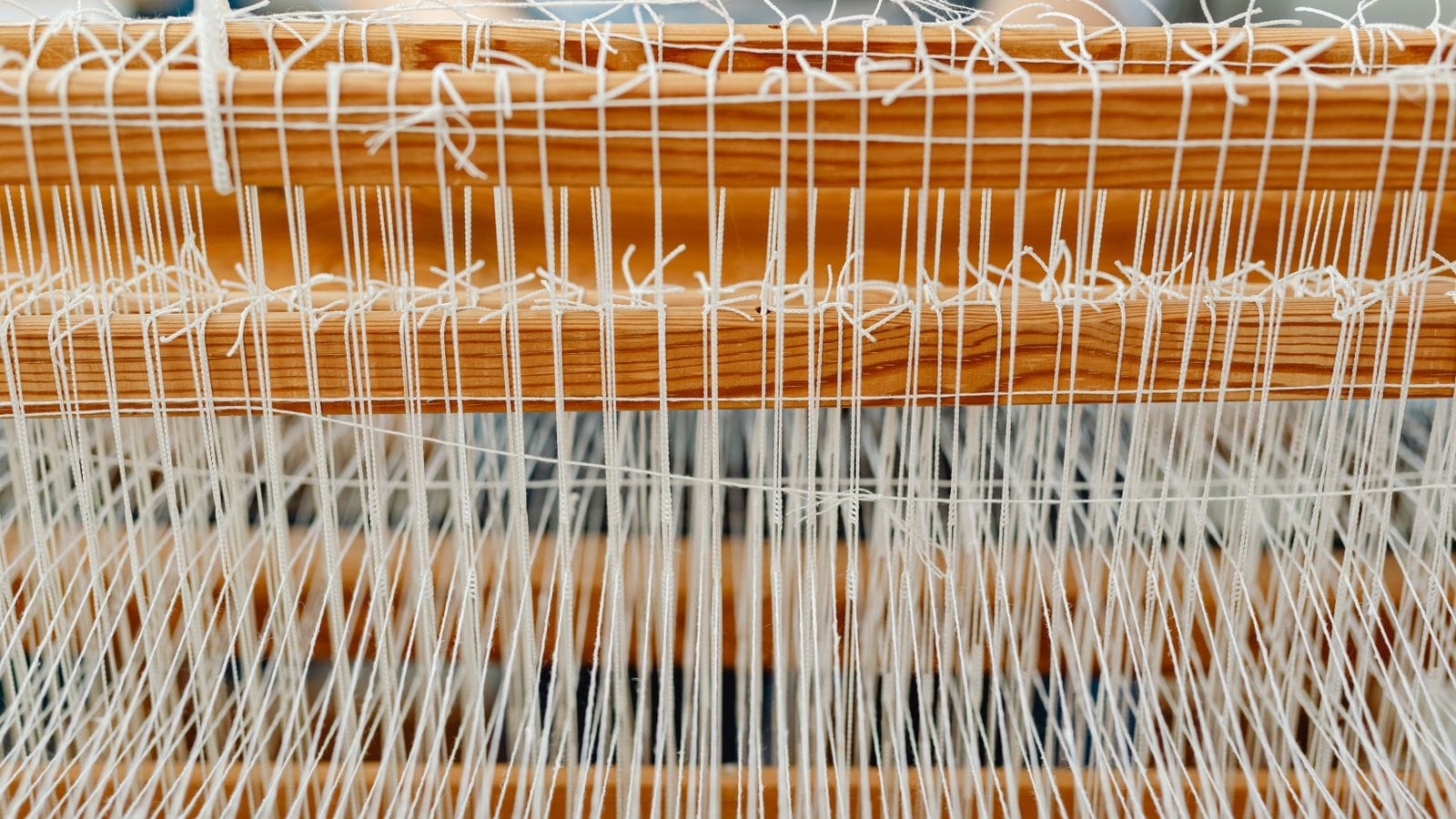
Nong Sung is one of Mukdahan's best-known weaving areas. Nearly every household has women who can weave, and they do it for real as a side income from rice farming. There are many types and patterns of cloth here, and if you've never come across them you might be unsure which piece to pick. We've laid them out in the order you'll see them most often and in the easiest way to understand, with rough prices you'll find at the weaving groups and shops in the community.
Mud-fermented cloth (pha mak khlon)
Nong Sung's most famous product. Cotton or silk is fermented in fine mud and then dyed with natural colors such as tree bark, giving the fabric an unusually soft hand and muted earth tones — easy to wear and never loud. It's the OTOP product people most often take home as a gift.
Kaeo Mukda mudmee cloth
Nong Sung's signature pattern, combining five sub-motifs in a single piece: the water-stream, little naga, little elephant-flower, small tum and large tum. It's a mudmee (ikat) design built to tell the story of the Mukdahan region — great as a collector's piece or to tailor into clothing.
Hang krarok (squirrel-tail) cloth
A smooth fabric made by twisting two colors of silk thread together, producing a shimmer like a squirrel's tail. It's a traditional men's cloth worn on important occasions — dense and hard-wearing.
Khit cloth
Cloth with raised supplementary-weft patterns using the khit technique, usually geometric shapes and mythical animals. Used for pillows, covers and decorative pieces. The dense, fine patterns clearly show the weaver's skill.
Chok cloth
A technique of picking up supplementary threads one slot at a time, creating bright, localized patterns. Often made as sarong borders or small pieces. It takes a long time per piece, so the price runs higher than ordinary cloth.
Praewa cloth
A silk cloth with small, tight patterns that is a shared Phu Tai heritage with the Kalasin side. Some households in Nong Sung can weave it — dense and intricate, it's considered the high cloth of the Phu Tai.
Buying the real thing
Buying directly from the community weaving groups or village shops gets you a better price and more genuine cloth than buying it secondhand in town. For mud-fermented cloth or silk, ask whether it's hand-woven or loom-woven, and ask about care (mud-fermented cloth should be hand-washed and dried in the shade) — the weavers are happy to explain. If you mean to buy several pieces you can bargain a little, but remember a single piece takes a week to weave.
Ban Phu: the cultural tourism village
If you're picking a single base to experience Phu Tai life, most people head to Ban Phu in Ban Pao subdistrict. It's a community-based tourism (CBT) village that has done this the longest and most systematically in Nong Sung, welcoming visitors since around 2006, with about 40 houses registered as homestays. Ban Phu's ancestors crossed the Mekong to found the village in a valley ringed by five mountains — Phu Pha Khao, Phu Jok Ko, Phu Hin Lek Fai, Phu Pha Daeng and Phu Pha Men.
You can visit Ban Phu as a day trip or stay overnight. Staying gets you the fuller experience — from giving alms in the morning, trying weaving, cooking local food, and walking among the old wooden houses, through to the pha laeng feast with a performance in the evening. Everything needs to be arranged with the homestay group in advance, since they set up the program based on the number of people.
Ban Phu Homestay (Ban Pao subdistrict, Nong Sung)
The main base for Phu Tai cultural tourism, with about 40 homestay houses. They run pha laeng feasts, Phu Tai and fon klong tum drum-dance performances, and workshops in weaving and local cooking. Contact the group ahead and give your numbers. Best for one overnight stay so you get all the activities.
Ban Nong Sung (weaving community)
An old Phu Tai village about 50 km from town, a source of Kaeo Mukda mudmee, mud-fermented, hang krarok, khit, chok and praewa cloth. The women weave for real in their downtime from the fields. You can walk around and buy cloth directly from the weaving groups.
Ban Bung Homestay (Phu Wong subdistrict, Nong Sung)
Another Phu Tai community that runs pha laeng feasts and homestays seasonally, close to the route up to Wat Phu Jok Ko. Good for groups who want a quiet trip paired with hiking up the mountain. Contact ahead as well.
Pha laeng: the meal you eat on the floor while the stories flow
For many, the highlight of coming to Nong Sung is pha laeng, the evening spread that sets savory dishes and dips on a pha khao (a round wooden tray), then has everyone gather around to eat on the floor. It's like the northern khantoke but the dishes are Phu Tai food. One spread usually has rattan-shoot curry with free-range chicken, bamboo-shoot curry with yanang leaf, mok bamboo shoots or mushrooms, jaew bong chili dip, seasonal blanched vegetables, steamed fish, and hot sticky rice — served with a dance performance and a circle dance you join at the end.
Phu Tai food leans sour and salty from fermented ingredients, with a mild bitterness from wild greens. It's not as fiery as the food along the Mekong in Isan. If you don't eat pla ra (fermented fish), say so ahead and they'll adjust. To have a pha laeng meal you must phone the homestay group at least a day ahead and give your numbers, because the fresh seasonal ingredients are prepared per booking. You can read a deeper menu of Phu Tai food in our Phu Tai food article.
Pha laeng etiquette
Pha laeng is a meal sitting on the floor, so a skirt or trousers you can sit cross-legged in comfortably is better. Hosts often invite you to drink and join the circle dance at the end — join in as you please, and if you don't drink just say so, it's no offense. And don't forget to thank the cooks and the performers, because they prepared it specially.
Nature and temples around Nong Sung
Nong Sung is a district ringed by mountains, so it has natural spots and hilltop temples you can string onto a village visit in a single day — good for alternating with the cultural program so the trip doesn't get repetitive.
- Tad Ton Waterfall — Mukdahan's largest waterfall, a single tier about 30 m wide and 7 m high, with water year-round and a pool to swim in. It's south of the district on Route 2030, around the 67–68 km marker, then a turn-off of about 400 m. In the rainy season the water is heavy and the air cool, and there are food stalls and local shops in the area.
- Wat Pha Phayom (Nong Sung Tai subdistrict) — a hilltop temple whose top level looks out over rows of wind turbines on the ridge. It's a wide-view photo spot the locals recommend. Go in the morning or evening when the sun is gentler for a more comfortable visit.
- Wat Phu Jok Ko (Wat Banphot Khiri), Ban Waeng — a temple on Phu Jok Ko with a calm, meditative atmosphere and a walking path up to valley views. Good for those who want a quiet corner and the kind of mountain views Nong Sung offers.
- Phu Pha Kham mountain range — the range that divides Nong Sung north and south, running on toward Nikhom Kham Soi. It's rich forest and watershed land that forms the backdrop to nearly every village in the district.
Getting around Nong Sung
The sights are spread out and there's no public transport linking them, so you need your own vehicle or a rental from Mukdahan town. Some roads up the hilltop temples are steep and narrow — drive carefully in the rainy season when they're slick. Fill up the tank in the district center before heading into the villages, as there aren't many big petrol stations.
Phu Tai festivals worth timing your trip for
If you want to see Phu Tai culture at its fullest, aim for the annual festival season. Nong Sung's big event is the Home Ngao Phao Phu Tai festival (the Phu Tai homecoming), held around early March. It features processions in full Phu Tai dress, Phu Tai dance and song, a walking street, local-food and fermented-product stalls, plus a model Phu Tai-life village to wander through. It's when the whole district comes out and when you'll see the most beautiful woven outfits all in one place.
Beyond the big event there are merit-making festivals following the Isan Heet Sip Song calendar spread through the year, such as Bun Khao Ji and the Bun Bang Fai rocket festival in early rainy season. If your trip doesn't line up with a festival you can still experience the way of life through the homestay program — but if you can plan it, going during the annual festival makes the journey most worthwhile.
A 2-day, 1-night Nong Sung plan
Nong Sung works as a day trip, but staying one night gives you a far fuller taste of the way of life. Here's a plan that balances culture with nature, starting from Mukdahan town.
Into the village, learning Phu Tai life, homestay night
Alms-giving, up the hilltop temples, wind-turbine views
Souvenirs from Nong Sung that travel easily
- Mud-fermented cloth — the number-one gift: soft, naturally colored, available as lengths, ready-made blouses and scarves. Prices start in the hundreds and run into the thousands depending on the fabric.
- Kaeo Mukda mudmee / hang krarok cloth — locally signature woven cloth, great as a collector's piece or to tailor into clothing. Buying from the weaving group gets a better price.
- Phu Tai fermented products — jaew bong, pla daek bong, som mu (fermented pork), sold by the jar, strong-smelling, so pack them separately and check them into the hold if you fly.
- Seasonal forest products — bamboo shoots, mushrooms, wild phak wan greens, red-ant eggs in the hot-to-early-rainy season. Buy them fresh from the market and roadside stalls in the district.
Plan a full Mukdahan trip — the Mekong side, the rock mountains, and the Phu Tai heartland of Nong Sung
See the Mukdahan travel guide →