🔄 Updated 21 Jun 2026
Pai is about a 3-hour drive from Chiang Mai along Route 1095, famous for its 762 curves. If you get carsick easily, bring motion-sickness tablets. Once you're in town, eating is easy on foot because most spots cluster around the walking street and the small side lanes nearby. The scenic cafes and Santichon Village, though, mean a short motorbike or car ride out of town.
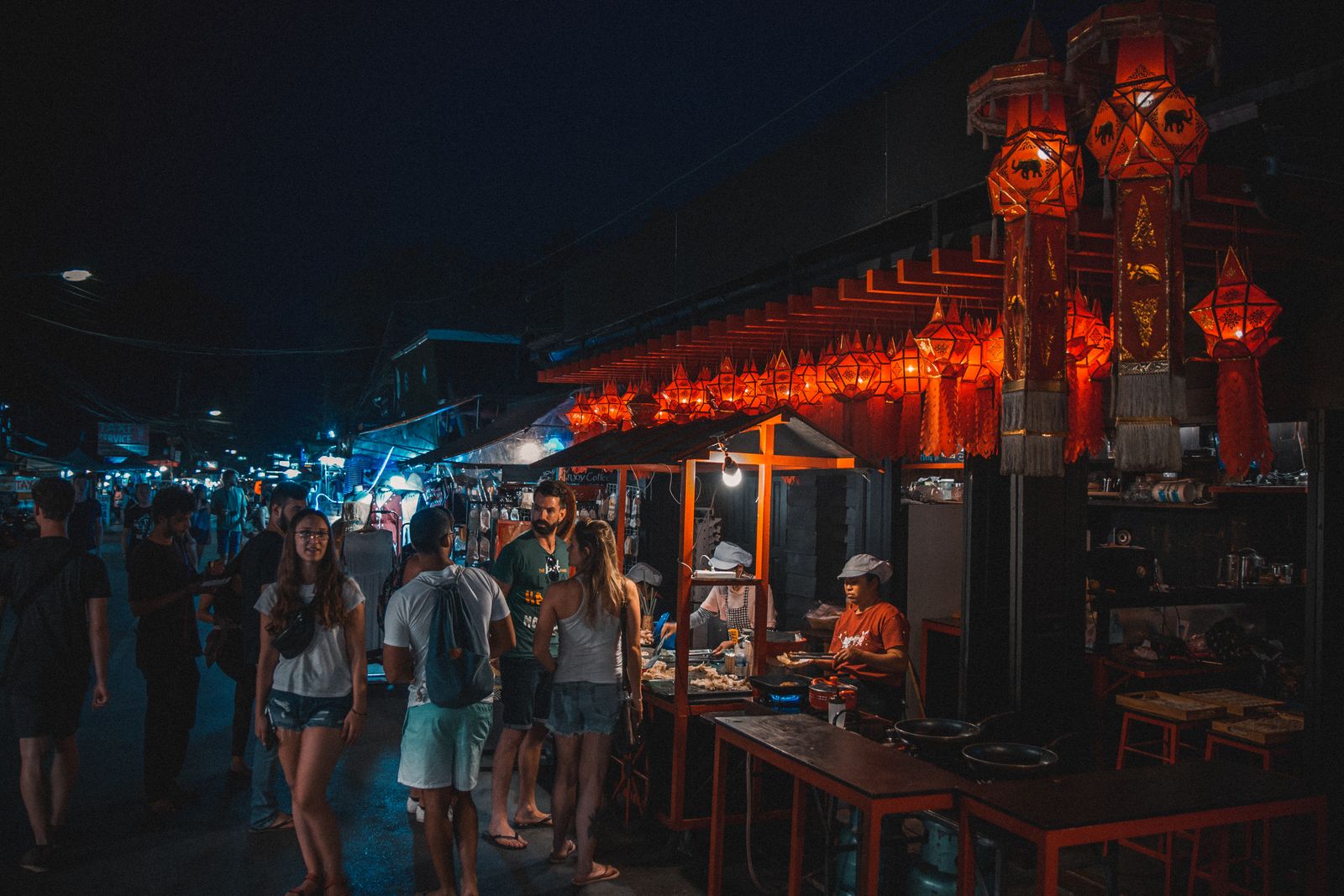
Pai Walking Street in the evening
The heart of eating in Pai is the walking street (Pai Walking Street), open every evening from around 5 PM to 10 PM. Food stalls line both sides of the road, from savory dishes to sweets to oddball snacks. Graze your way down at 30–60 THB a plate and you'll be full without ever sitting down at a restaurant. It's perfect for your first night when you don't know what you want yet.
- Gyoza / Goyza Queen — a fried gyoza stall with a packed queue every night, one of the most talked-about spots on the walking street.
- Kebab truck — hot wrapped kebabs, easy to eat on the move, light on the wallet at around 60–90 THB.
- Western-style sweets — chocolate-dipped strawberries, pancakes, fruit smoothies, with plenty of stalls to choose from all the way down.
- Northern Thai snacks — khao soi, omelets, grilled pork skewers, sticky rice, found here and there at local prices.
Tip
The walking street is liveliest during the cool high season (Nov–Feb), with big crowds and every stall open. Off-season, some stalls may close early or not open at all. If you come in low season, don't expect every stall to be running like in the review photos.
Want to taste deeper? Try a Pai food tour or cooking class
Half a day with a local who knows the lanes — or cooking a dish yourself — teaches you more than just eating. Book ahead on Klook or GetYourGuide.
Yunnanese Chinese food at Santichon Village
Santichon is a village of Yunnanese Chinese who migrated and settled here, about 4–5 km from Pai town. The whole village is done up in Chinese style, and it's the one place in Pai where you can eat genuine Yunnanese food. Restaurants in the village run about 100–250 THB per person, and ordering a few dishes to share works out better value with a group.
Yunnanese braised pork leg with mantou
The most-ordered dish here. Pork leg braised in Chinese herbs until the meat falls apart, not overly sweet, eaten with steamed or fried mantou buns and dipped in the braising sauce. It all comes together really well.
Mantou, fried or steamed
Soft white steamed buns. Order them steamed to eat with your meal, or fried and dipped in condensed milk as a dessert. A snack the kids tend to love.
Shiitake mushrooms in soy sauce
Fresh shiitake baked in a fragrant soy sauce, mellow and balanced. A good vegetable dish to cut through all the meat on the menu.
Steamed red tilapia with soy sauce
Chinese-style steamed fish topped with soy sauce and shredded ginger, soft and fragrant. Good as a centerpiece dish for a group.
Hot oolong tea
Several spots in the village serve oolong grown on the surrounding hills, brewed hot and sipped alongside a snack. A relaxing way to linger in the Chinese-style setting.
Straight talk
The road up to Santichon and the nearby Yun Lai viewpoint is narrow and steep mountain road. If you're new to riding a motorbike, take extra care. Going in the morning or early afternoon, while it's bright out, is safer than in the evening.
Pai cafes and mountain views
Pai is a genuine cafe town. There are spots in town you can walk to and cafes outside town that mean a ride out to sit and look at the mountains. Many brew arabica from the northern hills, with coffee generally running 60–120 THB a cup. Some view cafes charge a small extra fee for the viewpoint.
Coffee in Love
A cafe with fields and mountains out of town, a classic Pai photo spot for years. Good for a quick stop and a photo on the way into town.
Yun Lai viewpoint cafe
Above Santichon, looking out over the sea of fog on winter mornings. Yunnanese tea and steamed mantou for sale, entry around 30 THB.
Lemon Thyme Cafe
An in-town cafe you can walk to, known for omelets, bagels, and arabica coffee. Good for breakfast before heading out.
Cafe de Pai
A small in-town spot with an easy vibe, bacon-and-cheese sandwiches and iced coffee. Good for a last meal before you leave.
The sea of fog depends on the weather
The sea of fog at Yun Lai and the viewpoints around Pai only appears on mornings that are cool with the right humidity, mostly Nov–Feb, and not every morning. If you get up and find clear skies with no fog, that's completely normal. Don't set your hopes too high.
Northern Thai food and local spots
Beyond the Western-style snacks and Yunnanese food, Pai has northern Thai dishes like any other town in the north. Local spots are easy on the budget at 40–70 THB a plate, found around the morning market and along the lanes in town.
- Khao soi — egg noodles in a coconut-milk curry broth with northern curry paste, topped with crispy fried noodles. Sold both on the walking street and at spots in town.
- Nam ngiao with khanom jeen — an orange, lightly sour nam ngiao broth poured over rice noodles, a popular northern breakfast.
- Sai ua and crispy pork rinds — northern-style snacks and souvenirs, found at the Pai morning market.
- Pai morning market — open from before dawn, with sticky rice, home-style dishes, and fresh produce. Good for early risers who want to see local life.
How to eat in Pai by travel style
Pai is small enough to eat your way through in a few days. Here are some meal ideas by travel style to make planning easier.
Cafes and the walking street
Yunnanese food and local life
Plan a full day of eating and exploring in Pai
See the Pai travel guide →