🔄 Updated 13 Jun 2026
The Tha Pai Memorial Bridge sits along Highway 1095 (the Mae Malai–Pai road) at roughly the kilometre 88 marker, about 8–9 km before you reach Pai town. It's an iron-truss bridge with a wooden deck spanning the Pai River. Locals like to say "if you come to Pai and don't stop at this bridge, it's like you haven't really arrived," because it's both a landmark and the first place nearly every vehicle passes.
History — A bridge from the WWII era
Going back to World War II, the Japanese army based in Thailand needed a supply-and-weapons route from Chiang Mai, through Pai district, across the Pai River, to push on into Burma (then under British control). That's how a crossing came to be built right here. It started out as a wooden bridge, but over the years the original timber and frame rotted away, so it was restored with an iron frame to strengthen it while keeping a wooden walkway you can still cross. The result is the green iron bridge you see today.
What's original and what's been restored
The bridge you walk across today has been restored several times — it's not the original wartime timber all the way through. Its value is in the "location and the story" more than the original materials. If you're into history, read the information board at the head of the bridge before you walk across; it gives the visit a lot more meaning.
Want more out of Pai? Book tours & activities
Booking online ahead on Klook or GetYourGuide is usually cheaper than the gate and skips the queue. Pick only the experiences you actually want — prices and availability are shown live on each site.
Opening times, entry fee and parking
- Opening times: It's an open space you can visit any time of day — there are no gates. The nicest light is in the morning and late afternoon when the sun is soft.
- Entry fee: Free — there's no charge to visit the bridge (you only pay if you buy something or grab a coffee at the nearby shops).
- Parking: There are roadside lots on both sides of the bridge for cars, vans and motorbikes. In high season it gets busy, so you may have to circle a bit to find a spot.
- Time needed: A stroll-and-photo stop of about 20–40 minutes is plenty. Add more if you sit down for a riverside coffee.
How to get to the bridge
The bridge is before you reach Pai town, so anyone driving or riding a van from Chiang Mai passes it right before entering town. Plenty of people make it their first stop to stretch out after the long, winding drive. Here's how to get there at a glance.
Drive or ride yourself
The most freedom — stop and shoot photos whenever you like. Coming from Chiang Mai, take Highway 1095 straight until you spot the sign and the bridge on your left before town. On a motorbike, watch the curves on the climb and take it slow.
Chiang Mai–Pai van with a photo stop
Many Chiang Mai–Pai vans will slow down or pull over for a photo of the bridge before town (depends on the driver). If you really want to stop, tell the driver in advance, or come back on your own later with a rental in town.
Rent in Pai town and double back
If you're already staying in Pai town, rent a motorbike and ride back toward Chiang Mai about 8–9 km to reach the bridge. Works well paired with a waterfall or other sights on that side in one loop.
Honesty: the road to Pai has 762 curves
Highway 1095 from Chiang Mai up to Pai is famous for its 762 curves. If you get carsick easily, take motion-sickness medicine before you set off, sit in the front or middle, and keep a bag handy just in case. If you're riding a motorbike yourself, the mountain road is winding and steep in places, so take it slow and don't rush — it's especially slippery in the rain. Getting out to stretch your legs at the bridge before town genuinely helps clear the dizziness.
Where and when to shoot
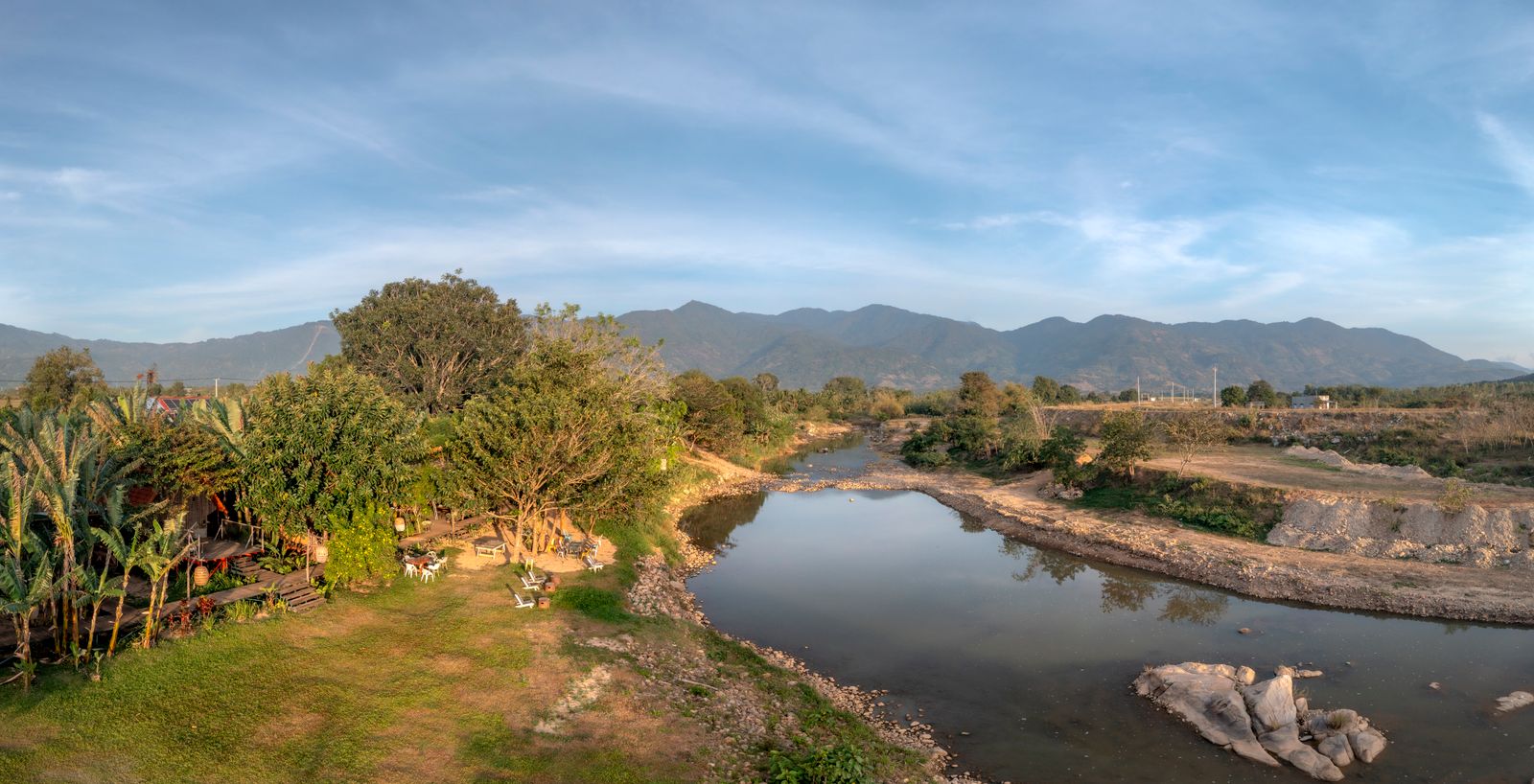
The charm here is the green iron frame set against the Pai River and the surrounding mountains. The most-shot angle is standing in the middle of the bridge and framing the iron trusses stretching out long, plus the shot from the riverbank that captures the whole bridge spanning the water. The best light is early morning when the sun is soft and late afternoon before sunset — the light is gentle and the blue-and-green tones come out nicely. Midday is harsh, crowded, and you end up shooting into the light.
Middle-of-the-bridge angle
Stand on the timber deck and shoot the iron frames converging on both sides as leading lines. It's the icon shot here — easy to get early in the morning when it's quiet.
Riverbank below the bridge
Walk down to the water's edge and shoot up at the bridge spanning the Pai River in full — bridge, water and mountains all in one frame.
Sign / check-in spot at the bridge head
There's usually a name sign and a check-in corner at the head of the bridge to pose with. Good for anyone who wants a shot confirming they made it to Pai.
Props at the shops around the bridge
Some shops around the bridge set up cowboy/vintage-style props to photograph with. A few spots may charge a small fee — ask the price before you shoot so there's no confusion.
On photo fees worth asking about first
Some photo props around the bridge (decorated shop corners, costumes or display pieces) may come with a service fee — not everything is free. Walking the bridge and taking your own photos is free, but if you want to use a prop or a corner inside a shop, ask the price first so there's no trouble later.
What's around the bridge
- Riverside coffee and drink shops — there are cafés and drink stalls at both ends of the bridge where you can sip and watch the Pai River. Coffee runs about ฿50–80 a cup.
- Souvenir, clothing and snack shops — small stalls and shops sell gifts, Pai T-shirts and snacks scattered around the bridge.
- Pai River activities — at certain times there's seasonal rafting/riverside activities (depending on the water level); ask the operators on site.
- Nearby sights — it's on the way into town, so it's easy to pair with carrying on to explore Pai town itself.
Honesty: sea of fog and seasonal haze
Pai is known for its sea of fog in the cool season (Nov–Feb), but the fog depends on the weather each day — it isn't there every morning. During March–April, northern Thailand often has haze problems from crop burning; visibility can turn murky and distant views come out unclear. If sharp scenic photos matter to you, avoid this stretch and go in the cool season or after the rains, when the skies are clearer.
Plan your whole Pai trip without missing the highlights
See the Pai travel guide →