🔄 Updated 21 Jun 2026
Budu is a food-preservation tradition of the Malay people across Thailand's deep south — Pattani, Yala and Narathiwat — running right through to Kelantan and Terengganu in Malaysia. The traditional method is to take small fish like anchovies, toss them with salt at a ratio of roughly 2–6 parts fish to 1 part salt, then ferment them in sealed jars or earthenware pots left out in the sun anywhere from around 140–200 days to a full year. The salt slowly draws the liquid out of the fish, leaving a dark-brown sauce with a deep fermented aroma. That is budu.
A lot of people assume budu is just a kind of fish sauce, which is close but not quite right. Regular fish sauce is filtered down to a clear liquid, while budu keeps both the liquid and the broken-down fish flesh together, so the flavor is rounder and deeper and the smell is stronger. Southerners use budu as both a seasoning and the star of a dish — spooned over khao yam rice salad, turned into budu chili dip, or used as a dip for fresh vegetables eaten with hot steamed rice.
Why Saiburi budu is so well known
Among all the budu made across the south, the version from Saiburi district in Pattani is the one people bring up most often as the original. The reason comes down to ingredients and location. Saiburi sits right on the Gulf of Thailand, with fresh anchovies landing on shore every day, plus the salt locals here call "sweet salt" and the strong, sunny weather that suits fermentation. Done right, Saiburi budu smells good, has a balanced rather than aggressively salty taste, and keeps well.
One well-known production source is the community budu-making enterprise in Paseyawor sub-district, Saiburi (around 270/2 Moo 2, Paseyawor sub-district), which still ferments with anchovies from the Gulf of Thailand and local salt the old way. There are also long-standing brands like Budu Heng Saiburi, which trades on a recipe going back more than a hundred years, and Budu Ta Dam Pattani, which you can find both in-store and online.
Want to taste deeper? Try a Pattani food tour or cooking class
Half a day with a local who knows the lanes — or cooking a dish yourself — teaches you more than just eating. Book ahead on Klook or GetYourGuide.
Thick budu vs. clear budu — what's the difference
When you go shopping you'll run into two main types of budu, and if you've never seen them before it can be confusing to tell them apart. Here's the short version.
- Thick budu — budu that has already been simmered and seasoned, with sugar added so it comes out sweet and savory, slightly thick and syrupy. You can open the bottle and spoon it straight over rice or use it as a dip with nothing else added. Great for anyone just starting out with budu.
- Clear budu (first-press budu) — budu scooped from the first batch in the jar, lighter in color, genuinely salty and not yet seasoned. Southerners like to use it to make their own budu chili dip or khao yam dressing to their family recipe.
- Khao yam budu — some makers prepare ready-to-use budu specifically for khao yam, balanced sour, salty and sweet so you can just pour it over. Easy to buy and make khao yam at home.
How to choose without going wrong
If you're buying it to eat yourself for the first time, or to give to someone who isn't from the south, start with the seasoned thick budu — it's easy to use and the smell isn't as strong as the clear kind. If you like to cook from scratch, then move up to the clear budu. And pick a bottle with a clear FDA and halal label — you'll be more confident about how clean it is.
Budu chili dip — what to eat it with so it's delicious
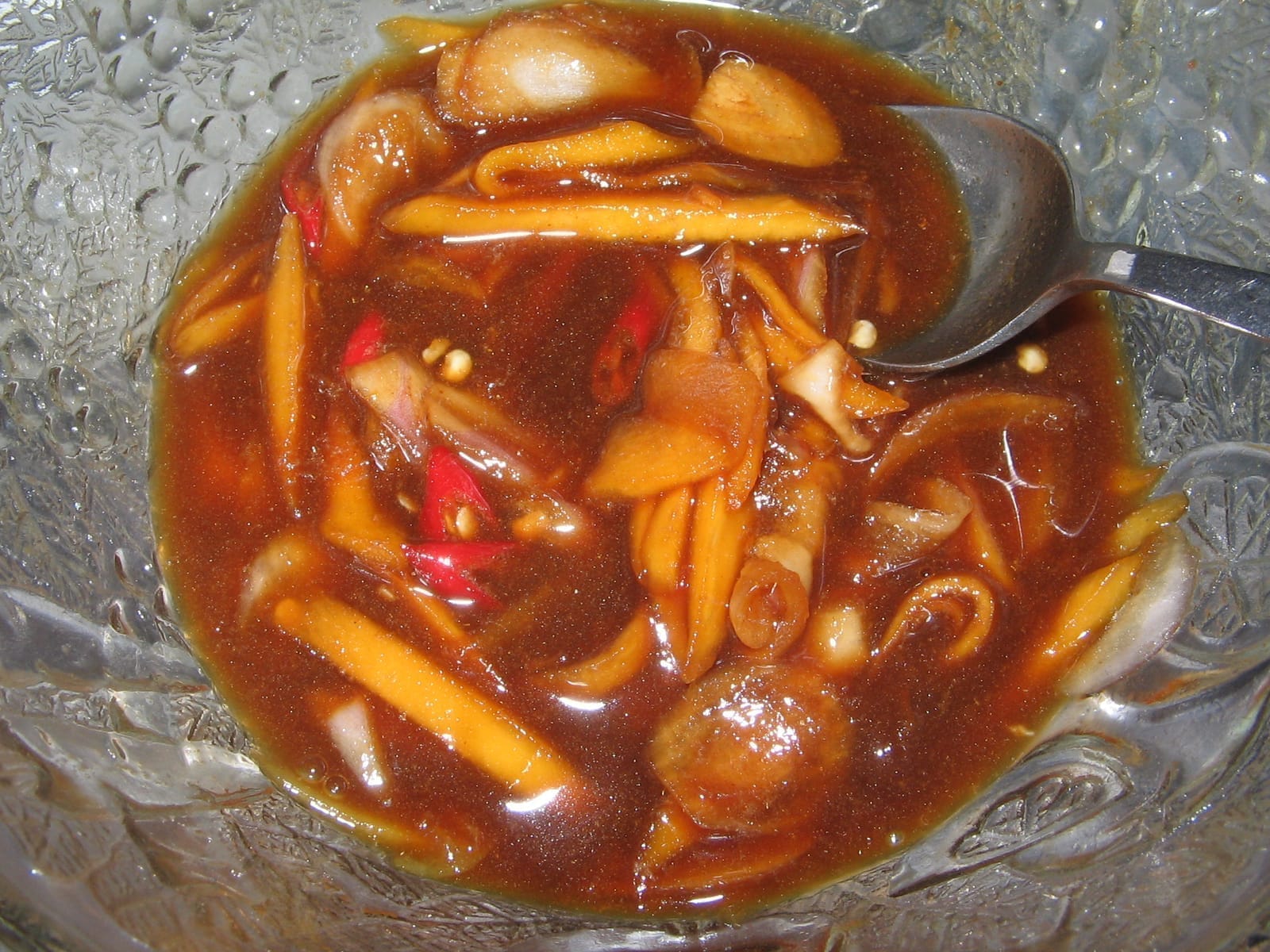
The heart of a home-style budu spread is budu chili dip. The basic method is to put budu in a pot, add a little water to soften the saltiness, bring it to a boil, then add fish flesh (many households use boiled, flaked mackerel) and stir it together. After that you season with lime juice, palm sugar and sliced bird's-eye chili, tasting until you get a balanced sour, salty, sweet and spicy result. Some recipes are a dry stir-fried budu dip loaded with herbs until it's wonderfully fragrant.
The fun of budu chili dip is in the side veg. Southerners call the fresh vegetables eaten alongside "phak nor" — the more there is, the better. Arrange them around the bowl of dip and slowly spoon it up with hot steamed rice.
- Phak nor (fresh side veg) — cashew shoots, pennywort, yard-long beans, winged beans, cucumber, raw sator beans, niang beans, neem and Thai eggplant. They cut through the saltiness of the budu nicely.
- Turmeric-fried fish — mackerel or local fish coated in turmeric and salt and fried crisp, the standard partner for budu chili dip. The fragrant fish and the salty, savory dip go together beautifully.
- Boiled egg / omelette — adds a soft, rich element to the spread, good for anyone who can't handle much heat.
- Shrimp, squid or grilled fish — for a bigger meal, grilled seafood dipped in budu chili dip works well too.
Eating budu for the first time
The smell of budu when you open the bottle is stronger than ordinary fish sauce, but once it's turned into a chili dip or poured over khao yam the aroma softens a lot. If you're not used to it, start with a small dip, eat it with plenty of steamed rice and lots of veg, then add more — you'll soon get hooked on that deep savory taste.
Khao yam — the dish where budu is the star
You can't really talk about budu without mentioning khao yam. Khao yam is steamed rice tossed with fresh shredded herbs and vegetables — lemongrass, kaffir lime leaf, bean sprouts, sour mango — sprinkled with ground dried shrimp and toasted coconut, then dressed with seasoned budu sauce that's sour, salty and sweet all in one dish. It's a breakfast and light meal that people in Pattani eat all the time, and the reason so many households always keep budu in the kitchen.
Khao yam budu
Rice tossed with fresh veg and dressed in seasoned budu, balanced sour, salty and sweet. The dish that uses the most budu and the easiest to find across town.
Budu chili dip with fresh veg
Budu cooked into a chili dip, served with fresh veg, steamed rice and turmeric-fried fish — the home-style southern spread.
Budu over rice with fried fish
Thick budu spooned over steamed rice, eaten with fried fish and veg — a simple, filling meal with full-on local flavor.
Where to buy budu as a souvenir
Budu is an easy souvenir to carry home — it keeps for a long time and stands in well for the taste of Pattani. If you want the real thing straight from the source, try working through these options.
- Saiburi district (the source) — if you have time to drive out to Saiburi, you can buy directly from the makers, both the Paseyawor community enterprise and old brand stores like Budu Heng Saiburi. You get to see the actual fermentation jars and choose between thick and clear.
- Souvenir shops in Pattani town — in the town center there are shops gathering local products together, like Tani Souvenir (OTOP/Doi Kham) and Asan Pattani Souvenir, which carry bottled budu alongside other gifts such as Panareh dried squid and fish crackers.
- Municipal market / town malls — around the Pattani municipal market and big stores like Big C there are local-product corners stocking small, travel-size budu bottles, good for buying several to share around.
- OTOP center / deep-south products — the area's OTOP product centers usually carry budu with full FDA and halal labels, so you can choose between several brands in one place.
Getting it home safely
Budu is a strong-smelling liquid, so if you're flying, pack it in checked luggage and wrap it in zip bags and several layers of plastic against leaks. Pick a bottle with a tight screw cap or a proper seal, and check the size against your airline's liquids rules. Small souvenir bottles of budu mostly run from a few tens to a low few hundred THB per bottle — an approximate price that varies by size and brand.
Before you travel down to taste budu at the source
Pattani is in Thailand's deep-south region. The atmosphere in the town center and the market areas is normal, people are friendly, and it's a genuine food town worth coming to try at the source. That said, before every trip it's worth checking the latest news and safety advisories, and planning your eating outings from midday to early evening will feel more comfortable. Respect the Muslim-Malay culture, dress modestly — especially when entering communities or near mosques — and your local-flavor food trip will go a lot more smoothly.
Plan a full Pattani food trip, with places to stay and things to see
See the Pattani travel guide →