🔄 Updated 21 Jun 2026
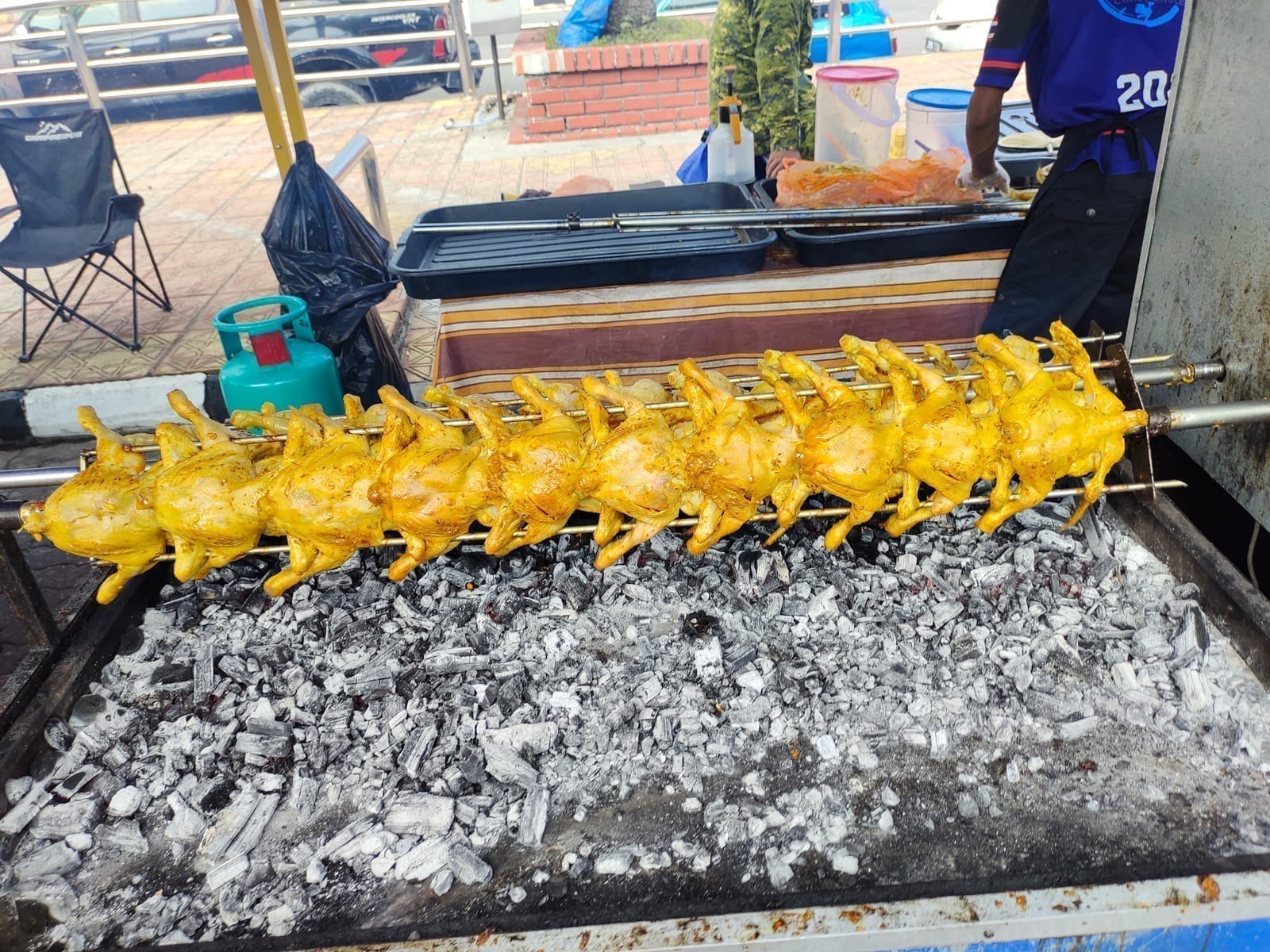
Kai kolae is a Malay dish you'll find across the three southern border provinces — from Pattani and Yala all the way into Malaysia — but Pattani has been known for it for as long as anyone can remember. The heart of the dish is the sauce: thick coconut cream simmered down with a Malay curry paste of chilli, shallot, garlic, turmeric, lemongrass and a handful of other spices. It leads with sweetness, then comes the salt and the warm aroma of the spices. The chicken is grilled over charcoal so the skin crisps up while the meat stays tender, then it's drenched in sauce. Eaten with sweet sticky rice is the combination people in Pattani know best.
What is kai kolae and how to eat it
The name "kolae" comes from a Malay word for turning something back and forth over the grill, because while it cooks the cook has to keep flipping the chicken and brushing on more sauce so it soaks into the meat. Good chicken smells of spice before the sauce even goes on; once a layer of thick coconut sauce is brushed over the top, it gets richer still. Locals like it with sweet sticky rice because the richness of the rice balances the sweet-salty sauce just right. Some shops offer both white and black sticky rice.
- Order by the piece — breast, drumstick, wing or thigh, whatever you like. Bigger groups usually mix a few pieces and share.
- Ask for extra sauce — the spiced coconut sauce is the star. Many shops top it up free or for a small charge.
- Pair it with sweet sticky rice — soft and rich, it carries the flavour better than plain rice, and it's only a few baht a pack, so grab extra.
- Eat it hot — the skin is crispiest and the sauce most fragrant right after it comes off the grill.
A note before you travel
Pattani sits in Thailand's Deep South. Before you finalise any trip, it's worth checking the latest news and official safety advisories so you can adjust your route or timing if needed. Most in-town neighbourhoods and well-known restaurants run as normal and locals are friendly, but a little planning ahead makes the trip smoother. And since this is a Muslim-Malay cultural area, dressing modestly and respecting local customs will earn you a warm welcome.
Want to taste deeper? Try a Pattani food tour or cooking class
Half a day with a local who knows the lanes — or cooking a dish yourself — teaches you more than just eating. Book ahead on Klook or GetYourGuide.
Pattani kai kolae shops that are actually open
We've picked the shops that locals and reviewers mention most often, focusing on places that are still open and easy to locate. Prices are rough ranges and may shift with ingredients and the season — especially during Ramadan, when many shops change their hours. If you've set your heart on a particular one, it's worth calling ahead.
Kai Gholae Yi-Yoh Ramkomut (Soi 4)
A legendary shop on Ramkomut Road, open for more than 20 years, and a repeat winner of the Pattani municipal kai gholae contest. What sets it apart is real coconut cream simmered with the spice paste, no MSG, a rich sweet-savoury sauce, and chicken with a smoky charcoal aroma. Expect queues in the afternoon.
Ka-Moh Kai Gholae Ramkomut Soi 4
Another big name in the Ramkomut area that Pattani locals mention in the same breath. Charcoal-grilled chicken glazed in spiced coconut sauce, well balanced, with crisp skin — great to take home and eat with sticky rice. The shop itself is plain and local.
Kai Kolae at Pattani Municipal Market
The municipal market in the centre of town has several kai kolae and Malay food stalls — handy for browsing alongside other breakfast dishes like nasi dagang and roti. Prices are easy on the wallet, and it's the simplest place to find kai kolae if you're staying in town.
Rusamilae Market (behind PSU)
A big morning market in the Rusamilae area behind Prince of Songkla University's Pattani campus. Beyond the secondhand goods and fresh produce, there are plenty of local food stalls, including Malay grilled chicken and various sticky-rice dishes. A good spot to wander and eat on a weekend morning.
MAKANAN KAMPUNG
An air-conditioned Malay restaurant in the area behind PSU, serving the home-style dishes of the three southern provinces in a more modern setting. A good pick if you want kai kolae and Malay food somewhere comfortable to sit — an alternative for anyone who'd rather not eat at a roadside stall.
Bang Nud (Pattani local breakfast)
A long-running breakfast spot where locals go, with nasi kerabu, nasi dagang, various sticky-rice dishes, roti and chicken sticky rice. If you want Malay grilled chicken with sticky rice as a breakfast, this is the traditional choice for atmosphere.
Kama Khao Yam Racha
A local restaurant known for its khao yam racha (southern herb rice salad), but it also has Malay dishes and grilled chicken to order alongside. A good option if you want to try several local dishes in one meal — it comes with a basket of vegetable sides and grilled fish.
Kai Kolae Ramkomut, Yala branch
If you're carrying on to Yala, the Ramkomut legend has a branch in Yala town on Route 15 in the Sateng area, using the same real-coconut-cream recipe as in Pattani. Worth a stop if your route passes through, and especially busy during Ramadan.
Tip
Many of the famous kai kolae shops sell from late morning into the afternoon and often sell out before evening. If you're set on a legendary shop like Yi-Yoh or Ka-Moh, getting there before 2pm is your safest bet. Bring cash too, as most roadside shops still don't all take bank transfers.
Other Malay dishes worth pairing it with
Now that you've made it to Pattani, kai kolae isn't the only thing worth trying. Deep South local food has a distinct Malay flavour that's hard to find elsewhere in Thailand. Order a few dishes together in one meal and you'll get a much broader taste.
Southern herb rice (nasi kerabu)
Rice tossed with a mix of fresh herbs and vegetables, dressed in a well-balanced budu sauce — fresh, light and easy on the stomach. A popular local breakfast.
Nasi dagang
Rice cooked in coconut milk Malay-style, eaten with fish or chicken curry. Rich in flavour, and a common breakfast at markets and local shops.
Roti + teh tarik
Roti that's crisp outside and soft inside, paired with fragrant, milky pulled tea. An easy way to finish a meal or a relaxed afternoon snack.
Fresh seafood
Pattani is on the coast, with seafood restaurants serving fresh crab, prawn, shellfish and fish at friendly prices. A good dinner for the family.
Where to find kai kolae in Pattani
- Ramkomut Road — the area of legendary kai gholae shops; both Yi-Yoh and Ka-Moh are around Soi 4, and it's the first stop for anyone hunting kai kolae.
- Pattani Municipal Market — in the centre of town, easy to find kai kolae and Malay breakfast dishes, ideal if you're staying in town.
- Rusamilae area, behind PSU — both a morning market and comfortable Malay restaurants, good for a late-morning to evening meal.
- Anoru old town — a multicultural old quarter; stroll among the old buildings and stop for local food in the same trip.
Pattani kai kolae food trip: 2 days, 1 night
If you've got two days, here's an unhurried way to eat your way through kai kolae and local food, with time to wander the old town and the coast as well.
Old town + legendary kai kolae
Morning market + mosques + souvenirs
Prices and what to know
- Price per piece is generally around ฿15–50 depending on the cut — neck, leg and skin are cheaper than breast, drumstick and thigh.
- Sweet sticky rice is around ฿10 a pack, in white and black, so order extra to go with the chicken.
- Cash — many roadside shops still prefer cash, so it's easier to carry small notes.
- During Ramadan many shops change their opening hours, so check first if you're travelling then.
Plan a full Pattani food trip
See the Pattani travel guide →