🔄 Updated 21 Jun 2026
Pattani's Malay sweets aren't like central Thai desserts — they lean hard on coconut milk, taste rich and sweet, and many are still made by hand over charcoal. These sweets are deeply tied to Muslim-Malay life, especially during Ramadan when the markets get noticeably busier. But the staples like ajae and putu are around all year at the morning markets. We've picked them out one by one before taking you to the markets themselves.
A note before you go
Pattani sits in Thailand's deep south border region. Before you actually plan a trip, it's worth checking the latest news and safety advisories, and looking into the situation in the specific areas you're heading to. Most people here are Muslim, so dressing modestly and greeting people with a smile makes walking the markets comfortable for everyone.
Malay sweets worth trying at least once
If you're short on time, these are the sweets that tell Pattani's story best. We've ordered them from the easiest to find and most popular first. Many cost less than ten baht a piece, so it's easy to try several in one morning.
Ajae
An old-school sweet that's almost the face of Pattani. It's made from flour, duck egg, sugar and coconut milk, poured into a mold and baked top-and-bottom over charcoal. The inside is soft and soaked with coconut, somewhere between Thai custard and mor kaeng, with a clear charcoal aroma. Many of the original makers still do every step by hand.
Putu (tepung bunga), flower cake
A flower-shaped sweet that locals call tepung bunga. Made from steamed flour and eaten with syrup or grated coconut, it's light and gently sweet — a common sight during Ramadan and at the morning sweet stalls.
Tupa sutong
Fresh squid stuffed with sticky rice and simmered in coconut milk until cooked, seasoned to a balanced salty-sweet. Sliced into rounds so you can see the sticky rice filling the whole squid, it's a deep-south signature that sits right between savory and sweet.
Colorful coconut cakes (tepung warna)
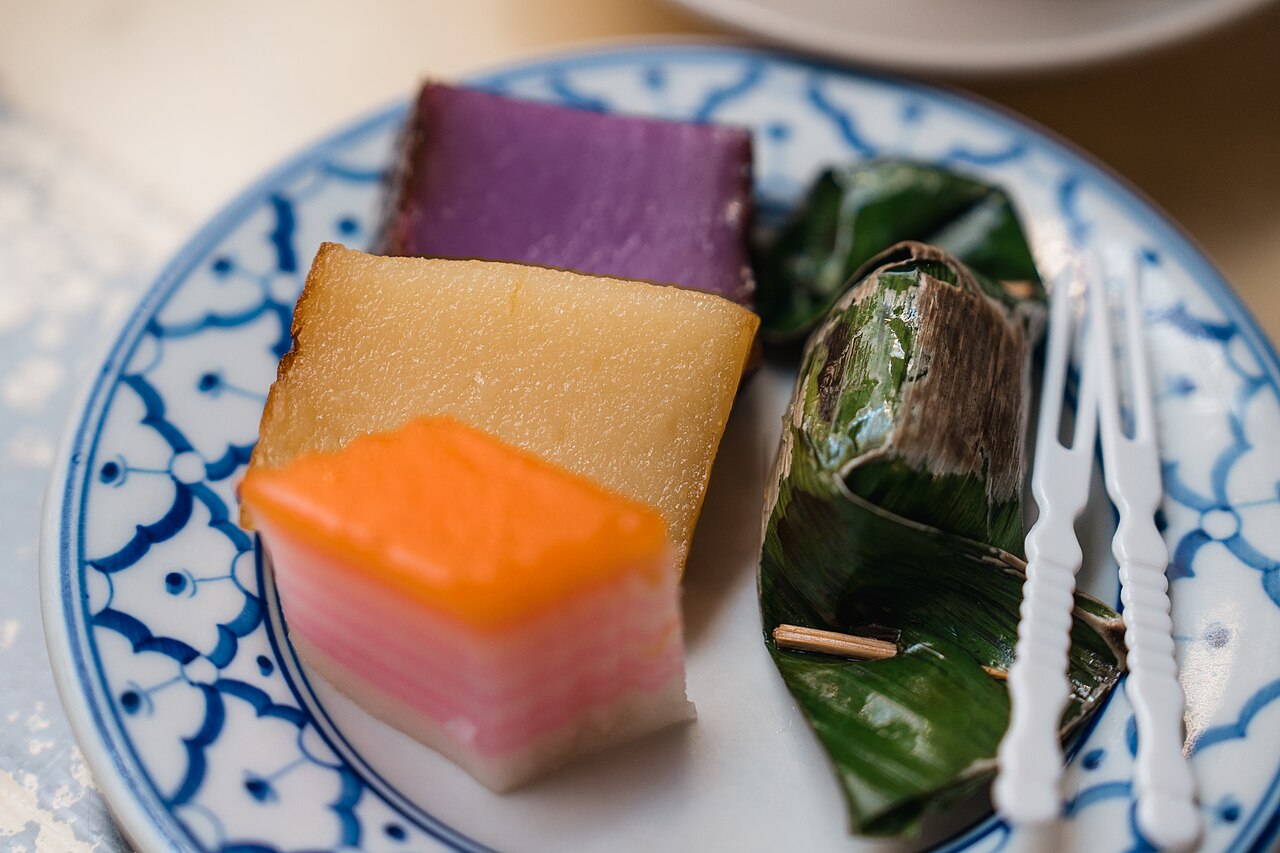
Trays of coconut-flour cakes in yellow, pandan green and pink, lined up neatly on the stall. The texture is chewy and soft, rich and sweet from the coconut milk, and some sellers top them with grated coconut or a drizzle of palm sugar. They're what gives the morning market stalls their color.
Piana
An old sweet going back close to a hundred years, made mainly from flour and egg yolk, poured into a mold and grilled top-and-bottom until fragrant. The texture is dense, rich and sweet. Older folks around here have a real attachment to piana, and you'll see plenty of it during Ramadan.
Maduka tong (charcoal-grilled coconut cake)
A clever local sweet made from rice flour, glutinous rice flour and young coconut, wrapped and grilled over charcoal. There's a faint smoky aroma, the texture is chewy and soft, and the sweetness is homey and unfussy.
Jemah (grandma's cake)
A small sweet passed down within families — the name comes from Malay and means grandmother's cake. Newer versions tend to dial the sweetness back, with a soft, easy texture. You'll find it at the long-running stalls.
Ladu
A Malay sweet that older people describe as both food and a tonic. It's popular at merit-making events and after childbirth, with a dense, sweet texture that keeps longer than the usual coconut sweets — a good one to take home as a gift.
Lopa tikaeng
A sweet with a clear pandan aroma, eaten with syrup or palm sugar. The texture is chewy and the sweetness is mellow — a local sweet you'll find at the market stalls.
Roti to go with your sweets
It's not a dessert exactly, but crisp-soft fried roti drizzled with sweetened condensed milk is the regular sidekick at the morning sweet stalls. Plenty of people order a plate of roti, then pick up some coconut cakes to eat alongside a glass of hot tea.
A tip
Handmade coconut sweets spoil easily because there are no preservatives — buy them in the morning and eat the same day for the best taste. If you mean to take them home as a gift over a long distance, go for ones that keep longer like ladu or ajae, and just ask the seller straight up how many days they'll last. People here will tell you honestly.
Want to taste deeper? Try a Pattani food tour or cooking class
Half a day with a local who knows the lanes — or cooking a dish yourself — teaches you more than just eating. Book ahead on Klook or GetYourGuide.
The morning markets where Pattani locals actually buy sweets
The freshest Malay sweets are at the morning markets, not in malls. We've picked markets that are still open and that locals visit regularly. Each has its own feel, so check the open days and hours before you go — some only open on certain days.
Pattani Municipal Fresh Market
A big market in the town center, diagonally across from Pattani Central Mosque, with stalls of Malay sweets, savory dishes, vegetables and fruit — busy in the morning and a good starting point for first-timers.
Tetwiwat Market
Another market in the municipal area where Pattani locals do their morning shopping, mixing sweet and local-food stalls in with the fresh produce. It's a short walk on from the municipal market.
Puyud Market
A market in the Puyud area with lots of local halal food and a strong Malay community feel — good if you want to see local life outside the town center.
Rusamilae Market
A Sunday morning market near Prince of Songkla University, Pattani campus, open from around 8am to noon, with food and secondhand goods. The local young crowd likes to come and browse.
Best time to go
Morning sweets start hitting the stalls from around six or seven, and the popular ones like ajae tend to sell out fast, especially on weekends and during Ramadan. If you want the full spread, get there before nine.
Why you eat them with hot tea
Malay tea culture has gone hand in hand with sweets for a long time. The rich, sweet coconut cakes cut nicely against hot tea, so you can keep eating without it feeling cloying. The tea shops here usually brew red tea or pulled tea with condensed milk — strong and sweet — and some have fragrant hot pandan tea. People around here like to order a glass of hot tea and share sweets with friends in the morning.
- Pulled tea / milk tea — hot tea with condensed milk, strong and sweet, a perfect match for ajae or coconut cakes
- Red tea (teh-or) — hot tea with sweetened condensed milk in a deep red color, the classic breakfast tea around here
- Traditional coffee — many tea shops also have strong old-style coffee, good for people who don't drink tea
- Pandan tea — some shops have hot pandan-scented tea, gently fragrant and good for cutting the sweetness of the cakes
A slow two-morning sweets crawl
If you want to try the full range of Malay sweets without rushing, we've laid it out over two mornings. The first morning focuses on the in-town markets; the second heads out to the community areas. Adjust it to the market open days and the real situation as needed.
In-town markets + tea shop
Out to the Malay community areas
Small courtesies
This is a Muslim community, so before photographing people or stalls, ask permission with a smile first. Dress modestly, and steer clear of anything that might not suit the local context. Do that and you'll walk the markets with ease.
Plan a full Pattani food trip, both savory and sweet
See the Pattani travel guide →