🔄 Updated 21 Jun 2026
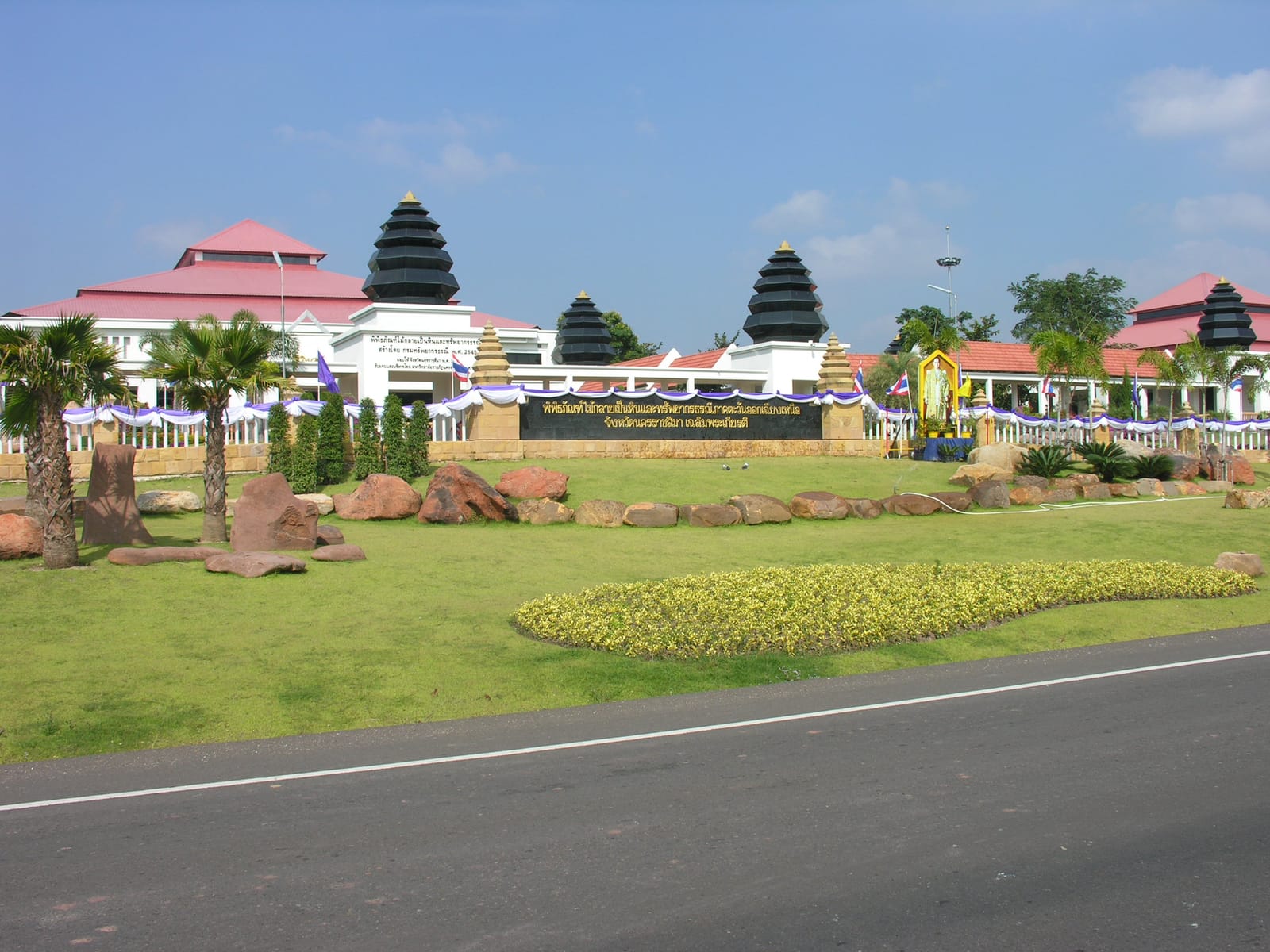
The Petrified Wood Museum is part of the Northeastern Research Institute of Petrified Wood and Mineral Resources at Nakhon Ratchasima Rajabhat University. It sits on around 80 rai (about 13 hectares) at Ban Krok Duean Ha in Suranaree subdistrict and opened officially in 2008. What makes it special is that it's one of just a handful of museums in the world dedicated specifically to petrified wood, and it's also a key site in the Khorat Geopark, which is registered as a UNESCO Global Geopark.
What is petrified wood, and why is it worth seeing?
Petrified wood is ancient logs that were buried under sediment for millions of years. Mineral-rich groundwater slowly replaced the wood, bit by bit, until the whole log turned to stone — yet the growth rings and grain are still preserved as they were. The samples found around Korat range from tens of thousands of years old to several hundred million. The interesting part is that when you step up close, you can see the surface really is stone, but the pattern inside is clearly still wood. It's the kind of thing photos don't do justice to — you have to stand there and look.
Know before you go
This isn't a tiny museum you wrap up in half an hour. It's spread across several buildings in a large garden, so plan on about 1.5–2 hours to see it properly. Some sections are outdoor walkways, so comfortable walking shoes make the visit easier.
Want more out of Nakhon Ratchasima? Book tours & activities
Booking online ahead on Klook or GetYourGuide is usually cheaper than the gate and skips the queue. Pick only the experiences you actually want — prices and availability are shown live on each site.
Going zone by zone — what's inside
The museum is divided into three main sections you can walk through one after another, from petrified wood to ancient elephants to dinosaurs. Each zone has real specimens and models you can see up close, so it works for both geology fans and kids who love dinosaurs.
Petrified Wood Building
Displays petrified logs of many kinds, including palm wood and wood from other regions. There's an interactive spot where kids can build a model of a plant stem, making it clear that this lump of stone was once a tree.
Ancient Elephant Museum
The zone many people like best, with skeletons of ancient elephants and mammals. It includes the skeleton of a Stegodon-type elephant standing around 3 m tall, plus a replica woolly mammoth around 5 m tall.
Dinosaur Museum
The dinosaur zone, showing a new Thai species, Siamraptor suwati, along with skeleton and skull replicas of several other dinosaurs.
10 genera of ancient elephants — what makes Korat special
The remarkable thing about the Korat area is that it's a site where an unusually wide range of ancient elephants has been found. Worldwide there are around 55 genera of prehistoric elephants, but Nakhon Ratchasima alone has yielded 10 of them, all now extinct. That makes the ancient elephant zone read almost like a logbook of elephant evolution on this very land millions of years ago. Kids tend to get excited by the huge skeletons, while adults come away seeing just how important Korat is on the world's fossil map.
- Stegodon elephant — a skeleton around 3 m tall, the highlight of the ancient elephant zone
- Woolly mammoth — a replica around 5 m tall, big enough to make kids' eyes go wide
- 10 elephant genera — showing the diversity of elephants that once lived around Korat
- Siamraptor suwati — a new predatory dinosaur species found in Thailand
Hours, entry fee, and location
The museum is open Tuesday to Sunday and closed on Mondays. The entry fee is a real bargain for what you get to see. The prices below are approximate, so it's worth checking with the museum again before you go, since they may change and the museum can close during festivals such as Songkran.
- Hours — Tue–Sun, 09:00–15:30, closed Mondays
- Thai entry fee — adults 30 THB · university students 20 THB · school students 10 THB
- Foreigner entry fee — around 100 THB
- Location — Ban Krok Duean Ha, Mittraphap–Nong Pling Road, Suranaree subdistrict, Mueang Nakhon Ratchasima district
- Phone — 0-4437-0739 or 08-0165-1070
Straight talk
If it's just the two of you on a quick visit, the place can feel quiet and more like an educational museum than a flashy photo spot. But if you're coming with kids or anyone into world history, it's well worth the few-baht entry — you learn a lot and see real things that are hard to find anywhere else.
How to get there from central Korat
The museum is on the west side of the city, right on Mittraphap Road heading out toward Sikhio. It's about a 20-minute drive from the city center. If you're coming from Bangkok you'll be on Mittraphap Road anyway, so you can stop in just before reaching the city. Without your own vehicle, you can call a Grab or hire a songthaew from town — but arrange your return ride in advance, because cars don't pass by often out there.
- Own car / rental — the easiest option, with parking at the museum
- Grab — you can call one from town, but book your driver for the return trip
- Combine into a day trip — pair it with Korat Zoo, or stop in before reaching the city, since they're along the same route
Day-trip plans that include the Petrified Wood Museum
The museum takes about 1.5–2 hours, so it pairs well with other spots on the same day. Below are two sample plans: a half-day focused on the west side of the city, and a full day that adds the old town. Adjust the timings to fit your day.
Half-day on the west side (family-friendly)
Full day, including the Ya Mo old town
Want a full set of Korat attractions — a mix of nature, city, and culture?
See all Korat attractions →