🔄 Updated 21 Jun 2026
Phang Nga's waterfalls are spread across several districts — from Takua Pa and Khao Lak in the north, down through Thai Mueang, to Mueang Phang Nga near the provincial capital. Most fall inside national park boundaries, fed by rivers running off well-preserved rainforest hills. What they share: genuinely cold water, heavy tree cover, and shallow pools calm enough to wade in safely. They make a solid half-day side trip from a beach-and-karst itinerary.
About 'Emerald Pool Phang Nga' — clear this up first
Searching for "Emerald Pool Phang Nga" will confuse you — the real Emerald Pool (Sra Morakot) is in Khlong Thom district, Krabi province, not Phang Nga. If you want that turquoise-green water closer to Phang Nga, the local equivalent is Nang Manora Pool (Sra Nang Manora) in Nop Pring sub-district, Mueang Phang Nga — a clear stream over flat rock slabs just a few kilometres from town. We've included it below.
Phang Nga Waterfalls Worth Visiting
Sai Rung Waterfall (Pak Weep)
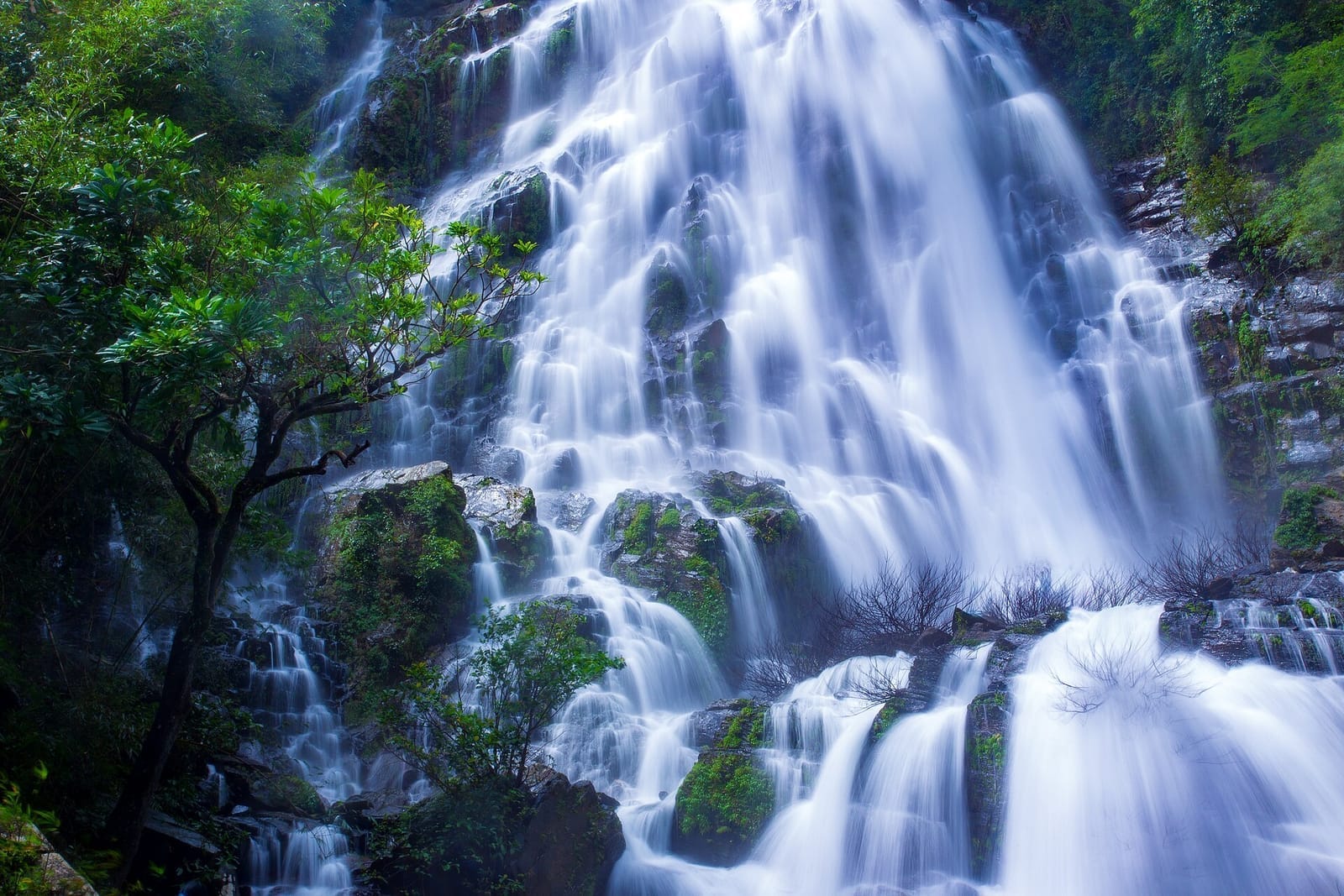
A single-drop waterfall around 60 metres high, sitting inside the Khao Lak area. It's only about 300 metres from the car park — short enough that almost anyone can reach it. The drop hits a wide rock face and creates a shallow pool at the base for wading. The name 'Sai Rung' means rainbow, which is exactly what the spray produces on sunny mornings.
Tamnang Waterfall
Another ~60-metre cascade, this one inside Sri Phang Nga National Park. The 500-metre forest trail in is dense and genuinely shaded — pleasantly cool even on hot days. On sunny mornings the spray catches the light and you get the rainbow effect again. In wet season the flow is powerful; wet rock near the base can be slippery, so watch your footing when getting close.
Ton Chong Fa Waterfall
Seven tiers spread through Khao Lak-Lam Ru National Park, each level looking quite different from the last. Some tiers have pools deep enough to sit in; one section has tiny fish that nibble your feet — natural fish-spa, no appointment needed. The trail steepens as you climb, but the view at the top opens up considerably for those who make it.
Lampi Waterfall
A multi-tier waterfall in Khao Lampi-Hat Thai Mueang National Park where clear water runs over flat rock slabs. There's a suspension bridge over the stream that makes for a good photo, and the car park is large — you can pitch a tent and stay the night. Good choice for families who want to sit by moving water for a few hours rather than do a hard hike.
Ton Prai Waterfall
A single strong-flow drop also in Thai Mueang district. During wet season the volume is high enough that mist hangs over the whole area and the air turns noticeably cool. The current is too strong for swimming when the water's up — this one is better for watching and photographing than getting into.
Lam Ru Waterfall
Inside the Khao Lak-Lam Ru park on the Kapong district side. Water steps down over rock outcrops into pools you can sit in. The forest here is quieter than the main Khao Lak waterfall spots — significantly fewer visitors. If the busier falls feel too crowded, this is a decent alternative.
Want more out of Phang Nga? Book tours & activities
Booking online ahead on Klook or GetYourGuide is usually cheaper than the gate and skips the queue. Pick only the experiences you actually want — prices and availability are shown live on each site.
Clear Streams & Natural Swimming Pools
If scaling a tall waterfall isn't the plan and you'd rather sit in cool clear water under trees, Phang Nga has several freshwater streams and natural pools that are easier to reach — good for families with kids or anyone who doesn't want a strenuous trail.
Sra Nang Manora Forest Park
Nop Pring sub-district, Mueang Phang Nga — only a few kilometres from the town centre. A clear stream runs over flat rock, forming a main pool around 10 metres wide plus smaller pools scattered around. The water is shallow and cold. There's a 2 km nature trail winding through a palm grove and past a fish cave, shaded all the way through.
Ton Pring Waterfall
A small, easy-access waterfall close to the main road with a shallow safe pool for sitting and picnicking. Good for a quick stop between destinations — no long walk required.
Lampi Stream (lower section)
Beyond the main Lampi waterfall, the stream below flows slowly over flat rock with clear water ideal for dangling your legs in. Large trees provide full shade and there's enough flat space for a group to spread out comfortably.
Best Season & What to Bring
- Rainy season (May–Oct) — Highest water volume. Falls are at their fullest and the mist-and-rainbow effect is most dramatic. That said, rocks are slippery and water can turn murky or run fast on heavy rain days — stay out when it's actively pouring.
- Late rainy to early cool season (Nov–Jan) — Water still high but starting to clear. Trails are less muddy and rock surfaces are less treacherous. This is the most balanced window for actually swimming.
- Dry season (Feb–Apr) — Water drops; some falls thin out to a trickle. The pools that remain are very clear and crowds are smaller — still worthwhile if you keep expectations in check.
- What to pack — Water shoes or sandals with a back strap, a towel, a waterproof bag or case for your phone, drinking water, and insect repellent for the forested sections.
- Getting there — Most waterfalls are outside the main towns and some access roads are narrow. Renting a car or motorbike is the most practical option. Go in the morning — light is better for photos and you'll be back before afternoon rain.
Swim safely
Always check the national park warning signs before entering water. On heavy rain days, skip the swim — flash water from upstream can arrive quickly with little warning. Choose pools where you can see the bottom clearly and the current is calm. Don't climb wet rocks near the lip of a waterfall. With children, stick to the shallow pools and stay close at all times.
Plan a full day in Phang Nga — sea, karsts, and waterfalls combined
See the Phang Nga travel guide →