🔄 Updated 21 Jun 2026
If you had to pick one dish to represent Phetchaburi, a lot of people would say khao chae right away. It looks simple but there's a huge amount of detail in it, from rice that's cooked then rinsed until every grain is clean, to water perfumed with candle smoke and floated with jasmine. It eats cool and refreshing, perfect for our hot weather. This article covers how Phetchaburi's khao chae differs from versions elsewhere, what the side dishes are, when you should eat it, and where the shops that locals actually go to are.
What is Phetchaburi khao chae, and how does it differ from the royal version?
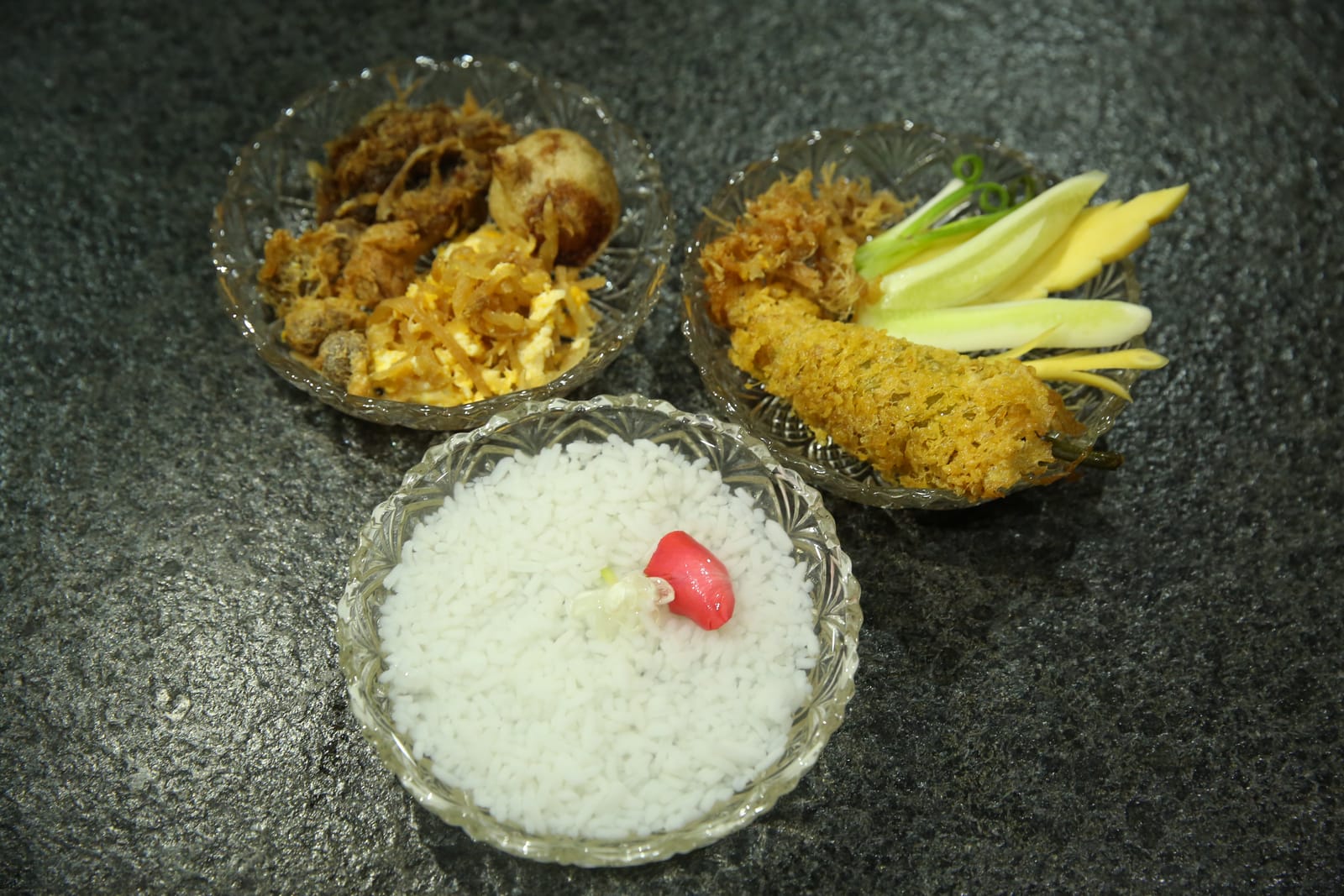
Khao chae has roots in Mon cuisine, made as an offering to monks and to the spirits during Songkran, before it was adapted into the palace kitchens and became the more refined royal khao chae, with more elaborate side dishes. Phetchaburi took the recipe and cooked it at home until it became a local staple. The clearest difference is that royal khao chae usually comes with up to six side dishes and is all about refinement, while traditional Phetchaburi-style khao chae is plainer, with three main sides: fried shrimp-paste balls, sweet stir-fried pickled radish, and sweet stir-fried fish, with other items added depending on the shop.
The heart of khao chae is the water. The cooked rice has to be rinsed until all the starch and gum are gone, leaving clear grains. The water is jasmine-scented; some shops add candle smoke, some add a little ylang-ylang. It's served ice-cold with the faintest fragrance, and that's exactly what makes khao chae completely different from plain rice in water.
Want to taste deeper? Try a Phetchaburi food tour or cooking class
Half a day with a local who knows the lanes — or cooking a dish yourself — teaches you more than just eating. Book ahead on Klook or GetYourGuide.
The side dishes — what they are and how to eat them
The charm of khao chae is in the sides. Each one is made by hand, takes time, and has a different flavour so you can alternate. The correct way to eat it is to take a bite of a side dish first, then follow with the rice and cool water, rather than tipping the sides into your rice bowl, because that clouds the water and the fragrance disappears.
- Fried shrimp-paste balls (look kapi) — the star of the plate. Phetchaburi shrimp paste is stir-fried with shallots and lemongrass, rolled into balls, dipped in egg and fried. Balanced salty-sweet with a good shrimp-paste aroma.
- Stuffed sweet peppers — sweet peppers split and seeded, stuffed with minced pork and shrimp, then wrapped in a fluffy egg net called 'rum'. Soft, gentle, mildly spiced.
- Stuffed shallots — large shallots split and stuffed with fish or pork, dipped in batter and fried. One bite gives you that sweet-salty shallot fragrance.
- Sweet stir-fried pickled radish — salty pickled radish shredded and stir-fried with sugar until sweet and sticky, good for cutting the richness.
- Sweet stir-fried dried fish — dried fish floss stir-fried sweet to a brown colour, strong-flavoured, a little goes a long way.
- Sweet shredded pork / beef — pork or beef pulled and stir-fried sweet and crisp; some shops add it as a freebie.
- Fresh vegetables — green mango, cucumber, spring onion, fingerroot, fresh chilli, all to cut the sweetness and add freshness.
Eat it better
Try alternating the side dishes with fresh veg like sour green mango or sliced fingerroot — it cuts the sweetness of the sides and keeps it enjoyable. Don't rush through the water; sip slowly so you catch the jasmine.
Phetchaburi khao chae shops the locals go to
Phetchaburi has khao chae shops spread across the town and out in Tha Yang district. Prices start from a few tens of baht up to a few hundred depending on how many side dishes you get. We've picked shops that are genuinely open and often talked about. Prices are rough ranges — check with the shop, since they vary with ingredients and season.
Khao Chae Mae Lek Sakidjai (Tha Yang)
A well-known royal-recipe shop carrying on a long-standing recipe, near Tha Yang market, across from the Guan Yu shrine. Full set of sides including shrimp-paste balls, stuffed sweet peppers and stuffed shallots, all carefully made. People will drive all the way out to Tha Yang for it.
Khao Chae Pa Uean (Khao Chae Kachat)
A humble, legendary Phetchaburi shop open since 1959 — over sixty years now. It's across from Red Cross Station 8, in front of the health centre. Very cheap but bold-flavoured as you'd expect from an old hand. Packed in the late morning.
Khao Chae Mae Orn (Riverside Market)
At the entrance to Phetchaburi's old riverside market, in Phanit Charoen market, Tha Rap subdistrict. The old-market atmosphere is good for a wander afterwards. Full set of sides and refreshingly cool jasmine water.
Khao Chae Mae Lap
Across from Phetchaburi Vocational College, opposite Wat Khoi, in Soi Sapsin 2/1, Khlong Krachaeng subdistrict. Super friendly prices; locals stop in regularly.
Khao Chae Hom Hom (Mae Nid)
Sit under a bamboo shelter beside Khlong Krachaeng, near the governor's residence and the Black Bridge. A homely, cool, relaxed spot — good for a chilled late-morning meal.
Khao Chae Bangorn, Riverside Market
An old hand in Phetchaburi's riverside market, selling Phetchaburi khao chae since 1981. A traditional home recipe with side dishes that taste of an experienced hand.
Marie Guimar
A Phetchaburi Thai restaurant by Chef Jo (Thana), focused on hard-to-find old-style dishes. The khao chae here is plated as carefully as a royal set — good for a special meal in a nice setting.
Stalls in morning markets around town
From the hot season through Songkran, the morning markets and dessert stalls around Phetchaburi sell plenty of khao chae bagged to go. Cheap, good for a quick bite or to take away.
Straight talk
A lot of shops sell from late morning into the afternoon and often sell out before closing on busy days, especially in the hot season. To be safe, call ahead or go before noon. Some are tiny shelters that open depending on ingredients and may close unpredictably — checking the shop's page before you set off is your best bet.
When and what season to eat khao chae
Khao chae is a heat-beating dish. Elsewhere in Thailand people usually only eat it in the hot season, March to May, with the peak around Songkran. But what's special about Phetchaburi is that many shops sell almost year-round, because here khao chae is an everyday snack — it doesn't wait for a season.
- March–May — the absolute peak. Every shop is open, the sides are fresh, and there are many to choose from. Hot weather makes it hit the spot.
- Songkran (mid-April) — the festival where khao chae is the star. Popular shops get packed, so go early or call ahead to reserve.
- Outside the hot season — you can still find it at several shops in town, but options thin out and some close for a while, so check first.
- Morning to late morning — the best time of day, when the rice and water are still cold and fresh and the sides are freshly made.
Half a day in old Phetchaburi + khao chae
If you want to make the most of your khao chae, you can easily build a walk around old Phetchaburi around it. Here are two rough approaches — pick depending on whether you want to stay in town or head out to Tha Yang.
Old-town walk + riverside khao chae
Royal-style — heading out to Tha Yang
Getting-around tip
The in-town shops are within walking or tuk-tuk distance of each other in the same area. Tha Yang needs a car — about 20–30 min from the town centre. If you're coming from Bangkok without a car, renting one or catching a local songthaew is the way to go.
Plan a full Phetchaburi eating trip — savoury, sweet, and where to stay
See the Phetchaburi travel guide →