🔄 Updated 21 Jun 2026
Plenty of people assume Phetchaburi and Ratchaburi need separate trips, but the two provinces are next-door neighbours, linked by Phetkasem Road (Highway 4). It's about 54 km city centre to city centre — roughly an hour's drive — so they fit neatly into a three-day trip that works its way south to north. Day one covers Phetchaburi's old town and Khao Wang, day two moves up to Ratchaburi for ceramics and nature, and day three starts early at Damnoen Saduak floating market before heading home. That rhythm means no rushing and no driving back on yourself.
Before you set off
If you're driving yourself, there are two routes down to Phetchaburi from Bangkok: Rama 2 Road through Samut Sakhon–Samut Songkhram, or Phetkasem Road through Nakhon Pathom–Ratchaburi — about 2 hours to Phetchaburi town either way. For the Phetchaburi–Ratchaburi leg, take Phetkasem straight north, roughly 1 hour. There are vans and trains running between both cities for those without a car, but for a cross-province trip like this, renting a car or driving yourself is far more flexible, since the sights are spread out beyond the town centres.
Day 1 — Phetchaburi old town, temples and sweets, then up Khao Wang
Phetchaburi old town → Khao Wang → overnight in Phetchaburi
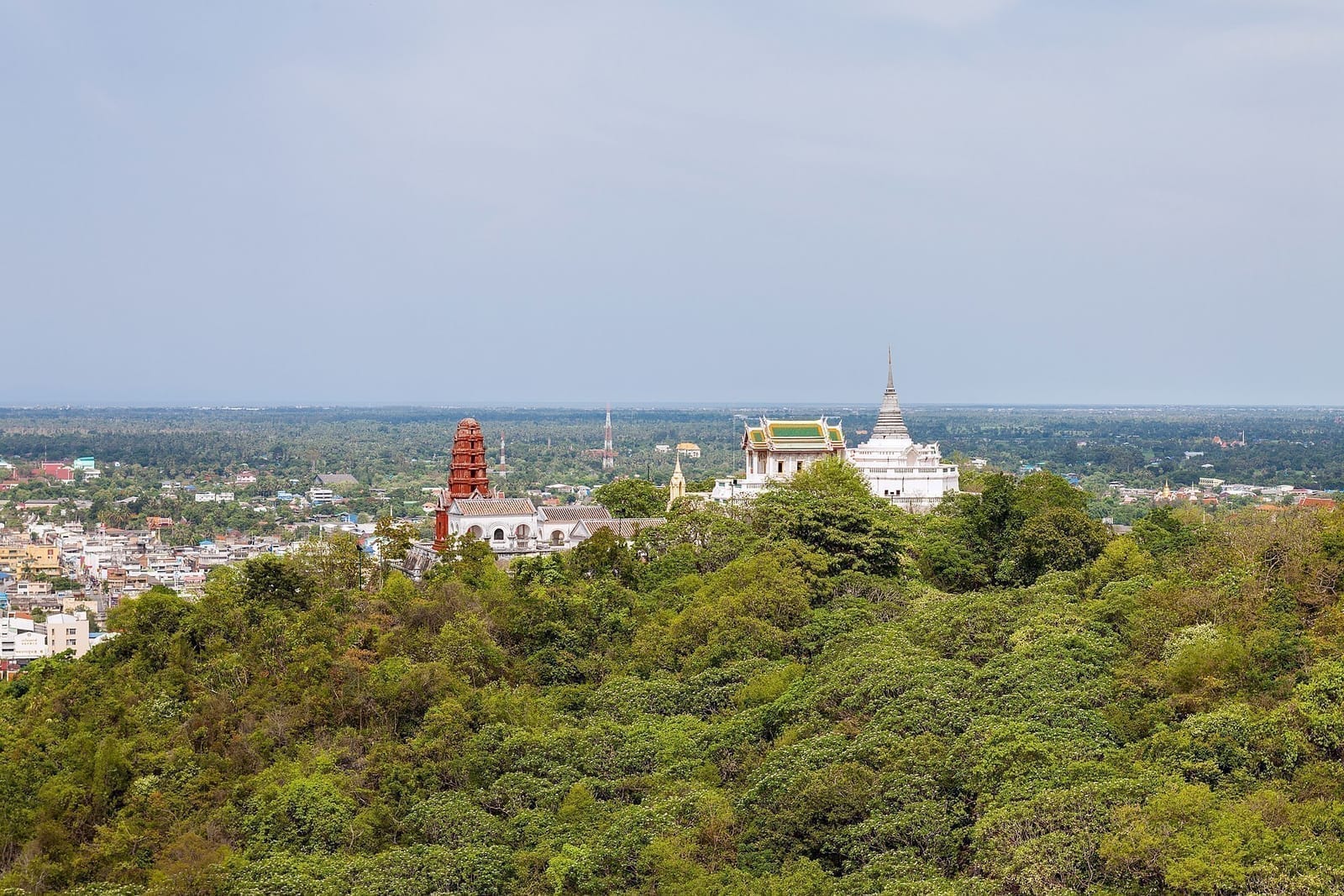
Khao Wang is the highlight of day one. Entry is a few tens of baht for Thais, around 150 THB for foreigners, plus roughly 50 THB for the cable car up and down. It's open about 08:30–16:30, so if you want to go up, aim to arrive before 4 pm to have time to walk around. You can take the stairs if your legs are up to it, but the cable car is easier. There are lots of monkeys at the top — keep snack bags and water bottles zipped away and don't tease them.
Why stay in Phetchaburi town the first night
Many people like staying in Cha-am on the first night for the beach, but for this trip crossing into Ratchaburi, staying in Phetchaburi town lets you drive straight north the next morning instead of looping back. If you want the beach, save Cha-am for another trip — or tack it on at the end instead.
Book the activities in your Phetchaburi trip ahead
Booking online ahead on Klook or GetYourGuide is usually cheaper than the gate and skips the queue. Pick only the experiences you actually want — prices and availability are shown live on each site.
Day 2 — Drive up to Ratchaburi: Tao Hong Tai, Khao Ngu, the old Mae Klong quarter
Phetchaburi town → Tao Hong Tai → Khao Ngu → Ratchaburi old town → overnight near Damnoen Saduak
Ratchaburi is famous for pottery, especially the dragon jars that have been a hallmark of the city for over sixty years. Tao Hong Tai is a long-running factory open to visitors for free, where you'll see both the old kilns and contemporary ceramic work. Khao Ngu, meanwhile, is a limestone hill that was once a quarry and has since been turned into a public park, with old Buddha-image caves and a lake to wander around. Together with the old Mae Klong riverside quarter, those two spots give day two a mix of craft, nature and history all in one day.
Which side to stay on for the second night
If your goal is Damnoen Saduak floating market the next morning, it's worth staying around Damnoen Saduak or near the market, so you can be up in time for the busy early hours before the crowds build. Lodging here ranges from canal-side resorts to homestays, and weekday rates are noticeably cheaper than weekends.
Day 3 — Damnoen Saduak floating market: boat ride, local food, then home
Damnoen Saduak floating market → boat ride → souvenirs → back to Bangkok
Damnoen Saduak is an old floating market known around the world, running as a tourist spot since 1967. Its draw is the canal-side scene of paddle boats selling goods, which still survives here in part. The trick is to go early, because from mid-morning to noon the crowds build and the vendors start packing up. If you want good photos and an easy boat ride, aim to reach the market before 8 am. As for boat fares, settle the price clearly before you get on so there's no confusion afterwards.
Getting the most out of the floating market
Ask about and agree the boat rental clearly before boarding — both the price per boat and how long the ride lasts. Some food on the boats costs a little more than usual depending on location, so if you want cheaper prices you can walk and buy along the canal bank instead. And bring plenty of cash, as many stalls still don't take transfers.
What else is there to do in Ratchaburi if you have more time
If you've still got energy on day two, or want to stretch the trip to four days, Ratchaburi has plenty more spots to drop by — nature, craft and photo-friendly stops alike. Add them in to taste.
Rueang Khong Ong
A living museum telling the story of Ratchaburi's dragon jars, with pottery workshops and ceramic photo corners — a natural follow-on from Tao Hong Tai.
The Scenery Vintage Farm
A European-style vintage sheep farm that photographs well, with a café and a spot to feed the sheep — good for families and photo lovers.
Wat Nong Hoi (Khao Wat Nong Hoi)
A hilltop temple where you climb up to pay respects to Guan Yin and take in views over Ratchaburi town, with cool air in the early morning and evening.
Old Mae Klong riverside market
A quarter of old shophouses and a riverside market in town — stroll, sample local food and photograph the street art.
Best eats across the two provinces: Phetchaburi–Ratchaburi
A cross-province trip like this gives you two styles of food: the Phetchaburi side is strong on sweets and regional dishes, while the Ratchaburi side leans into canal-side eats and local food around Damnoen Saduak. These are the dishes you can actually find and that people go for again and again, ordered to match the flow of the trip.
Phetchaburi mor kaeng custard
Phetchaburi's signature souvenir — a rich, fragrant custard made from egg, palm sugar and coconut milk. Famous shops line Phetkasem Road on the way into and out of town, easy to grab and take home.
Phetchaburi khao chae
Rice in chilled, flower-scented water eaten with fried side dishes — Phetchaburi's hot-season cooler. Most reliably found March–May, and the old-town shops do it well.
Thong yip, thong yot, foi thong
Traditional Thai sweets that Phetchaburi does very well, sweet and fragrant from egg and sugar. Find them in the old town and at souvenir shops all over town.
Damnoen Saduak boat noodles
Small bowls of rich-broth boat noodles, the classic floating-market eat — order several bowls without filling up too fast, with pork crackling and meatballs on the side.
Charcoal-fired khanom krok & sweets in the floating market
Coconut-scented khanom krok from a charcoal stove, plus Thai sweets made fresh in Damnoen Saduak floating market — eaten warm by the canal, it suits the setting.
Old-style canal-side coffee
Oliang and old-style coffee brewed fresh in the floating market and old market — bold and sweet in the traditional way, sipped with pa thong ko in the morning.
Thai food at Khao Ngu view restaurants
Thai restaurants with limestone-hill and rice-paddy views around Khao Ngu — à la carte dishes, grilled fish and tom yum at friendly prices, good for day-two lunch.
Tao Hong Tai café
A café inside the old ceramics factory, where you sip coffee among the pottery and dragon jars — a different atmosphere from your usual café, and the factory is free to visit.
Palm sugar & coconut sugar from both provinces
The Phetchaburi side is known for palm sugar from toddy palms, while the Damnoen Saduak side is known for coconut sugar — both are used in sweets and make good souvenirs.
Pacing your eating
Phetchaburi sweets keep, so buy them on the way back on the last day and they'll be fresher. Floating-market food has to be eaten fresh on the spot. Carry plenty of cash, since many small stalls still don't take transfers. Fried snacks and sweets in the floating market vary in price by location, so it's fine to compare a couple of stalls before buying.
The route and getting between the provinces
- Bangkok → Phetchaburi — Rama 2 Road through Samut Sakhon–Samut Songkhram, or Phetkasem Road through Nakhon Pathom–Ratchaburi, about 2 hours to the town centre.
- Phetchaburi → Ratchaburi — take Phetkasem Road (Highway 4) north, through Pak Tho district, about 54 km and roughly 1 hour.
- Ratchaburi → Damnoen Saduak — about 30 km, roughly 40 minutes, from Ratchaburi town. Stay near the market to do it early the next morning.
- Damnoen Saduak → Bangkok — back into Bangkok via Rama 2 Road, about 1.5 hours. Leaving in the afternoon helps dodge the evening jams.
- If you're not driving — vans and trains run between Phetchaburi and Ratchaburi, but renting a car or hiring one in town is recommended, since the sights are spread out beyond the towns and the floating market is hard to reach by public transport.
Want Phetchaburi places to stay that genuinely review well? We've picked them out.
See the Top 10 Phetchaburi hotels →