🔄 Updated 21 Jun 2026
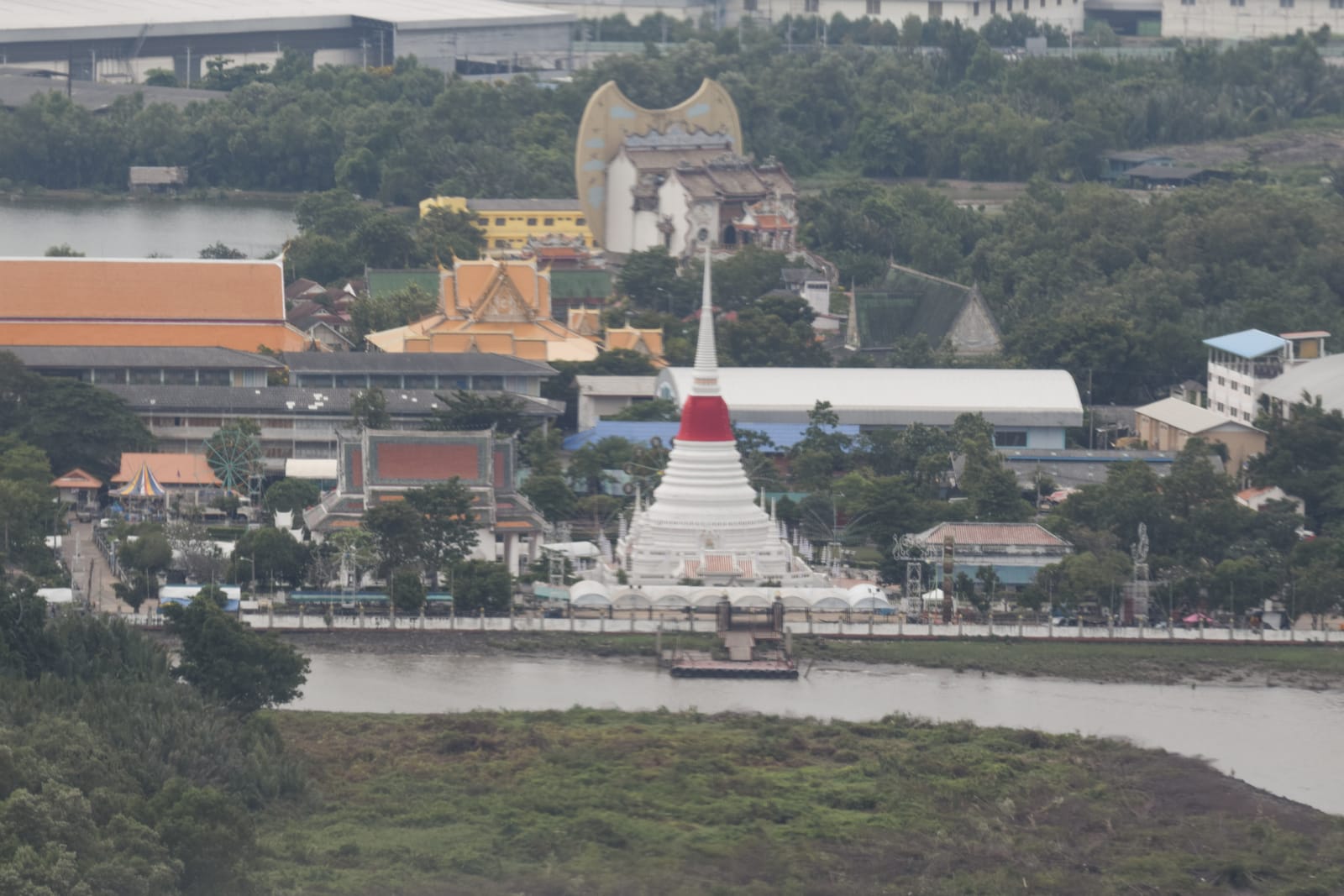
Phra Samut Chedi has been one of Samut Prakan's defining sights for nearly two hundred years. The white bell-shaped stupa sits on a small island at the mouth of the Chao Phraya River, visible all the way from the town side and even prettier as the ferry pulls closer. The draw here isn't just the stupa itself — it's the ferry crossing, which makes you feel like you've slipped out of Bangkok into another world, even though it's only a few dozen minutes away.
The mid-river stupa that became the province's symbol
Phra Samut Chedi began with a wish from King Rama II to have a stupa standing right at the river mouth, so that foreign ships sailing in and out would see this was a Buddhist land. Construction wasn't finished until the reign of King Rama III, around 1827, taking roughly 211 days to build, and relics of the Buddha were enshrined inside the stupa. That made it both a landmark and a sacred place for locals at the same time.
The stupa originally stood on a real island in the middle of the water, which is why people called it the "stupa in the river." Over time, river silt built up until the surrounding ground became connected to the bank, but the old name has stuck to this day. More than that, the image of the stupa was adopted as the official emblem of Samut Prakan province — so if you've seen the provincial logo and wondered which stupa it is, this is the one.
Want more out of Samut Prakan? Book tours & activities
Booking online ahead on Klook or GetYourGuide is usually cheaper than the gate and skips the queue. Pick only the experiences you actually want — prices and availability are shown live on each site.
Taking the ferry across — the most fun part
The thing that really makes a visit here fun is the ferry crossing. From the town side, you board near the pier by Paknam Market (many people use Wibunsri Pier, just a short walk from the market), and the boat carries you across the Chao Phraya to the other bank where the stupa stands. It only takes a few minutes, but you get the full river breeze along the way.
- Ferry fare — around 6 THB per person, paid in cash on the boat (bring coins or small notes to make it easy)
- Ferry hours — boats run frequently from before dawn until evening; during the day you barely wait, with one leaving as another arrives
- Stupa opening hours — roughly 07:00–18:00, free to enter, no admission fee
- Best time to go — early morning when the sun is still gentle and crowds are thin, or late afternoon when the soft light is great for shooting the stupa against the sky
Tip
If you're coming by train, take the BTS to Paknam station, then walk toward Paknam Market to find the pier — it's easier than driving yourself, since parking around the market is hard to come by. If you do drive, there's also a car ferry that takes vehicles across, but the queue for cars moves slower than the passenger boats.
What to do once you reach the stupa
Once you cross to the stupa side, the mood shifts to a quiet riverside temple ground. You can walk up and around the stupa, pay your respects, apply gold leaf, and ring the bells as tradition has it. A favorite spot for many is the view back toward the town side, where cargo ships and ferries pass to and fro — a river-mouth scene you don't often get to see anywhere else.
Pray and apply gold leaf around the stupa
Walk around the base of the white stupa, make a wish, press on gold leaf, and ring the bells at the marked spots — calmer and quieter than the temples in town.
Photograph the riverside stupa
The white stupa set against the river and sky, with boats passing through the river mouth — you can shoot it all day long.
Buddha images and riverside pavilions
Beyond the stupa, there are Buddha images and pavilions where you can sit and catch the cool river breeze before taking the ferry back.
The Phra Samut Chedi worship festival
If you want to see the place at its liveliest, come during the Phra Samut Chedi worship festival, held every year in October (in 2025 it ran 12–23 October) alongside the provincial Red Cross fair. During this time there's the robe-wrapping ceremony for the stupa, candlelight processions, food stalls, and entertainment filling the grounds on both the town side and the stupa side. It's the annual event the people of Samut Prakan look forward to all year.
One thing to keep in mind
The festival draws big crowds — the ferry queues get long and parking fills up fast. If you're coming for the event, take the BTS and allow extra time for the boat. If you'd rather pay your respects in peace, skip this stretch and come on a weekday instead, when it's much more relaxed.
Keep exploring around Paknam
The nice thing about visiting Phra Samut Chedi is that you can pack several stops into one day, since it's close to the Paknam area with food and sights all around. You can easily plan anything from a half-day to a full-day trip.
- Phi Suea Samut Fort — an old riverside fortress near the stupa, a historical site tied to the defense of the river mouth that you can carry on exploring
- Paknam Market — a fresh riverside market on the town side, good for seafood, made-to-order dishes, and snacks before or after the ferry
- Phra Chulachomklao Fort — home to the disappearing gun batteries and the HTMS Maeklong warship museum, not far from the Phra Samut Chedi side and perfect for a history-leaning trip
Plan a full Samut Prakan day around its temples, markets, and food
See the Samut Prakan travel guide →