🔄 Updated 21 Jun 2026
When it comes to nature trips around Phitsanulok, Phu Hin Rong Kla is usually the first name that comes to mind. It's Thailand's 48th national park, covering more than 300 square kilometres, with its highest point at Phu Man Khao around 1,820 metres. That altitude keeps it cool almost all year, and in winter it can drop to 0–4°C. The charm here is that you can do several different things in a single day — natural rock fields, viewpoints, waterfalls and historical sites, all within easy reach of each other.
Highlights you shouldn't miss
Most of the main sights are clustered around the park headquarters, just a short walk or a quick drive away. These are the three stops everyone makes once they're up at Phu Hin Rong Kla.
Cracked Rock Field (Lan Hin Taek)
A wide rock field split by deep fissures that look like the ground has pulled apart, carved by natural weathering over millions of years. A wooden boardwalk lets you walk all the way around, and some of the cracks have small trees and green moss growing in them. It photographs beautifully in the early morning while the sun is still low and angled. It's about 1 kilometre from the headquarters.
Knobby Rock Field (Lan Hin Pum)
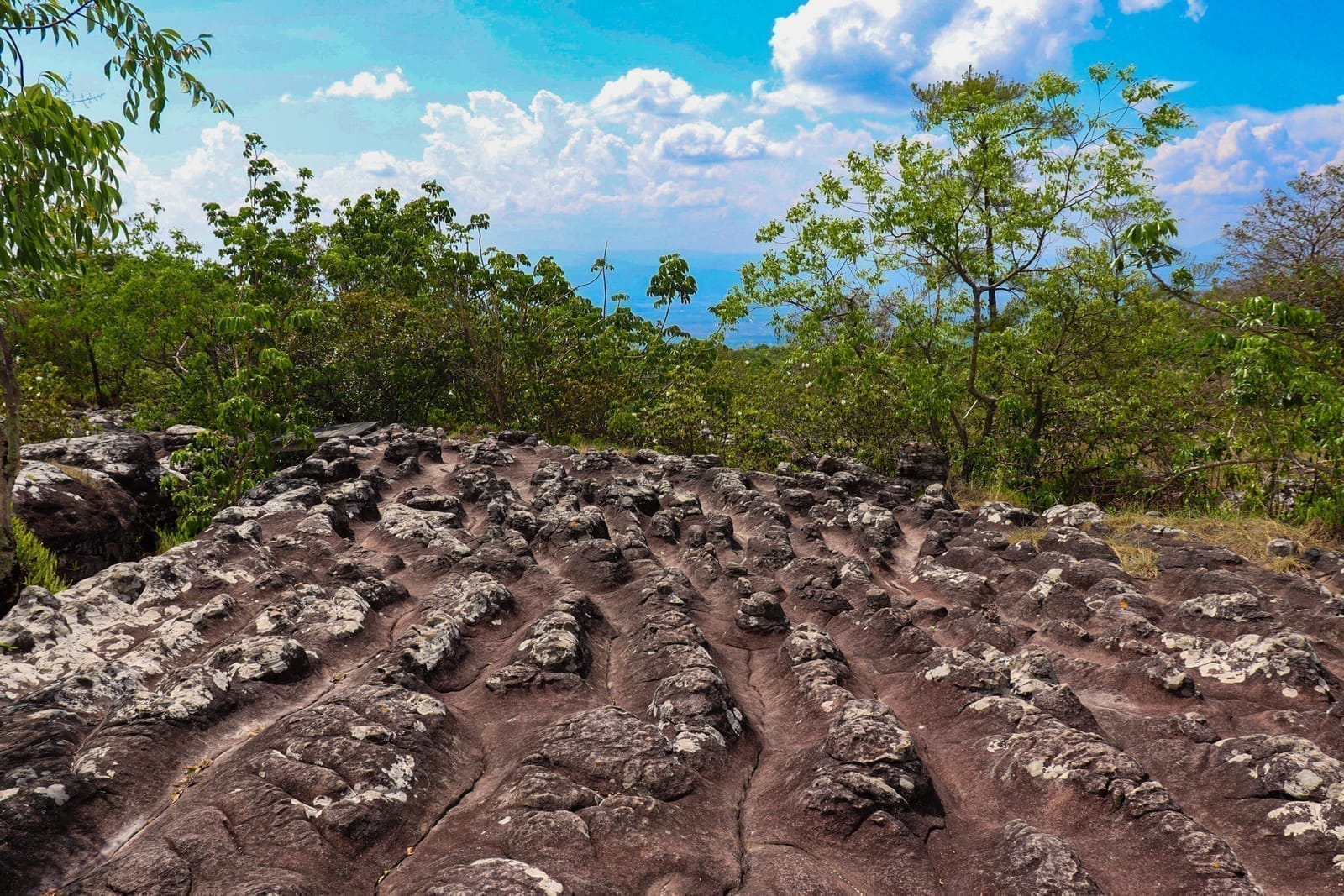
A rock field studded with knob-shaped boulders poking up across the whole area, almost like the surface of the moon. It was once a resting spot for former Communist Party members, and today it's an easy stroll with valley views all around.
Pha Chu Thong Cliff
A high cliff that looks out over layer after layer of mountains stretching as far as you can see. It's where the Communist side once raised their red flag after a battle victory. People like to come at sunset and wait for the light, and on some days you'll catch a sea of mist drifting below.
Walking the rock fields
The rock surfaces are uneven and get slippery when damp, so sneakers or shoes with good grip will be far more comfortable than sandals. Bring water too — the sun on the open rock fields can get fairly strong by mid-morning.
Want more out of Phitsanulok? Book tours & activities
Booking online ahead on Klook or GetYourGuide is usually cheaper than the gate and skips the queue. Pick only the experiences you actually want — prices and availability are shown live on each site.
Phu Lom Lo and the wild Himalayan cherry
Phu Lom Lo is the largest planting of wild Himalayan cherry trees in Thailand. Around the middle of winter — roughly January to early February — the whole mountain turns pink as the blossoms open at once, which is why people often call it Thailand's sakura. The spot sits deep beyond the headquarters along a steep, narrow road, so you'll need to switch to a local villager's truck or a four-wheel drive to get up there.
Check before heading to Phu Lom Lo
The bloom window shifts every year with the weather, and in some years the park temporarily closes the Phu Lom Lo area to let the forest recover after the blossoms drop. Before you plan a trip, it's always worth calling the park or checking their latest official page so you don't end up making the trip for nothing.
Waterfalls and extra stops
If you've got time to spare, the park also has waterfalls and historical sites to explore. A few involve a short walk through shady forest, so they suit anyone who wants to stay longer than half a day.
Rom Klao–Pharadon Waterfall
A two-tier waterfall in shady forest, about 3.5 kilometres from the headquarters and a short walk down from the parking area. The water is clear and cool — a good spot to rest your legs.
Si Phatcharin Waterfall
A mid-sized waterfall that spills into a rock pool, reached on a trail through pine forest. It's quiet and far less crowded than the main sights.
Political and Military School
Traces of old wooden buildings and a former camp from the years of armed conflict, with a water wheel and a state-power office you can walk through. A good way to understand the history of this area.
Battle History Museum
Located by the tourist service centre, it displays stories and objects from the conflict era. Worth a stop before you set off to the other sights.
Getting to Phu Hin Rong Kla
From central Phitsanulok, take the Phitsanulok–Lom Sak route along Highways 2013 and 2331, passing through Nakhon Thai district on the way up. It's about 130 kilometres in total and takes roughly 2.5 to 3 hours. The final stretch is a winding mountain climb that's steep in places — a regular sedan can make it, but drive carefully and check your brakes before you set off.
- Self-drive — the most convenient option, since the sights are spread out and public transport is limited. Fill the tank before the climb, as petrol stations get hard to find on the final stretch.
- Songthaew / chartered ride — if you're not driving yourself, get to Nakhon Thai district first, then catch a local ride or charter a vehicle up to the park. Ask about pickup queues in town.
- Combine with Phu Thap Boek — many people pair Phu Hin Rong Kla with Phetchabun's Phu Thap Boek on the same trip, since they're in the same zone. Plan for an overnight stay so you're not rushing.
Park entry fees
Adults 40 THB, children 20 THB, cars 30 THB, motorbikes 20 THB. Open daily 06:00–18:00. Prices can change, so check again at the entry gate when you arrive.
Where to stay and camping
If you want to wake up to morning mist and cool air, staying inside the park is the best value. There are park bungalows and a campground, and prices are reasonable — but it gets very busy in winter, so book ahead.
- Park bungalows — several units near the tourist service centre. Book through nps.dnp.go.th up to 60 days in advance; they fill up fast in winter.
- Campground — a 2-person tent is around 150 THB, a 3-person tent around 225 THB, or 30 THB per person if you pitch your own, with children free. There are toilets and lighting.
- Homestays and resorts outside — there are several private places around Nakhon Thai and along the road up, handy if you don't manage to book the park in time or want a bit more comfort.
A 2-day, 1-night plan
You can do Phu Hin Rong Kla as a day trip, but staying overnight lets you catch both the sunset and the morning mist. Here's a plan that works well if you're driving up yourself.
Up the mountain — rock fields — Pha Chu Thong
Morning mist — waterfall — heading back
When is the best time to go
Winter, November to February, brings cool air and a good chance of mist. If you're after the wild Himalayan cherry blossoms, aim for around January — but expect big crowds. If you prefer lush green forest and fewer people, the green season in the rainy months is beautiful in its own way; just be aware the roads can get slippery.
Plan a full Phitsanulok trip — the great temple, the food and the mountains
See the Phitsanulok travel guide →