🔄 Updated 21 Jun 2026
When people talk about waterfalls in Bueng Kan, almost all of them sit within one stretch of forest — the Phu Wua Wildlife Sanctuary, a large sandstone range in the east of the province. It covers several districts including Bung Khla, Seka and the areas nearby, and feeds a number of streams that spill over the cliffs as waterfalls scattered around the range. Because it's a broad sandstone slope, the waterfalls here tend to fan out across rock terraces with natural slides, rather than the tall, sheer drops you get on limestone mountains.
The first thing to understand is that Phu Wua is a wildlife sanctuary, not a national park. That means its main job is protecting wildlife and the ecosystem, and tourism is only open at certain spots and on certain routes. Some waterfalls are easy enough to visit on a day trip, but the deeper treks — like Lan America or the hike to Tad Chanaen — need a permit and a ranger or guide, because there are genuinely wild elephants living in this area.
What is Phu Wua, and why are nearly all of Bueng Kan's waterfalls here?
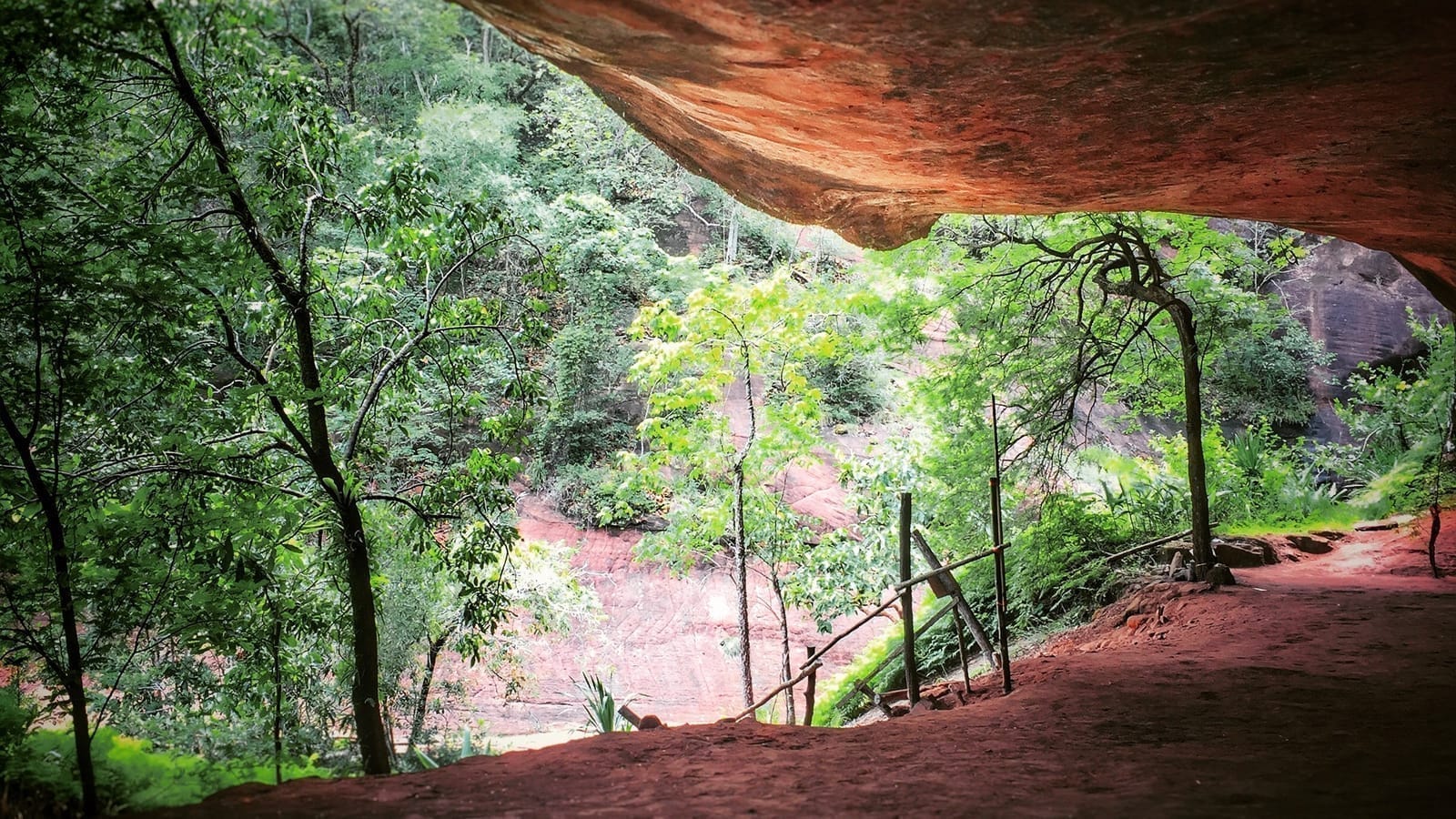
Phu Wua Wildlife Sanctuary is the biggest forest in Bueng Kan. The main office is on the Bung Khla side, with several ranger stations spread out to cover the area. Its standout feature is broad sandstone terraces with dry dipterocarp forest mixed with evergreen forest, so in the rainy season the forest floor fills with wildflowers and green moss carpeting the rock, while the cool season brings comfortable, crisp air. It's a forest that really gives you that upland Isan feel when you walk it.
Because it's the source of so many streams, Bueng Kan's well-known waterfalls almost all sit inside this sanctuary. Each one is in a different corner of the range — some you reach from the Bung Khla side, others from the Seka side — and they're a fair distance apart. So if you want to tick off several waterfalls in one trip, plan your route and leave plenty of driving time.
Want more out of Bueng Kan? Book tours & activities
Booking online ahead on Klook or GetYourGuide is usually cheaper than the gate and skips the queue. Pick only the experiences you actually want — prices and availability are shown live on each site.
Which waterfalls are in Phu Wua, and how do they differ?
Phu Wua has several waterfalls open to visitors, ranging from the easiest to reach to the ones that need an overnight trek. Here's how they line up and who each one suits.
Tham Fun Waterfall
The easiest to reach and the most popular, on the Bung Khla side, closer to Bueng Kan town than the others. Two streams drop from a cleft in the cliff and join in a pool below, with a wide rock terrace to swim in — like a natural water park. It's only about a 300 m walk from the parking area, and a regular car can make it in.
Chet Si Waterfall (Ka-am)
A wide sandstone-cliff waterfall on the Seka side. Mist catches the sunlight and shows several colours, which is why it's called Chet Si ('seven colours'). It has multiple tiers and a broad rock terrace for swimming. From the parking area it's about an 800 m walk through the forest to the first tier.
Tham Phra Waterfall
In the Phu Wua forest on the Seka side, about 3 kilometres further on from Chet Si. The highlight is a natural rock slide you can ride down into the pool. Easy to pair with Chet Si in a single trip.
Tham Noi Waterfall
A waterfall a step deeper into the forest, usually a stop on treks heading toward Lan America. The atmosphere is quiet, the crowds thin — better for people who want real forest than a casual swim.
Tad Chanaen Waterfall (Sanaen)
The biggest and most beautiful waterfall in Phu Wua, at the Chanaen ranger station on the Seka side. The falls have a distinctive natural stone bridge, but they're not easy to reach — it takes a long trek and most people go as an overnight trip. Entry is around 20 THB.
Match the waterfall to your energy
If you're with family or only have half a day, pick Tham Fun — the shortest walk and closest to town. Want a wide cliff face for good photos? Head to Chet Si paired with Tham Phra on the Seka side in one trip. If you're a serious trekker, save Tad Chanaen and Lan America for an overnight trip. Don't expect to bag every waterfall in a single day — they're in different corners of the range and far apart.
The Lan America trek — the prize for adventurous hikers
Ask any nature lover what in Phu Wua is worth walking at least once, and the answer is Lan America — a broad sandstone terrace in the middle of the forest that fills with wildflowers and green moss carpeting the rock in the rainy season. The odd name dates to the war years, when American soldiers used to land helicopters on this wide rock terrace, so locals took to calling it Lan America (the 'America terrace') ever since.
This is a round-trip trek of about 7 kilometres, passing through forest, rock terraces and small waterfalls like Tham Noi along the way. Most people do it as a two-day, one-night trek, camping in the forest. You'll need a permit to enter the area and a ranger or guide to lead you. There are no shops in the forest, so bring your own food and gear.
An honest word on slippery trails
Lan America and the trails through Phu Wua are paved in sandstone covered in moss and algae — extremely slippery in the rainy season. Plenty of people who've been say it's so slick you have to step one foot at a time. The charm of moss carpeting the rock always comes with that slipperiness. If you go in the rainy season, wear shoes with good grip, walk slowly, and accept that you will definitely come back muddy.
How much is entry to Phu Wua, and what are the hours?
Phu Wua doesn't have one single gate that collects a fee. Each waterfall sits under a different ranger station, so entry fees and management vary by spot. Overall, they're local prices and not expensive.
- Tham Fun Waterfall — free or a small maintenance fee as set by the station. Open during the day, roughly 08:00–16:30. Busy in the rainy season.
- Chet Si / Tham Phra Waterfall — entry around 60 THB per person. Open during the day, roughly 08:00–16:00. Wat Tham Bucha is right out front, with parking and toilets.
- Tad Chanaen Waterfall — fee around 20 THB per person, but it's a long trek, so most people go as an overnight trip.
- Lan America trek — you need to arrange a permit in advance and have a ranger as a guide. Trips run by trekking tour groups usually include the fees, food and gear already.
Always check before you go
Because this is a wildlife sanctuary, some routes open and close with the seasons and with wild-elephant activity. Before you set out, call or message the Phu Wua Wildlife Sanctuary page to check whether the spot you're heading to is open — especially when there's news of wild elephants foraging near the trails.
Wild elephants and other wildlife — what you need to know
Phu Wua has a genuine herd of wild elephants living in it, and rangers run regular elephant-monitoring patrols. At times the elephants forage near farmland and tourist routes. That's exactly why the deeper trekking routes need a ranger to lead, and may close temporarily. If you stick to the waterfalls that are open as normal — like Tham Fun or Chet Si — during daytime, the chance of running into an elephant is very low, but always follow the rangers' advice.
- Don't leave the marked trail — especially while trekking, stay with your guide and group.
- Avoid being in the forest at dusk — wildlife forages at nightfall, which is why most waterfalls close in the late afternoon.
- Keep food sealed — food smells attract wildlife. On overnight trips, manage your supplies as the rangers advise.
- No littering, no taking forest material — this is a conservation zone, so pack your rubbish back out every time.
When does it look best — rainy season or cool season?
The waterfalls in Phu Wua depend entirely on the rain. The window when they're full and flowing hard is the rainy season into early cool season, roughly July to November. That's when every waterfall looks its best, the rock terraces are covered in green moss, and wildflowers bloom across Lan America. The trade-off is slippery trails and the risk of flash floods. In the dry season, roughly February to May, the water drops a lot — some waterfalls thin to a trickle or run nearly dry — so if you're set on seeing waterfalls in full flow, don't come in this stretch.
The cool season is the sweet spot
If you want a decent amount of water but trails that aren't extremely slippery, plus comfortably cool air, November to early January is a good window. There's still water left from the end of the rains, some wildflowers remain, and trekking is easier than mid-rainy-season when it's slick and rains often.
How to get to Phu Wua from Bueng Kan town
Phu Wua covers a wide area, and the entry point differs depending on which waterfall you're after. Tham Fun on the Bung Khla side is closest to Bueng Kan town, about a 40–50 min drive. Chet Si, Tham Phra and Tad Chanaen are on the Seka side, further out, about a 1.5–2 hour drive. Every spot is easiest with your own vehicle, since there's no public transport that runs right up to the waterfalls.
- Own car / rental car — the easiest option. Rent a car from Bueng Kan town or drive in from Udon Thani, and use navigation to the ranger station or the temple at the front of each waterfall.
- Hire a local car — if you're not driving yourself, you can hire a car to put together a trip covering several waterfalls on the same side. Agree the price with the driver in advance.
- Group trekking tour — for Lan America and Tad Chanaen, trekking tour groups offer two-day, one-night packages that include transport, food, a guide, fees and camping gear, from around 3,000 THB per person.
- Allow travel time — waterfalls close in the late afternoon and the round trip is long, so set out early to have a relaxed day out.
Getting ready before you enter Phu Wua
- Shoes with good grip — the sandstone is mossy and algae-covered, very slippery in the rainy season. Strap-back sandals or hiking shoes beat flip-flops.
- Swimwear + a change of clothes — if you're heading to swimmable waterfalls like Tham Fun, Chet Si or Tham Phra, bring a towel and a waterproof bag for your phone.
- Drinking water and snacks — most of the forest and the waterfalls have no shops, so bring your own and pack your rubbish back out.
- Mosquito and insect repellent — this is real forest, with insects and leeches in places during the rainy season. Better to apply some and relax.
- For overnight trips — tent, sleeping bag, headlamp, personal medication, a warm layer, and have your permit sorted in advance.
- Check the rain and trail status — ask the Phu Wua Wildlife Sanctuary page before you go about water levels, trail openings and closures, and wild-elephant activity.
Where to go next from Phu Wua
Chet Si Waterfall
A wide sandstone-cliff waterfall in the Phu Wua forest on the Seka side, its mist reflecting several colours. Pairs with Tham Phra in a single trip.
Rock slideTham Phra Waterfall
A natural rock slide in the Phu Wua forest, about 3 kilometres from Chet Si, with a fun slide down into the pool.
LandmarkPhu Thok
Wat Chetiya Khiri Wihan, with wooden stairways winding up around the cliff — a natural landmark that pairs with Bueng Kan. Easy to combine with a forest trip.
City guideThe full Bueng Kan trip
See things to do, where to eat, where to stay and routes across all of Bueng Kan in one place.
Plan a full Bueng Kan trip — the Phu Wua forest, its waterfalls, Phu Thok, the Three Whale Rock, and riverside eats along the Mekong.
See the Bueng Kan travel guide →