🔄 Updated 21 Jun 2026
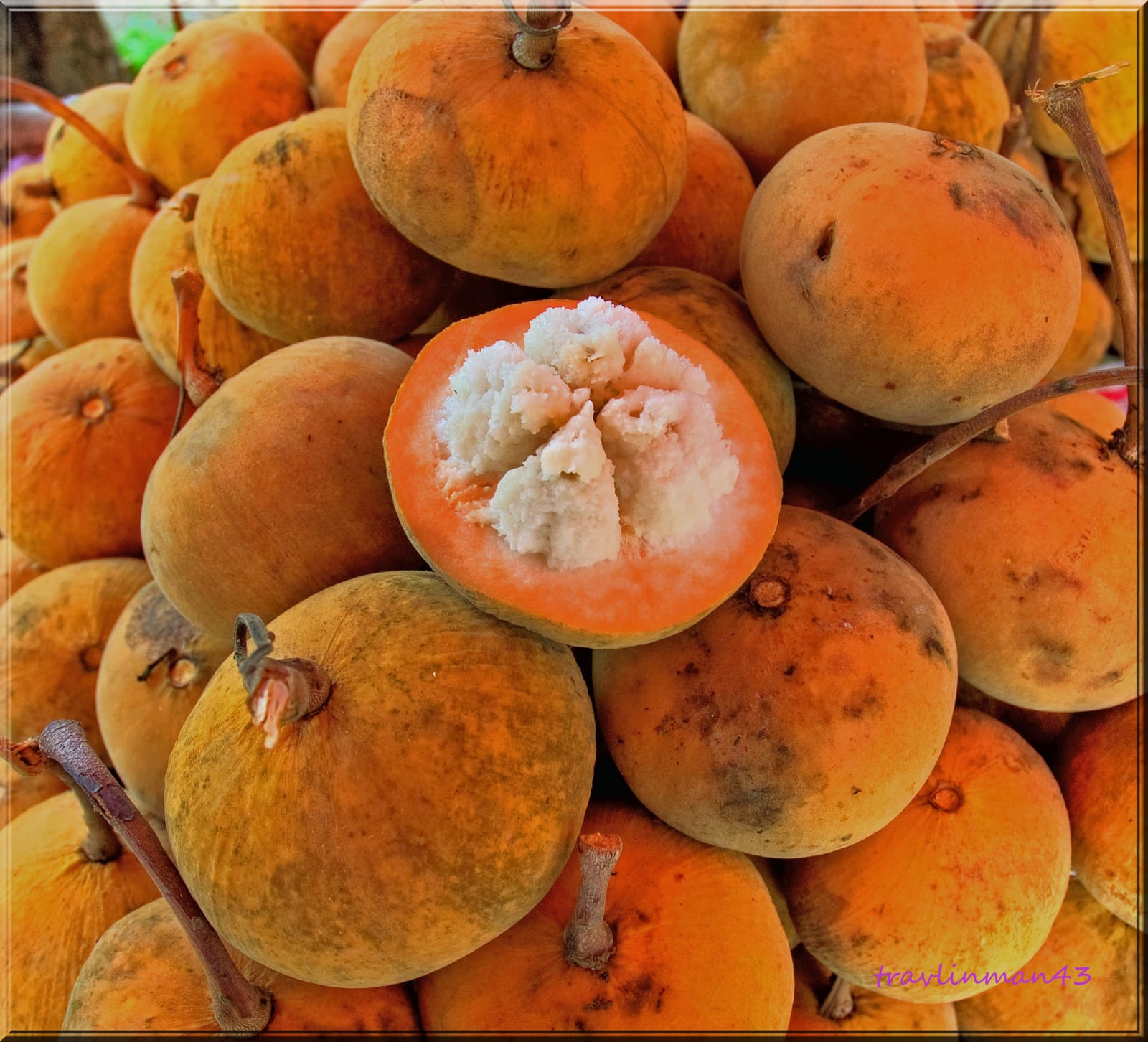
Santol has been tied to Prachinburi for a long time, with the main growing area on the Mueang district side around Dong Khilek and Ban Phra subdistricts — the province's fruit-orchard belt. Growers here bag each fruit by hand while it's still small, which gives smooth skin and clear flesh and cuts down on insect damage. When the fruit is fully ripe the skin turns a creamy yellow and feels soft to the touch. That's why Prachinburi santol tends to be bigger and thicker-fleshed than what you usually see at the market.
The fruit comes in heavily during the rainy season. Early varieties start appearing from late April through June, while heavier types like Eela run all the way into July. Prices at the orchard shift with variety and size — good big varieties go for around 60–80 THB per kilo. If you catch a festival or buy straight from the orchard, you'll get the grower's price, which is cheaper.
Prachinburi santol varieties worth knowing
Prachinburi has several santol varieties, each with different flesh, flavour, and ripening window. Knowing a few of them makes it easier to pick what you actually want. We've ordered them from the ones people ask for most.
Pui Fai
The variety most people picture first when Prachinburi santol comes up. It's an early type — large and round-flat, with fine smooth skin that feels velvety in the hand. Inside, the flesh is fluffy and white, pure sweet with almost no sourness. You can eat it fresh as is, no prep needed, which makes it perfect for anyone who doesn't like sharp flavours.
Eela
The heavy variety with the biggest fruit of the lot. When fully ripe the skin turns deep yellow to light brown, the rind goes thin, and the flesh is fluffy white and very soft. The taste is sweet with a slight tartness — if you like a rounder flavour with more dimension, this is the one. It ripens later than the rest, so it's the variety that carries through to the end of the season.
Thapthim
Another variety you'll see often at Prachinburi orchards. The flesh is thick and firm with a nicely balanced sweetness. It's good eaten fresh and also works well for song khrueang, since the flesh stays crisp and clear rather than turning mushy.
Theppharot
A variety known for soft, sweet, fragrant flesh. The fruit is fairly large with attractive skin, and it's a favourite at the province's santol festival. If you find a vendor who bags the fruit well, the flesh comes out clear and inviting.
Kammayi / Nimnuan
A group of varieties named after their soft skin and tender flesh. You'll find them at orchards and the province's local-produce fairs too. The flavour is mild and the flesh is fine — good for anyone who likes santol soft and gently sweet.
How to pick a good santol
Go for fruit with creamy yellow skin that goes soft all over when you press gently — that means it's ripe and ready to eat · Fruit that's still green and hard will be astringent and needs a couple more days to ripen · Large fruit with even, smooth skin is usually well-bagged, so the flesh will be thick and clear · If you're eating it fresh right away, tell the vendor you want one that's just ripe.
Want to taste deeper? Try a Prachinburi food tour or cooking class
Half a day with a local who knows the lanes — or cooking a dish yourself — teaches you more than just eating. Book ahead on Klook or GetYourGuide.
Santol orchards and where to buy in Prachinburi
If you're coming specifically to buy santol, fruit season brings rows of stalls along the main roads, especially around Dong Khilek and Ban Phra on the Mueang district side. Many of the sellers are growers bringing their own crop to sell at the orchard or roadside, so you get fresher fruit at a better price than buying in town.
Dong Khilek–Ban Phra fruit stalls
The fruit-orchard belt of Mueang district. In season there are roadside stalls of santol and other seasonal fruit, many run by the orchard owners themselves, so you can pick from several varieties in one spot.
Kong Thai Market
The place to find Pui Fai santol and processed versions. You'll spot both santol song khrueang and candied santol in ready-to-eat cups here — good for a taste before you carry fresh fruit home.
Prachinburi Sweet Santol & Local Produce Fair
The province's annual festival from late June to early July, gathering many santol varieties from local growers at grower prices. There's a santol-eating contest and other quality seasonal fruit too.
The provincial festival has been held at the OTOP centre at Talat Tong Chom, Naresuan Roundabout junction, Ban Phra subdistrict in Mueang district, around late June into early July. That's the window when several varieties come in at once and prices are the best of the year. If you're planning a rainy-season trip to Prachinburi, check that year's dates on the province's page first.
Fun ways to eat santol — in syrup and song khrueang
Prachinburi santol is great eaten fresh, but if you end up with fruit that's a bit firm or sour, locals like to turn it into cooling desserts. The two you'll see most often are santol in syrup and santol song khrueang. You can make them at home, or buy them ready-made in a cup.
- Santol in syrup — peel, remove the seeds, slice into pieces, soak briefly in salt water to draw out the astringency, then float in chilled syrup over ice. Sweet and refreshing, an easy hot-weather dessert.
- Santol song khrueang — crisp santol flesh tossed with a rich sweet fish sauce fragrant with coconut sugar, topped with chilli, fried shallots, and dried shrimp. Boldly flavoured and moreish.
- Candied santol — santol flesh soaked in syrup until juicy-sweet. It keeps for a while and is sold in cups at the markets, ready to eat.
- Fresh with chilli-salt dip — for anyone who likes a tart edge, peel into pieces and dip in chilli and salt, which cuts the sweetness nicely.
Keeping santol-in-syrup flesh from browning
Once peeled, soak the santol flesh in water with a little lime juice or weak salt water — it keeps the flesh from changing colour and helps draw out the astringency · Use firmer-fleshed santol for a crisp, clear texture that won't go mushy · Chill the syrup for at least an hour so the flavour soaks into the flesh.
Souvenirs and getting there
Santol is an easy souvenir to carry, but it's a fruit that ripens fast, so buy it close to when you're heading back and pick fruit that isn't too soft yet if you've got a long drive. If you want something that keeps longer, grab a cup of candied or song khrueang santol to take along. Prachinburi is about a two-hour drive from Bangkok, which makes it an easy day trip where you can stop for fruit straight from the orchard. Pair it with a visit to the Abhaibhubejhr herbal centre, or stop for boat noodles before heading home.
Plan a full eat-and-explore trip to Prachinburi
See the Prachinburi travel guide →