🔄 Updated 21 Jun 2026
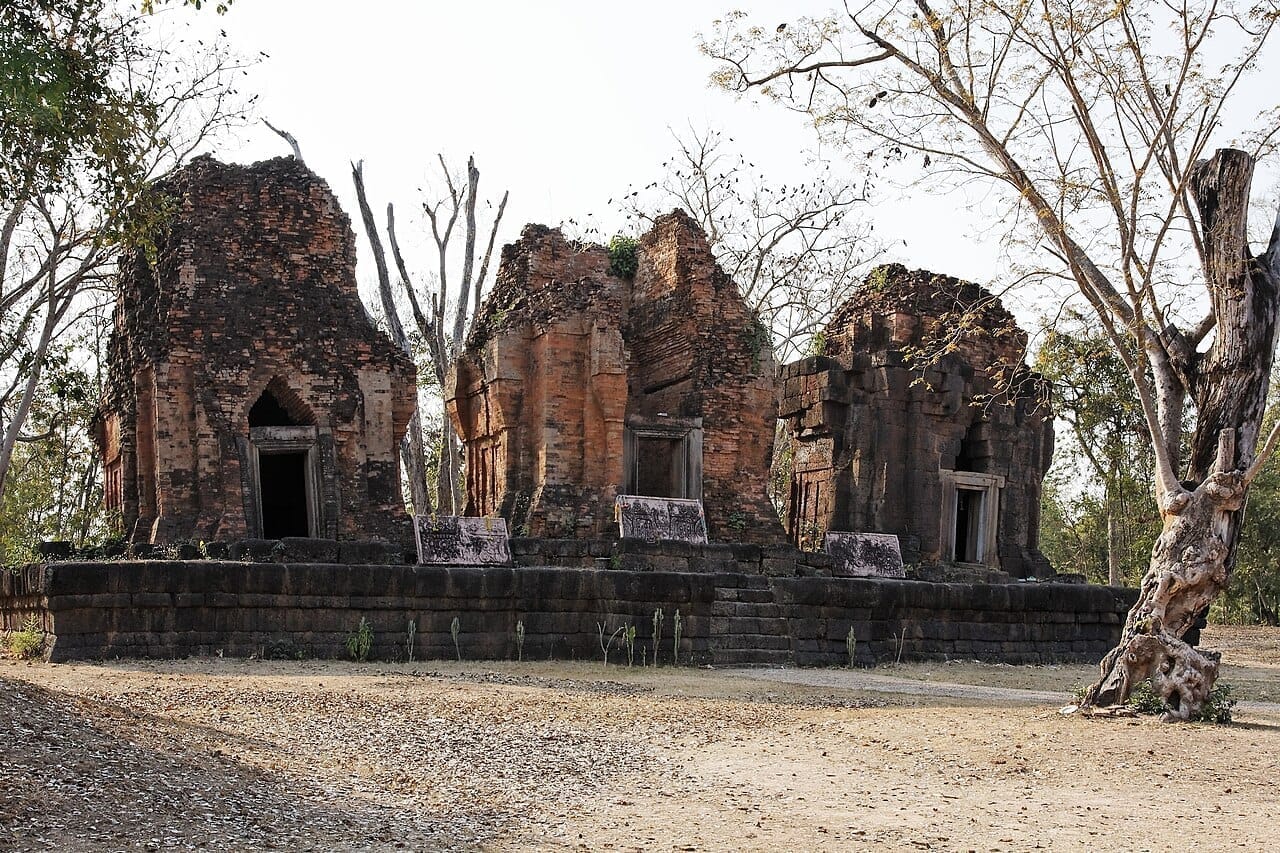
Chaiyaphum probably isn't the first province that comes to mind when you think of Khmer temples, but there's a fairly well-preserved Khmer ruin tucked right inside the city limits: Prang Ku. Its biggest draw is how close it is to town — under ten minutes by car from the center — so it's easy to stop by on the way somewhere or fit into a half-day trip.
What is Prang Ku, and was it really a Khmer hospital?
Prang Ku is a Khmer temple that archaeologists believe was built as an arogayasala — essentially a community hospital. It dates to around the late 12th to early 13th century (roughly 1181–1218 CE), during the reign of King Jayavarman VII, the Khmer ruler who followed Mahayana Buddhism. He had arogayasala built along routes across the kingdom, more than a hundred of them in all, and Prang Ku was one of these.
The temple you see today wasn't an exam room or a ward, though. It was the religious building attached to the hospital — a shrine that housed an image of Bhaisajyaguru, the Medicine Buddha of Mahayana belief. The actual hospital itself was made of wood and decayed over the centuries, so nothing of it remains.
Want more out of Chaiyaphum? Book tours & activities
Booking online ahead on Klook or GetYourGuide is usually cheaper than the gate and skips the queue. Pick only the experiences you actually want — prices and availability are shown live on each site.
What to look at when you get there
Prang Ku is a single laterite temple standing in the middle of a grassy plot, facing east in keeping with Khmer tradition. A square laterite wall surrounds it, with a gateway (gopura) on the east side and a small building in one corner thought to be a library. These elements are the standard layout of a Khmer arogayasala, found the same way at several sites across Isan.
- The laterite tower — built entirely from laterite, with the porous reddish-brown stone clearly visible. It's the main building material of Khmer craftsmanship from the Jayavarman VII era.
- Bayon-style lintel — carved with the bodhisattva Avalokiteshvara and a meditating Buddha, in the Bayon Khmer style that helps date the temple.
- Buddha image in the subduing-Mara posture — inside the tower is a Buddha image moved here later. It's the principal image that locals come to pay respect to, not an original from the Khmer period.
- Pond at the northeast corner — a square pond, a standard feature of every arogayasala, used as a sacred water source and for the community's everyday water.
Between 1997 and 1999, the Fine Arts Department excavated and restored Prang Ku using anastylosis (reassembling the original stones in their proper positions). The dig turned up fragments of stone Buddha images, architectural pieces, and a Khmer-language inscription praising King Jayavarman VII — all of which helped confirm the age and origin of the site.
Photo angles
The best light is in the morning before nine and in the late afternoon when the sun softens. Try standing at the east gateway and shooting the tower head-on for clean, symmetrical lines. The red laterite stone takes on a lovely warm tone in the late-afternoon light.
How to get there and opening hours
Prang Ku is on Bannakan Road in Ban Nong Bua, Nai Mueang subdistrict, Mueang Chaiyaphum district, about 3 kilometers east of the city. It's very easy to reach: from town, take Highway 202 for about 1 kilometer, then turn right onto Highway 2158 and continue about 2 more kilometers. You'll see Wat Prang Ku right beside the road, with the temple inside the same grounds.
- Private car / rental — the easiest option, with a parking area in front of the temple. About 8–10 minutes' drive from the center of town.
- Motorbike — it's close and an easy ride, ideal if you're staying in town and want a quick stop.
- Free entry — there's no admission fee. It's an open historical site that you can visit during daylight hours; come anytime from morning to evening, since it's outdoors.
Because it's an open plot with little shade, the midday sun in the hot season can be harsh — bring a hat and water. You really only need about 20–30 minutes to see everything, so it works better as a quick stop than somewhere to spend the whole day.
What to pair it with
The nice thing about Prang Ku is that it's right in town, so it's easy to pair with other spots around central Chaiyaphum. It makes a good half-day history-and-culture trip.
Chao Pho Phaya Lae Monument
The shrine and monument to Chaiyaphum's first town ruler, a focus of devotion for the whole province. It's in town, so you can stop by right after Prang Ku.
Where to eatIsan food in town
Head back into town for som tam, larb, koi, or a standout khao man kai to round off your half-day trip with a full stomach.
OverviewThings to do across Chaiyaphum
If you've got more than half a day, browse the bigger picture of Chaiyaphum's nature and culture spots to extend your plan.
Every year from around May to June, downtown Chaiyaphum holds the lively Bun Duean Hok festival honoring Chao Pho Phaya Lae. If you time your trip for this window, you'll also catch the baisri procession and a festival atmosphere all over town.
Plan a full Chaiyaphum trip — where to stay, eat, and explore
See the Chaiyaphum travel guide →