🔄 Updated 21 Jun 2026
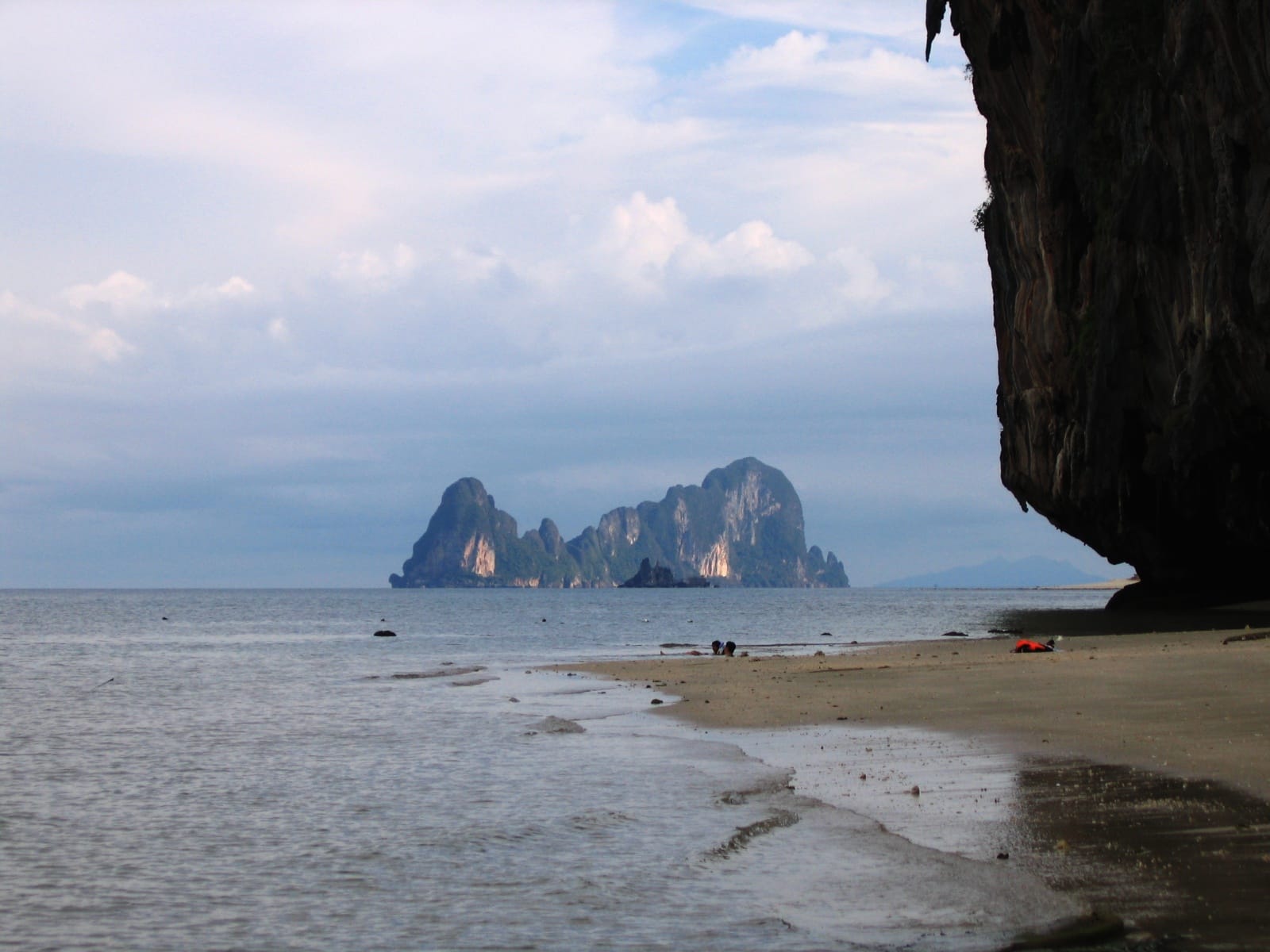
Prasat Hin Phan Yot sits on Khao Yai Island, within Mu Ko Phetra National Park in Satun province, about 3 km out to sea from Pak Bara Pier. What sets it apart from other islands is the limestone wall: sea and wind have eroded it over millennia into a row of sharp spires that look like a castle, with a small opening in the middle that lets a boat slip through to a lagoon — an enclosed pool of water ringed by rock on all four sides. It's a rare sight, and it sticks with people who've actually seen it.
Why this place feels so unusual
The appeal of Prasat Hin Phan Yot is the quiet and the sheer scale of the rock. As you paddle through the narrow gap, the sound of the waves outside slowly fades until all you hear is your paddle dipping into the water of a lagoon walled in by towering stone. Sunlight slants down in shafts through the pointed peaks, and it feels like you've slipped into another world. The limestone here formed during the Cambrian–Ordovician period, roughly 450–500 million years ago. The harder rock still stands as sharp spires, while the softer rock has been eroded away — which is how it got the shape you see today.
- A lagoon walled in by rock — paddle through the gap and you reach a still pool of water ringed by jagged limestone spires on every side.
- Rock 450–500 million years old — dating to the Cambrian period, it's one of the geological highlights of the Satun Geopark.
- The Dragon Crest sandbar — a long ridge of sand and rock that surfaces at low tide so you can walk it, near Hin Ngam Bay — another photo stop on the same route.
- The island's ecosystem — mangroves, shallow coral, and shorebirds, which you'll often get to look at along the way.
Want more out of Satun? Book tours & activities
Booking online ahead on Klook or GetYourGuide is usually cheaper than the gate and skips the queue. Pick only the experiences you actually want — prices and availability are shown live on each site.
How to get there and where to catch the boat
You can't visit Prasat Hin Phan Yot on your own — you have to go with a tour, because it involves a boat ride out to sea and then a kayak paddle into the lagoon. The main departure point is the Pak Bara–Ban Bo Jet Luk area in La-ngu district, where local community tourism groups run the visits. You drive to the pier, park, then take a community boat out for about 15–30 minutes to reach Khao Yai Island, where you switch to a kayak and paddle through the rock gap into the lagoon.
- By air — the nearest airport is Hat Yai, then a road transfer to Satun town and Pak Bara Pier, around 2–2.5 hours in total.
- By car — from Satun town to Pak Bara Pier in La-ngu district is about 1 hour on good roads, with parking at the pier.
- Community boat — departs from Pak Bara/Ban Bo Jet Luk to Khao Yai Island, a short ride, then you switch to a kayak into the lagoon.
The tides matter a lot here
Paddling into the lagoon is only possible during certain windows when the water level is just right. If the tide is too high, the gap shrinks and is hard to slip through; if it's too low, you can't paddle in at all. That's why the community tour times shift with the daily tide schedule rather than running at fixed hours. Because of this, you need to book ahead and ask for a slot when the tide is right — don't just walk in, because there may be no paddle-in slot available that day.
Prices and what's included
The Prasat Hin Phan Yot tour is a community-run half-day to full-day trip. Prices depend on the package and group size; from what we've checked, they range from a basic option around 800 THB per person up to a full-service package around 1,500 THB per person. The price usually covers the boat, kayak, a local guide, a life vest, one meal, drinking water, and fruit. We'd suggest asking the operator directly before you go, since prices and time slots change with the season and the tide schedule.
Half-day package (basic)
Focused on kayaking Prasat Hin Phan Yot and nearby spots — good if you're short on time or stopping by between other island trips. You can pick a morning or afternoon slot depending on the tide.
Full-day full-service package
The community handles the boat, kayak, guide, food, and stops at other spots along the route such as the Dragon Crest and Hin Ngam Bay. Good for groups who want the full experience without organizing anything themselves.
Straight talk
The 800–1,500 THB range is what we've seen across several operators, but the real price comes down to group size — the more people you go with, the cheaper it works out per head. If you go solo or as a pair, you may have to wait to join a group or pay more. Better to contact them ahead and ask clearly than to gamble on it when you arrive.
When's the best time to go
The calm season, when the sea is settled and good for boats, runs roughly November–April: less swell, clearer water, and easy kayaking. The monsoon runs from around mid-May to mid-October, with strong waves and plenty of rain, when Mu Ko Phetra National Park may close or suspend boat departures. Before you go, check the park's announcements and ask the community group whether trips are running. Most importantly, keep an eye on the tide schedule too, since paddling into the lagoon is only possible when the water is at the right level.
A half-day plan for Khao Yai Island and Prasat Hin Phan Yot
Most people do this as a half-day trip — some make it a day trip from Satun town, or tack it onto a boat ride out to other islands. Below is a sample morning timeline; adjust it to whatever tide window the community schedules for you.
Khao Yai Island + Prasat Hin Phan Yot
If you still have time the same day
What to know before you go
- You must go with a community tour — you can't get in on your own. Contact the community tourism groups around Pak Bara–Ban Bo Jet Luk in advance.
- Pack waterproof gear — phone, camera, and valuables should go in a dry bag, since you'll likely get wet kayaking.
- Wear shoes that can get wet — strapped sandals or water shoes make walking on rock and getting in and out of the boat easier than loose flip-flops.
- The rock is more fragile than it looks — parts of it have collapsed in the past, forcing temporary closures. Paddle behind the guide, don't grab or climb the rock, and check that it's open as usual before you go.
Getting the shot
The morning light in the lagoon is softer and quieter than in the afternoon, making it the best time for photos. If you want a shot of a kayak framed by the pointed rocks, tell your guide you'd like to stop at the mouth of the gap, then wait for the moment after the other boats have paddled past.
Want a well-located place to stay in Satun before your boat trip? See the ones we've picked.
See 10 Satun hotels →