🔄 Updated 21 Jun 2026
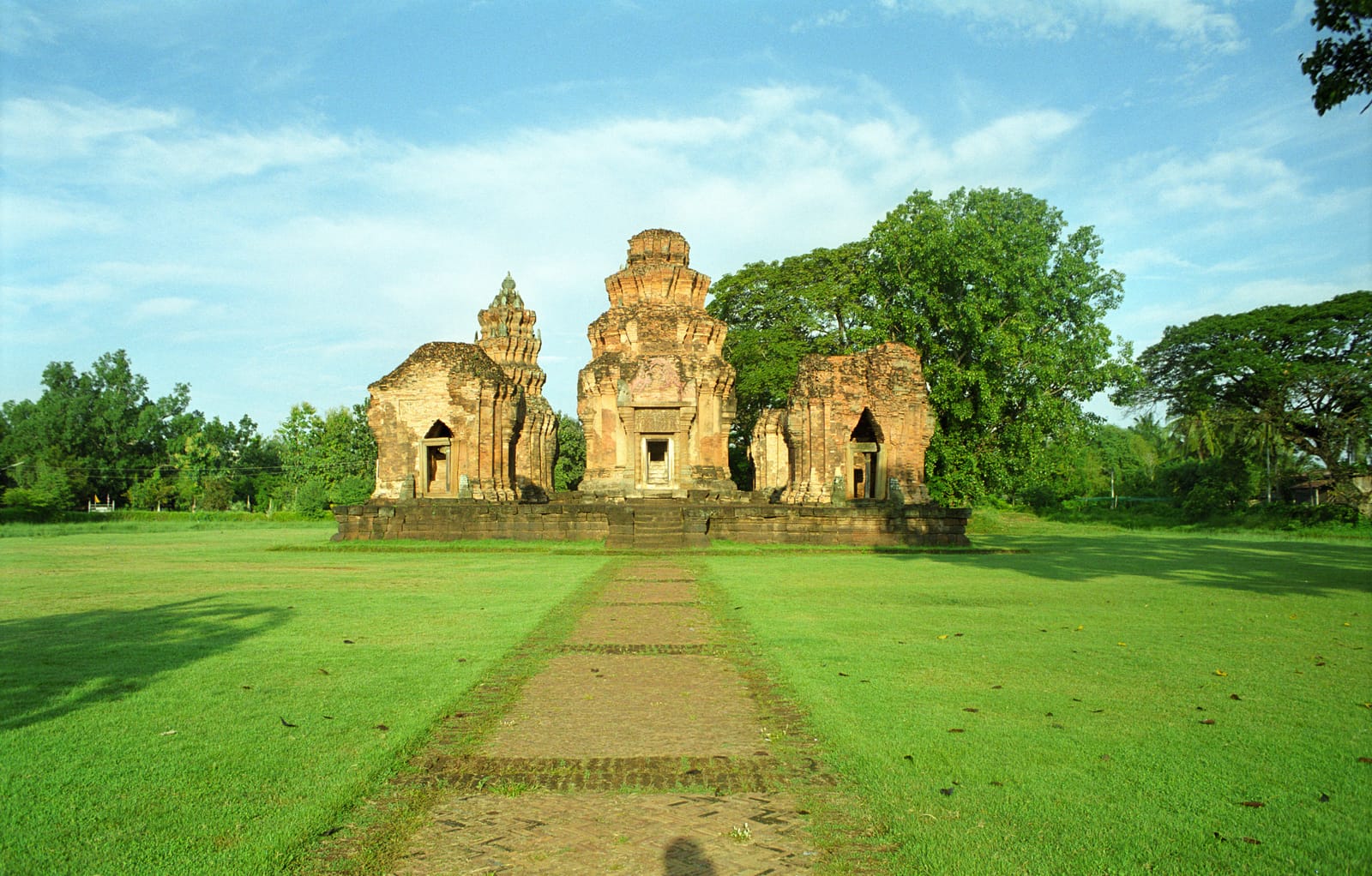
If you're in Surin and want to see one Khmer temple where the carving is still crisp and the photos come out well, Prasat Sikhoraphum is usually the first name locals bring up. The temple sits in Sikhoraphum district, about 34 kilometres east of Surin city — you can drive or take the train. What sets it apart from the other Khmer temples in this area is the shape: five brick prangs on a single base, and sandstone carving that has kept its detail on both the lintels and the doorway columns.
To be honest, the temple grounds aren't large. Half an hour to an hour is enough to walk the whole thing. The appeal here isn't size — it's the precision of the carving and the mood of the moat wrapped around it. It suits people who like getting up close to old stonework more than those after a long walk. Plan it well and you can easily fold it into a day combined with the other Khmer temples around Surin.
The Highlights Worth Seeing in Full
Prasat Sikhoraphum was built around the 12th century as a Hindu shrine dedicated to Shiva. The prangs are made of brick set on a laterite base, with the central tower rising about 32 metres, surrounded by four secondary prangs at each corner. There are only a handful of things you can't skip — but each one is worth standing in front of for a while.
- The central tower's lintel — carved with a ten-armed Shiva Nataraja (Shiva dancing), the signature image of the temple. Around it you'll find other Hindu deities like Brahma, Vishnu, Ganesha and Uma woven into the same relief.
- The apsara doorway columns — the frame of the central doorway shows apsaras holding lotus flowers. The carving is so fine that many compare it to the reliefs at Angkor Wat, and it's where most people take their photos.
- The mace-bearing dvarapala — standing beside the apsaras at the doorway, a guardian figure in the old Khmer tradition.
- Five brick towers on one base — a layout that's hard to find among Thailand's Khmer temples. Shoot a wide angle that catches all five prangs in a row for the classic image of this place.
- The surrounding moat — in the morning or evening the water sits still and mirrors the temple on its surface, a favourite angle for a lot of visitors.
Make the most of the lintels
The carvings on the lintels and doorway columns sit fairly high, and the light is backlit at certain times. If you want to see the detail clearly, go in the morning or late afternoon when the light is angled — you'll catch the depth of the carving far better than at midday when the sun is straight overhead. Bring a zoom or telephoto lens and you'll get a much nicer shot of the Shiva Nataraja.
Want more out of Surin? Book tours & activities
Booking online ahead on Klook or GetYourGuide is usually cheaper than the gate and skips the queue. Pick only the experiences you actually want — prices and availability are shown live on each site.
Entry Fee and Opening Hours
The entry fee follows the usual rate for Khmer temples looked after by the Fine Arts Department — around 10 THB for Thai visitors and around 50 THB for foreigners. As for opening hours, sources don't quite agree: some say 7:00–18:00, others say 8:00–17:00. Either way, if you come from late morning through the afternoon you'll definitely get in, and giving yourself a little buffer before closing makes the visit easier.
- Entry fee — around 10 THB for Thai visitors · around 50 THB for foreigners
- Opening hours — open daily, roughly 7:00–18:00 (some sources say 8:00–17:00)
- Time needed — half an hour to an hour is enough to see it all
- Annual festival — the third weekend of November usually brings a light-and-sound show with traditional dance and historic costumes. Time your trip to match and you'll catch a special atmosphere.
Getting There From Surin City
The temple is in Sikhoraphum district, about 34 kilometres east of Surin city. There are two main ways to get there: driving or taking the train. Driving yourself is the easiest since you can park right in front of the temple and move on to other temples afterward. If you don't have a car, take the northeastern railway line and get off at Sikhoraphum station — it's an easy ride. The station is only about 1.5 kilometres from the temple, close enough to walk or grab a motorbike taxi.
Self-drive
From the city, take Highway 226 toward Sikhoraphum — about 34 kilometres, roughly 40 minutes. You can park in front of the temple. Ideal if you plan to carry on to other Khmer temples the same day.
Train
Take the Isan railway line and get off at Sikhoraphum station — about half an hour from Surin. A third-class ticket costs just a few baht. From the station it's about 1.5 kilometres to the temple.
Motorbike taxi
From Sikhoraphum station, a motorbike taxi to the temple runs around 20 THB. Handy if you've come by train and don't fancy walking in the sun.
Allow time and bring water
The temple grounds are open and exposed — midday sun is strong and there's little shade. Bring an umbrella or hat and some drinking water. Mornings and evenings are more comfortable to walk and the light is nicer than midday. If you're with family or older travellers, some of the ground is uneven stone, so watch your step.
What Else You Can Do Nearby
Surin has plenty of Khmer temples, so if you still have energy after Sikhoraphum you can turn it into a full day of temple-hopping. Or loop back into the city for Isan food and local sweets — that works too.
- The Khmer temple trail — Surin's Khmer temples are spread across several districts, including the southern border area, so you can string together a few in a single day.
- Back to the city for something spicy — on the way back, stop at an Isan restaurant or grab khanom chin nam ya in Surin city for an easy meal to finish the day.
- Pick up souvenirs before heading home — Surin silk and local treats are the souvenirs people most like to take home.
Plan a full day exploring Surin
See the Surin travel guide →