🔄 Updated 21 Jun 2026
Ranong town and Kawthaung in Myanmar sit on opposite banks of the river mouth, a half-hour boat ride apart. Many Burmese have come over to work and settle in Ranong across several generations, so Burmese food has become part of the town — it isn't cooked for tourists, it's what Burmese and Ranong locals eat themselves every day. That's why the flavors are still genuinely home-style.
Burmese food differs from Thai in that it uses more oil, leans heavily on ferments and pickles, and brings in Indian-style spices. The result is rich, fragrant flavors with a sour, astringent edge that can catch first-timers off guard — but once it grows on you, you'll understand why people eat it every morning.
The Burmese market, where it all starts
If you want to understand Ranong's Burmese food fast, walk into the Burmese market next to the Ranong municipal fresh market, in the Phoem Phon Road area of Khao Niwet sub-district. It sells the full range of Burmese fresh and dry goods — dried fish, shrimp paste, fermented beans, fermented tea leaves for salad, freshly ground spices, plus fried snacks and Burmese sweets cooked fresh right at the stalls.
- Fermented tea leaves (laphet) — sold by the bag, take some home to make your own tea leaf salad; some vendors mix in the fixings so you just toss and eat
- Fried beans, roasted beans, roasted sesame — the crunchy fixings for tea leaf salad and snacking, scooped into bags and sold by weight
- Ground spices — turmeric, dried chili, masala, Burmese-style curry powder, far more pungent than what's sold elsewhere
- Dried fish, dried shrimp, shrimp paste — processed seafood from the Kawthaung side, cheaper than in town
- Burmese sweets and fried snacks — fried fresh at the market, eat as you walk, just a few baht a piece
Make the most of the Burmese market
The market floor gets wet and slippery, so wear shoes with decent grip. Go around 7–9am when the goods are freshest and the selection is fullest. Bring small cash, since many vendors still don't take bank transfers — and don't be shy about asking how each item is eaten. The sellers are friendly and love to give tips.
Want to taste deeper? Try a Ranong food tour or cooking class
Half a day with a local who knows the lanes — or cooking a dish yourself — teaches you more than just eating. Book ahead on Klook or GetYourGuide.
Burmese restaurants that are actually open in Ranong
Beyond the market goods, Ranong has several proper sit-down Burmese spots — from authentic Burmese places in the local neighborhoods to riverside restaurants with a view across to Kawthaung. Here are our picks, ordered from most authentically Burmese to the more Thai–Burmese blend.
Thoungpon Myanmar Food
An authentic Burmese restaurant where Ranong's Burmese community eats. The menu is genuinely Burmese, from rich pork curry to tea leaf salad, fried snacks, and Burmese-style mixed rice — the flavors aren't toned down for Thai palates. If you want real Burmese food with nothing softened, this is the place.
Keing Lay Ranong
A riverside spot with a clear view across to Kawthaung in Myanmar. The draw is the two-borders atmosphere paired with fresh seafood that comes out fast. The crowd favorites are the various yam (Thai-style salads) and the seafood — it isn't strictly Burmese, but it gives you the full border feel. Come in the evening to catch the river breeze.
Roti Nisara
A well-known roti shop in town, carrying the Muslim–Burmese–Indian influences that mix together in Ranong. The roti is crisp outside, soft inside, eaten with spiced fried chicken and iced tea. Starts at ฿15 a plate — great for breakfast or a snack before heading out.
Morning tea shops in the Burmese market
Burmese-style tea shops that open before dawn in and around the Burmese market, serving freshly brewed sweet milky Burmese tea alongside fried snacks and Burmese sweets. This is where Burmese workers sit before heading off to work — a lively, genuine Burmese tea-house scene.
Fried-snack and Burmese-sweet stalls at the market
Not named shops, but small stalls frying things fresh in front of the municipal fresh market and the Burmese market — fried beans, battered fritters, and sweet Burmese treats. Easy to buy and graze on as you wander the market.
An honest heads-up
Some authentic Burmese dishes are richer and use more oil than Thai diners are used to. Ferments like tea leaf salad taste astringent, sour, and unfamiliar at first. We'd suggest starting with the easy-to-grasp dishes like mohinga or roti, then working your way toward the ferments — you'll enjoy it more without forcing it.
Burmese dishes you should make a point of trying in Ranong
Since you've come all this way, order the full set of Burmese dishes that are hard to find in Bangkok. This is the lineup Burmese people themselves eat regularly, and Ranong actually has all of it.
Mohinga
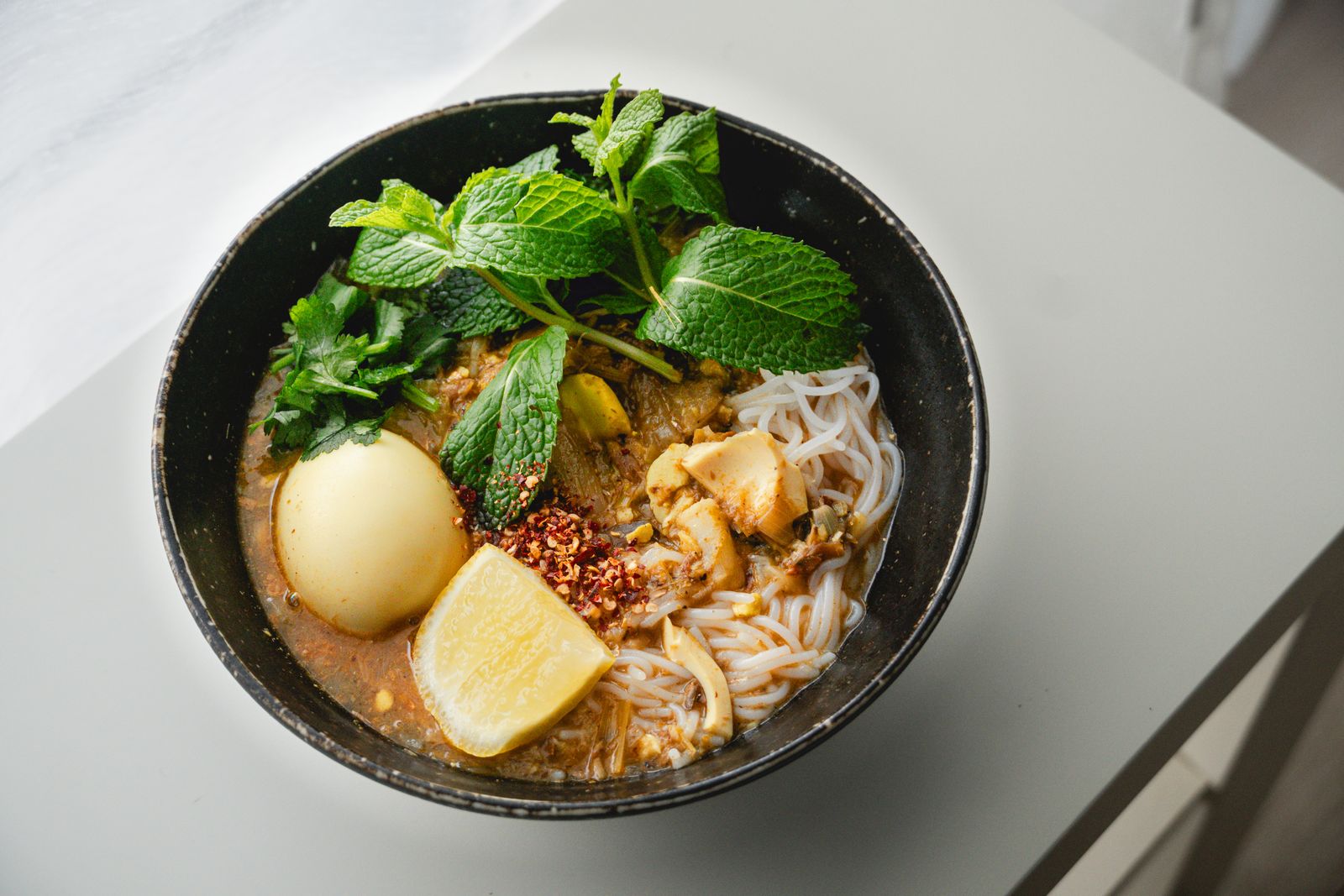
Burmese rice noodles in a thick catfish broth with tender banana stem, lemongrass, turmeric, and black pepper, topped with boiled egg and crispy fritters. It's Myanmar's national breakfast, the same way pad thai is Thailand's — savory and well-rounded, and the easiest of all Burmese dishes for Thai palates.
Tea leaf salad (Laphet Thoke)
A salad made from fermented tea leaves, tossed with fried garlic, fried beans, roasted sesame, shredded cabbage, and tomato, with a squeeze of lime — astringent, rich, and sour all at once. It's one of the most distinctive Burmese ferments, a must-try for anyone who likes the unusual.
Burmese curry (pork / chicken / fish)
A thick, spiced curry fried in oil until fragrant, with turmeric, dried chili, and shallots, the meat cooked until tender, eaten with hot steamed rice. Richer and bolder than Thai curry, it's the main plate of any Burmese spread.
Burmese fried snacks (fried beans, battered fritters)
Crispy fried things at the market — fried beans, battered vegetables, and small fried bites eaten with a sweet-and-sour dipping sauce. Everyday snacks that Burmese people buy and eat through the day.
Burmese tea (Laphet Yay)
Strong-brewed black tea mixed with sweetened and evaporated condensed milk — rich, sweet, and full-bodied, with the strength and sweetness adjustable to taste. It's the standard drink of the Burmese tea house, perfect with fried snacks in the morning.
Roti and spiced fried chicken
The Muslim–Indian influence woven into Ranong's Burmese culture. Crisp-outside, soft-inside roti eaten with spice-marinated fried chicken and iced tea — a cheap, easy-to-find breakfast or snack around town.
Spices and ferments worth taking home as souvenirs
Part of Ranong's charm is buying Myanmar-side goods cheaper than anywhere else. If you like to cook or want something unusual to bring home, the Burmese market has plenty to choose from.
- Fermented tea leaves with the fixings — buy the ready-to-toss kind, go home and make tea leaf salad; keeps a long time
- Masala and Burmese curry powder — strongly fragrant, for cooking curry with a genuine Burmese flavor
- Roasted beans and sesame — fixings for salads and snacking, sold by weight
- Shrimp paste, dried fish, dried shrimp from Kawthaung — processed seafood that Ranong locals agree is good quality and cheap
- Dried Burmese sweets — keep-able treats to bring home as an unusual souvenir
About bringing souvenirs home
Ferments and shrimp paste have a strong smell, so if you're flying, wrap them in several layers and put them in checked luggage. Fermented tea leaves and dry spices are fine to carry on. Taste before buying a lot, because the flavor of ferments isn't for everyone.
Eat your way through Ranong's Burmese food in 2 days
With two days, pace it like this and you'll cover the morning market eats, the authentic Burmese restaurant, and the riverside spot with a Myanmar-side view — without rushing.
Tackle the Burmese market in the morning, authentic Burmese for lunch
Mohinga in the morning, finish riverside with a Myanmar view
Can you cross over to Kawthaung?
If you want Burmese food at the source, you can take a boat across to Kawthaung from the Saphan Pla pier using a passport or border pass. Check the latest entry/exit rules before you go, since the conditions can change with the border situation. If you'd rather not cross, the Burmese food in Ranong town is complete enough to fill you up.
Plan a full day of eating around Ranong
See the Ranong travel guide →