🔄 Updated 21 Jun 2026
The Ranong Governor's Mansion, which older locals call Ban Khai Chao Mueang (the governor's compound), sits on Rueang Rat Road in Khao Niwet subdistrict, right in the middle of Ranong town. It's the Chinese-style home of Khaw Su Cheang, founder of the Na Ranong family, built around 1877 on a plot of roughly 33 rai. Today the Fine Arts Department has registered it as a historic monument. Walk in and you'll find brick walls about 3.5 metres high, an ancestral shrine, and an exhibition building that lays out the family and the tin-mining history in full.
Who was Khaw Su Cheang, and why does he matter to Ranong?
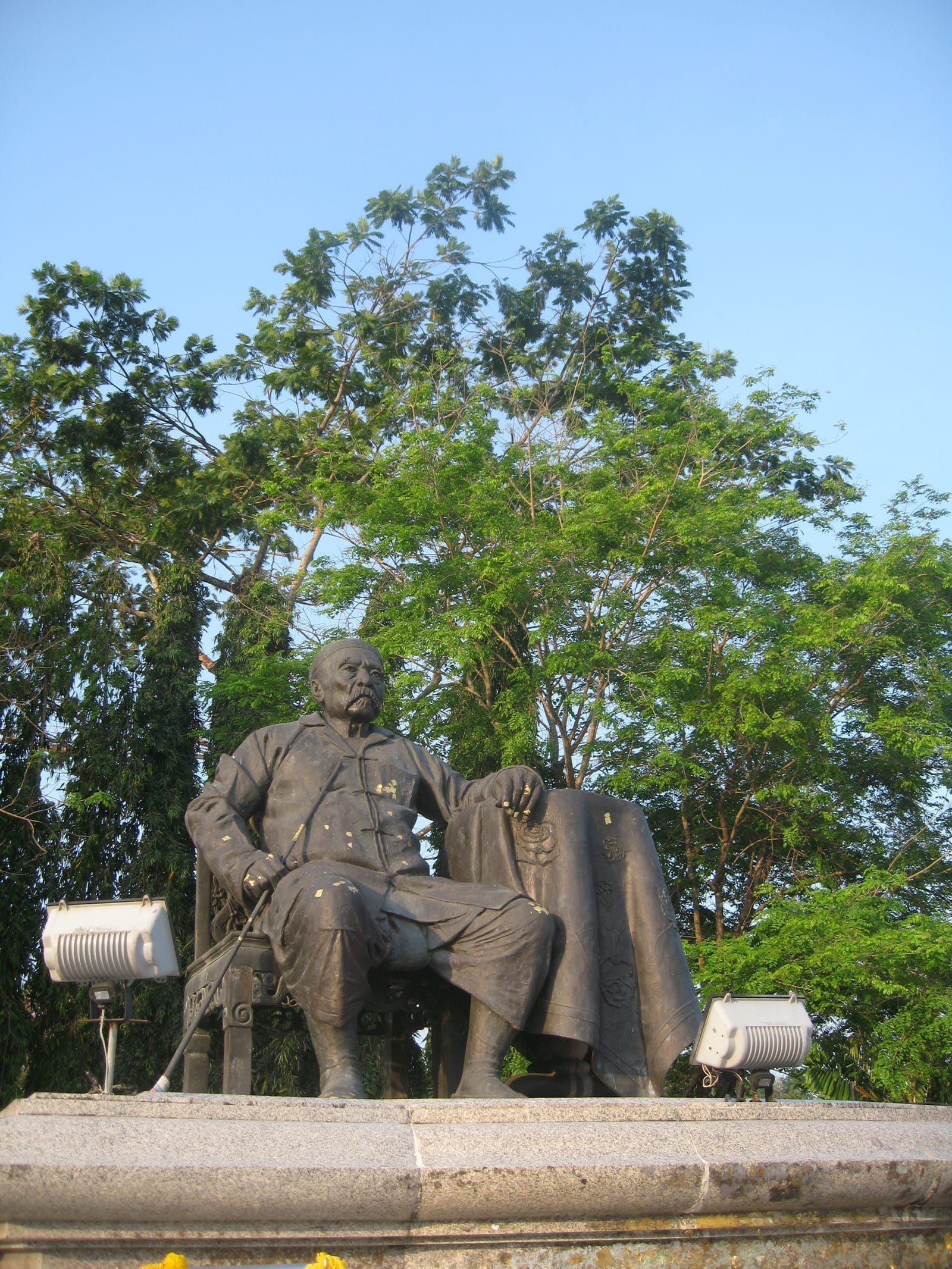
Khaw Su Cheang (1797–1882), originally named Su Cheang of the Khaw clan, was a Hokkien Chinese man who came to make a living in this area from the late reign of King Rama III. The turning point came in 1846, when he went to Bangkok to bid for the tin-tax concession over Ranong and Tra. He was granted it and given the title Luang Rattanasetthi, tax collector of Ranong. From tax collector he gradually rose, and by the reign of King Rama IV he had become governor of Ranong, later receiving the title Phraya Damrong Sujarit Mahison Phakdi, which became the office name his descendants carried on.
What set him apart from a typical tax collector was that he shifted tin from the old tribute-collection system into proper industrial mining, then shipped the ore out to Penang and Britain. The money from tin is what fed Ranong, drew in Chinese labour, and let a small town on the Andaman side grow. Put simply, without Khaw Su Cheang, the Ranong you see today would look nothing like it does.
A little side note
Several of Khaw Su Cheang's sons went on to become governors and high-ranking officials at the Phraya level. The mansion you see was actually built for him by his second son, Khaw Sim Kong, so it's a house that holds the stories of two generations layered together.
Want more out of Ranong? Book tours & activities
Booking online ahead on Klook or GetYourGuide is usually cheaper than the gate and skips the queue. Pick only the experiences you actually want — prices and availability are shown live on each site.
What's worth seeing inside the mansion
The grounds inside the wall aren't big enough to tire you out, but there are several spots worth taking slowly, because each one tells a different story. All in, a relaxed walk takes about 40 minutes to an hour.
- The old brick wall — the surrounding wall stands about 3.5 metres high and roughly 50 cm thick, laid in Chinese brick-and-mortar style. It's the real thing, surviving from the era of the first house, and a favourite spot for photos.
- The Na Ranong ancestral shrine — restored as a single-storey building, used to honour the ancestral tablets in the Chinese tradition. Above the entrance is a Hokkien Chinese inscription read as Kao-Yang, meaning the lofty sun.
- The exhibition building — displays a full wooden model of Rattanarangsan Palace, models of the mansion itself, the guest house, and old household items, which help you picture Ranong town in that era.
- Family history panels and photos — they trace the line of governors and the tin-mining story. Anyone into history will happily read through it.
Hokkien Chinese architecture: what to look for
The mansion is a compact Chinese-style home, built with fresh Chinese brick-and-mortar work, a timber roof structure, and tiled roofing. The detail people like most is the surrounding wall, taller and thicker than an ordinary house, a reminder that in those days a governor's home had to defend itself too, not just look good.
If you want to see the southern-Chinese craftsmanship in full, look at the Chinese inscription above the shrine, the patterns on the tiles, and the courtyard-centred layout typical of Hokkien Chinese homes. Anyone who has been to Phuket Old Town will feel right at home, since it comes from the same group of craftsmen and the same beliefs. Ranong is just quieter and far less visited.
The tin-mining story worth knowing before you go
Tin is the reason everything in this mansion exists. Back then, tin ore from the Andaman coast was in demand on the world market through Penang and Britain, and whoever controlled the tin tax controlled the town's economy. The Na Ranong family grew from exactly this, and the tin money turned into homes, temples, Chinese shrines, and a palace in town.
If you're interested in the mining side in more depth, the town also has the Siam Tin Heritage Centre at Ban Ngao, housed in the old mine office of the Siamese Tin Syndicate. It tells the story of the tools, the miners' way of life, and the impact of the tin industry on the town. It's a good follow-on after the mansion, but call ahead to check the hours, since opening times can be unpredictable at certain periods.
Straight talk
The Governor's Mansion suits people who like history and old things. If you're coming with small kids or you're after lively activities, it might feel a bit quiet. Pair it with another sight in the same town so the trip doesn't fall flat.
How to get there, hours, and entry
- Address — Rueang Rat Road, Khao Niwet subdistrict, Mueang Ranong district. It's in the middle of town, near the market and the old-town quarter.
- Opening hours — daily, roughly 8:00 AM to 5:00 PM (allow a little buffer around the lunch break).
- Entry — free, no admission fee.
- Getting there — if you're staying in town, a motorbike taxi or a rental car gets you here easily, and you can park out front. It's only a few minutes' drive from the town centre.
- Time needed — about 40 minutes to an hour is just right for a look around.
Dress a little modestly, since there's an ancestral shrine. Morning and late afternoon have softer light and are more comfortable for walking and photos than midday, and bring water, because Ranong is a rainy town but can stay hot and humid all the same.
Pair it with more sights in one day
The mansion is right in town, so you can pair it with several walkable sights and fit a neat morning-to-afternoon plan together.
Rattanarangsan Palace (replica)
A wooden palace blending Thai, Burmese, and Chinese styles, close by, perfect for continuing the Ranong story right after the mansion.
StrollRanong Old Town
Wander past old shophouses, Chinese shrines, and vintage coffee shops, the Chinese-Burmese feel the mansion tells you about.
UnwindRaksawarin Hot Springs
End the day soaking your feet in natural hot mineral water, right in town, free to enter.
Want a full Ranong trip plan with the days already laid out? Check out the Ranong city guide next.
See the Ranong travel guide →