📝 Written 2 Jul 2026 · ✅ Fact-checked 3 Jul 2026 · prices and schedules can change — check with the operator before booking
Before choosing which Ranong island to visit, try answering three questions for yourself: do you want an island with reasonably complete accommodation and restaurants, or one that's quiet enough to feel completely cut off from the city; how much boat time can you handle; and do you mainly want to relax on the beach, or seriously get in the water to snorkel and see real coral. Ranong's sea has everything from islands you can settle into for a week, to day tours that loop around several islands for snorkeling, to crossing the border into Myanmar, which is an entirely different experience altogether.
Overall, if you want an island with a lovely beach and accommodation options across several price ranges, Koh Phayam comes first. If you want a quiet, simple island at down-to-earth prices and don't mind some inconvenience, choose Koh Chang Ranong. If your goal is clear water and coral worth diving for, go on the Koh Kam-Koh Yipun snorkeling tour. And if you want to do a visa run or try a day trip across the border, you can cross to Kawthaung on the Myanmar side. The table below sums up the overview first, then we go into detail on each option one by one.
| Island/Tour | Atmosphere | How to get there | Best season | Who it suits |
|---|---|---|---|---|
| Koh Phayam | Main island, lovely beach, full range of accommodation, plenty of cafes and bars | Boat from Ranong pier, ~45 min-2 hrs | Best Nov-Apr · some boats/resorts close in rainy season | Travelers wanting a quiet island that's still convenient, staying several nights, couples and families |
| Koh Chang Ranong (Koh Chang Noi) | Quiet, simple island, beachfront bungalows, electricity available only at certain hours | Longtail/slow boat from Pak Nam Ranong | Mainly open in dry season Nov-Apr · mostly closed during monsoon season | Travelers wanting to cut off from the city, staying long-term, on a budget, not fussy about convenience |
| Koh Kam-Koh Yipun snorkeling tour | Day trip looping outer islands, clear water, beautiful coral | Speedboat from the mainland/Koh Phayam, day trip | Dry season only · boats suspended during monsoon season | Travelers wanting to snorkel and see coral at several islands in one day, clearer water than near the main island |
| Kawthaung (Koh Song), Myanmar side | Border port town, market, visa runs, loops around islands on the Myanmar side | Border-crossing boat from Saphan Pla pier/Pak Nam Ranong | Can cross year-round if the border is open · check border status first | Travelers wanting to do a visa run, try crossing the border, walk the border market |
Koh Phayam — Ranong's main island, lovely beach, full range of accommodation, stay for several nights

Koh Phayam is the go-to choice for anyone wanting to visit Ranong's sea. Its selling point is being an island that's still quiet and natural, in the style of the northern Andaman, yet still has several tiers of accommodation, restaurants, cafes, and beachfront bars to choose from — not nearly as rustic as the smaller islands nearby. The island itself isn't very big, with two main beaches: Ao Yai (Big Bay) to the southwest, a long beach with waves good for swimming and sunset views, and Ao Khao Kwai to the north, marked by a distinctive buffalo-horn-shaped rock formation. There are no cars roaming the island generally — people rent motorbikes or take motorbike taxis to get around. The atmosphere is therefore calmer and slower than the bigger tourist islands. Compared with the other three options in this article, Koh Phayam stands out most for balancing quiet with convenience, making it ideal for anyone who wants a beautiful island without too much hassle.
To get there, head to Ranong town and continue on to the pier, then buy a slow-boat or speedboat ticket up to the island. The slow boat is cheaper but takes around an hour and a half to two hours, while the speedboat is faster at around 45 minutes but costs more and gets bumpier when the waves are rough. Koh Phayam sits within Laem Son National Park, so there's a park entrance fee, with Thai and foreign visitors paying different rates — keep cash ready for this separately. The clearest water and easiest time to visit is the dry season, roughly November to April, with clear skies, calm seas, resorts fully open, and boats running frequent trips. Booking accommodation and boats in advance through online platforms makes it easier to compare prices and choose a beach that matches your style before you arrive.
To be upfront about what to expect, Koh Phayam still has more limited facilities than the big islands in Phuket or Krabi. Electricity in some spots only runs certain hours or comes from generators, internet isn't stable everywhere on the island, and ATMs are scarce, so bring enough cash. The most important thing to stress is the season — during the monsoon period, roughly May to October, seas get rough, rain is heavy, many resorts close for the season, and boats cut trips or stop running on days with high waves. Anyone planning a rainy-season trip must confirm with accommodation and the pier beforehand that they're still open and boats are still running. Don't book a car or flight to Ranong without confirming the boat situation first, because if the waves are genuinely rough, the boat may not run for safety reasons.
- A well-balanced island between quiet and convenience, with several tiers of accommodation, restaurants, cafes, and beachfront bars to choose from
- Beach choices include the long Ao Yai, great for swimming and sunset views, plus Ao Khao Kwai with its landmark rock formation
- The sea is still quiet and natural in the style of the northern Andaman, with fewer people than the famous islands of Phuket-Krabi, good for a longer stay
- Easy to get around the island by renting a motorbike; the pace is slow and calm, suiting both couples and families
- Travel takes time — the boat from the mainland takes roughly 45 minutes to 2 hours each way, so it doesn't suit a day trip
- Facilities are limited — electricity in some spots runs only certain hours, internet isn't stable everywhere, and ATMs are scarce, so bring cash
- During the monsoon season (May-Oct), rough seas and heavy rain mean many resorts close and boats cut trips or stop running — check before you go
Koh Chang Ranong (Koh Chang Noi) — a quiet, simple island of down-to-earth beachfront bungalows

Koh Chang Ranong, commonly called Koh Chang Noi, is a small island in the Andaman Sea close to Koh Phayam, but far quieter and simpler. It's important to be clear from the start that this is a completely different island from Koh Chang in Trat — an entirely different sea coast. The Trat side sits in the Gulf of Thailand and is a large island with upscale resorts, while Koh Chang Ranong sits on the Andaman side and is a small island that has kept its raw, quiet character. That's why foreigners call it Koh Chang Noi or Little Koh Chang to avoid confusion. The charm of this island is that there's essentially nothing here — no convenience stores, no ATMs, no loud bars — just sandy beach, sea, wooden beachfront bungalows, and a handful of small restaurants. Most visitors come specifically to cut off from the city, fall asleep to the sound of waves, and stay for a week or more. Compared with Koh Phayam, Koh Chang Ranong is quieter and cheaper, but also clearly more of a hassle.
The main beach sits on the west side of the island, offering lovely sunset views and the densest cluster of bungalows. The smaller bays to the north and south are quieter and harder to reach. Nearly all accommodation is simple wooden bungalows priced in the low hundreds of baht; some have electricity from a generator only in the evening through late night. Getting there requires a boat from Pak Nam Ranong pier, mostly longtail or slow boats — sometimes you need to charter a boat or wait for a departure with enough passengers. It's worth checking the boat schedule and price with the accommodation you've booked in advance, since boats to this island don't run every hour like they do to the bigger islands. The best time to visit is the dry season, roughly November to April only, since that's when the sea is calm, bungalows are open, and boats run consistently.
To be candid about what to expect before you go, Koh Chang Ranong only suits certain kinds of travelers. Anyone who likes convenience — air conditioning, hot water, strong internet, or shops to browse — may find it too much of a hassle, since the island has almost none of that. Bring enough cash since there's no ATM, and pack your own medication, a flashlight, and other essentials. The most important thing to stress is the season — during the monsoon period, roughly May to October, seas get very rough, most bungalows close for the season, and boats usually stop running, so it's nearly impossible to visit during that stretch. Anyone planning to go should stick to the dry season and confirm with accommodation beforehand that they're open and can arrange a boat pickup. Don't just head to Pak Nam Ranong and try to find a boat on the spot during the rainy season — you risk not making it to the island at all.
- A genuinely quiet, natural island — ideal for anyone wanting to cut off from the city, fall asleep to the sound of waves, and settle into a slow-life stay
- Budget-friendly — wooden beachfront bungalows start in the low hundreds of baht, good for backpackers and travelers on a tight budget
- Far fewer people than Koh Phayam, high privacy, calm beach, no loud bars to disturb the peace
- Close to Koh Phayam, so you can extend the trip or stop by nearby islands for snorkeling in a single trip
- Very limited facilities — no ATM or convenience store, electricity runs only certain hours, internet is unstable, so bring your own cash and supplies
- Getting there is more of a hassle than Koh Phayam — the longtail/slow boat from Pak Nam Ranong doesn't run every hour, sometimes requiring a charter or a wait
- During the monsoon season (May-Oct), most bungalows close and boats usually stop running, making it nearly impossible to visit — go only in the dry season
Koh Kam-Koh Yipun snorkeling tour — a day trip looping the outer islands, clear water, beautiful coral
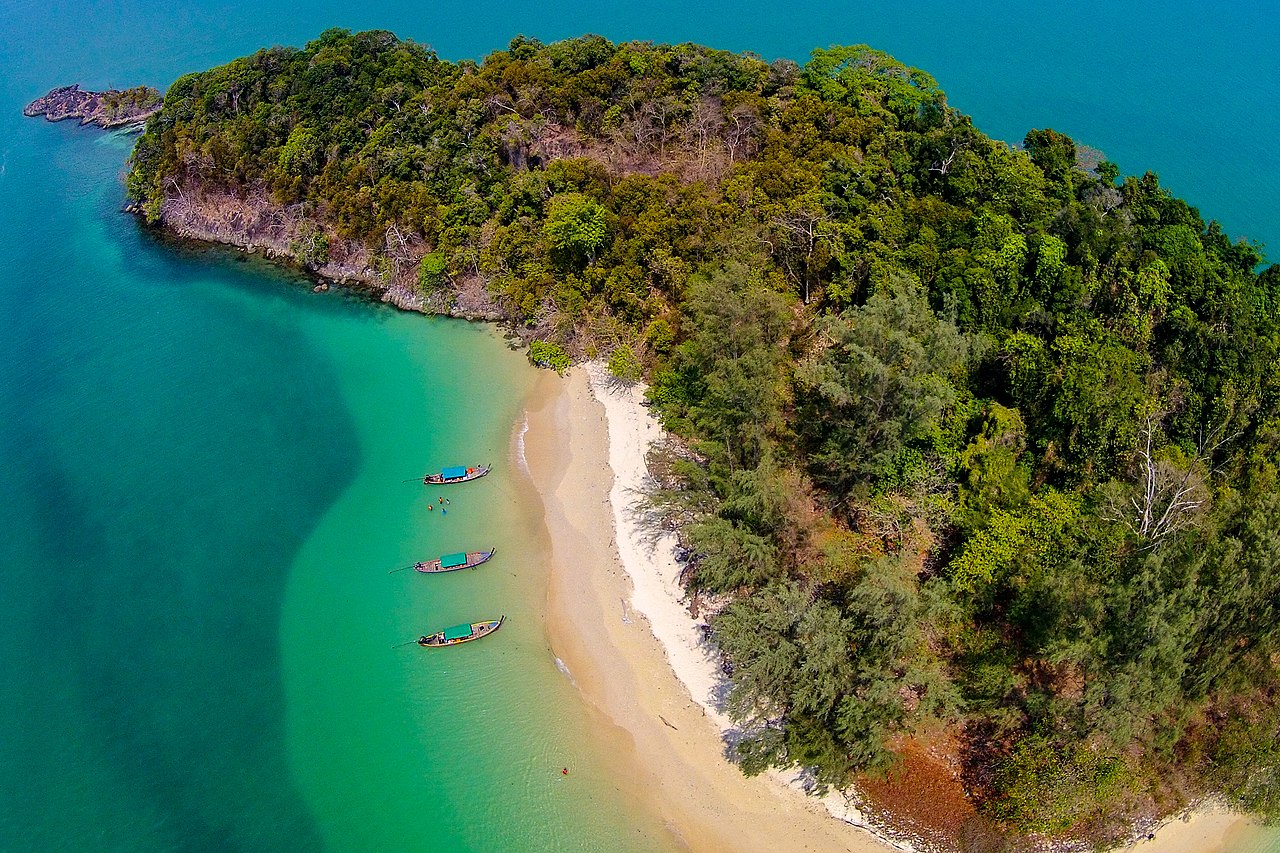
If your goal is clear water and coral worth diving for, Ranong's outer-island snorkeling tour is a better value than simply relaxing on one island's beach, because the speedboat heads out to the outer islands within Laem Son National Park, which see fewer people and have clearer water than spots near the mainland. Popular stops include Koh Kam (which includes both Koh Kam Yai and Koh Kam Tok), known for its white sand beach and shallow coral reefs, and Koh Yipun, known for clear water and coral where you can watch schools of fish. Many programs loop through 3-5 spots in a single day, including time floating over the coral, walking the beach on an island, and stopping for lunch. Join-group speedboat tours are popular because you cover several spots in a limited time and life jackets are provided for everyone, making it suitable for families with kids or anyone who isn't a confident swimmer. Compared with staying on one island, this option stands out for clear water and variety of dive spots, in exchange for spending the whole day on the boat with no overnight stay.
Per-person tour prices usually already include lunch, fruit, drinking water, snorkeling gear, and a life jacket. Some operators include the Laem Son park fee in the price, while others charge it separately, so it's worth asking clearly before booking. Many tours offer pickup from accommodation in Ranong town or from Koh Phayam. Booking through an online platform in advance makes it easier to compare what's included in the price, how many islands are visited, whether it's a speedboat or a larger boat, and which pier it departs from. It's also worth checking whether the program focuses on snorkeling or more on beach time, since each operator arranges the route differently. The clearest water and best conditions for snorkeling are in the dry season, roughly November to April, with good underwater visibility and calm seas.
The most important thing to stress for this tour is season and safety. During the monsoon period, roughly May to October, the Andaman Sea off Ranong gets rough, underwater visibility is poor, and most operators suspend trips to the outer islands for safety, so it's nearly impossible to book this kind of tour during the rainy season. Anyone wanting to snorkel should plan mainly around the dry season. Another point is that the speedboat ride to the farther outer islands can get fairly choppy at times — anyone prone to seasickness should take motion-sickness medication beforehand and sit in the middle of the boat. Some coral spots are fragile and show signs of damage, so avoid stepping on or touching the coral, use reef-safe sunscreen, and follow the guide's instructions closely for the safety of both people and the reef.
- Clearer water and more intact coral than spots near the mainland — snorkel and see coral and fish schools across several islands in a single day
- Join-group speedboat tours usually include lunch, snorkeling gear, and a life jacket, suiting families with kids or less confident swimmers
- Stops at both Koh Kam with its white sand beach and Koh Yipun with clear water — many programs loop 3-5 spots, good value for the trip
- Pickup service available from Ranong town or Koh Phayam, making it easy to combine with a stay on one of the islands
- During the monsoon season (May-Oct), most operators suspend trips to the outer islands for safety, so it's nearly impossible to book — plan for the dry season instead
- You spend almost the entire day on the boat with no overnight stay; anyone prone to seasickness needs medication and should sit in the middle of the boat
- Some operators don't include the Laem Son park fee in the tour price — ask clearly before booking so the budget doesn't run over
Kawthaung (Koh Song), Myanmar side — cross the border, do a visa run, walk the border market
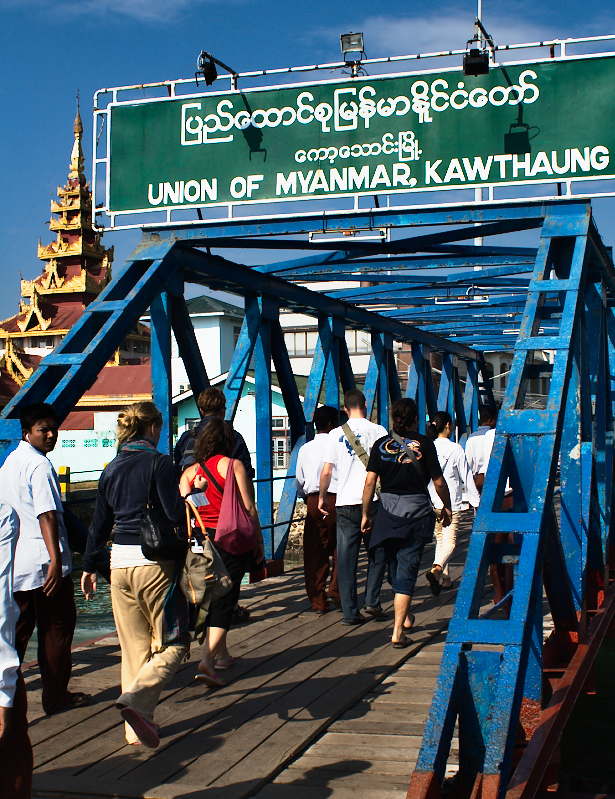
Another experience that can only be done in Ranong is taking a boat across the border to Koh Song, or as it's called on the Myanmar side, Kawthaung — a border port town in Tanintharyi Region, Myanmar, sitting directly across from Pak Nam Ranong. Just a short ferry ride across and you've arrived in another country. Many Thai travelers come here to do a visa run, crossing out and back in to reset their stay period. Some tourists cross over simply to see the port town on the Myanmar side, walk the border market with its inexpensive food and goods, visit temples and riverside viewpoints, or continue on a tour looping small islands on the Myanmar side as a day trip. The atmosphere is clearly different from a typical Thai beach trip — in language, food, and the rhythm of a port town — making it an option worth trying for anyone wanting something different from a standard Ranong trip.
In practice, crossing the border requires a passport and completing border-crossing paperwork at immigration checkpoints on both the Thai and Myanmar sides. There's a border-crossing fee and a documentation fee on the Myanmar side, charged in dollars or baht depending on the rate the border sets. Bring a valid, unexpired passport, copies, photos, and enough cash. Ferries run both as private charters and shared boats from Saphan Pla pier or Pak Nam Ranong pier. Many travelers use visa-run agencies in Ranong town that handle the boat and paperwork together as a single package, which is convenient for anyone who doesn't want to manage it themselves and helps reduce documentation hassle. Asking and booking in advance helps clarify costs and steps before you reach the border.
To be direct and stress this clearly: this is an international border crossing, and rules, fees, and the open/closed status of the border can change at any time, depending on policy and circumstances on both sides at any given moment. The border may close temporarily or add conditions during certain periods, so always check the latest border status and documentation requirements with the relevant authorities or a trusted service provider before planning every time. Don't rely on old information from reviews written years ago. You should also check the latest travel advisories and strictly follow the laws of both countries, carry all required documents, avoid bringing prohibited items across the border, and allow extra time for immigration procedures, which can take a while on some days.
- A cross-border experience only possible in Ranong — a short ferry ride and you've reached a port town on the Myanmar side
- Convenient for anyone needing a visa run, with agencies in Ranong town that handle the boat and documents together in one package
- You get to walk the border market and see the port town, temples, and riverside viewpoints on the Myanmar side, with an atmosphere clearly different from the Thai side
- You can continue on to a day tour looping small islands on the Myanmar side, adding variety to a Ranong trip
- This is an international border crossing — rules, fees, and open/closed border status can change at any time, so check the latest status before you go
- Requires a passport and border-crossing paperwork, with an added fee on the Myanmar side, and immigration procedures that can take a while on some days
- Not a scenic sea trip like the other islands in this article — it focuses more on the port town-market-visa run experience than swimming or snorkeling
Quick summary: which Ranong island should you choose
Want a lovely island with full accommodation and restaurants, staying several nights Choose Koh Phayam. It's the main island that balances quiet with convenience, with a lovely beach and accommodation across several price ranges — you just need to take a boat ride of 45 minutes to 2 hours each way.
Want to cut off from the city completely, stay long-term, on a budget Choose Koh Chang Ranong (Koh Chang Noi), a quiet island of down-to-earth beachfront bungalows, but be ready for no ATM, electricity running only certain hours, and boats that don't run every hour.
Want clear water and coral worth diving for Go on the Koh Kam-Koh Yipun snorkeling tour, looping the outer islands in a single day, with clearer water than spots near the mainland, but you'll spend the whole day on the boat and it only runs in the dry season.
Want to do a visa run or try crossing the border Cross to Kawthaung (Koh Song) on the Myanmar side, a port town-border market experience, but you'll need a passport and must check the latest border status every time before you go.
One more reminder about season Ranong's sea sits on the Andaman coast — during the monsoon season, May-Oct, seas get rough and many islands and resorts close, with boats to the smaller islands and snorkeling tours usually suspended for safety. The best and safest time to go is the dry season, Nov-Apr.
Book Activities & Tickets in Advance
Boats to the islands and Ranong's snorkeling tours are limited and often suspended during the monsoon season — book in advance and confirm the boat schedule before you travel
Visiting Ranong's islands — where should you stay?
Choose accommodation in a good location, from resorts on Koh Phayam-Koh Chang right on the beach to hot-spring hotels in Ranong town near the pier. Compare prices across 3 sites before booking
Search hotels on AgodaHow to plan a trip that covers both the islands and snorkeling
If you have three days in the dry season, we recommend taking the boat up to Koh Phayam and staying 2 nights, using Koh Phayam as your base. On the first day, tour around the island, swim at Ao Yai, and stop by Ao Khao Kwai for the sunset. On the second day, add on the Koh Kam-Koh Yipun snorkeling tour to see the clear water and beautiful coral. On the third day, before heading back, stop for a relaxing soak in the hot springs in Ranong town. Anyone with more time who wants an even quieter island can continue on to Koh Chang Ranong for another two or three nights. Anyone needing to do a visa run can set aside half a day to cross to Kawthaung. But all of this should be done in the dry season, Nov-Apr, and always confirm the boat situation with accommodation beforehand.
Once you've decided which island to visit, don't forget to book accommodation in a good location as your trip base. See Ranong accommodation with prices already compared here
See Ranong accommodation in great locations →