🔄 Updated 21 Jun 2026
Most people know Ratchaburi for the Damnoen Saduak Floating Market and the dragon jars, but the province itself is an easy two-to-three-day trip without repeating yourself. The draw is that it has two distinct sides: the Mae Klong lowlands to the east, full of markets, old towns and handicrafts, and the western edge against the Tenasserim range, with forested hills, waterfalls and the cool air of Suan Phueng. We've grouped the spots so you can pick by how many days you have and the kind of trip you're after.
Town, Floating Markets & Handicrafts
The first group is the stuff people picture first when they think of Ratchaburi — the floating market known around the world, the dragon jars that are the province's GI product, and the old town along the Mae Klong River. These sit on the eastern side of the province and are an easy drive from Bangkok.
Damnoen Saduak Floating Market
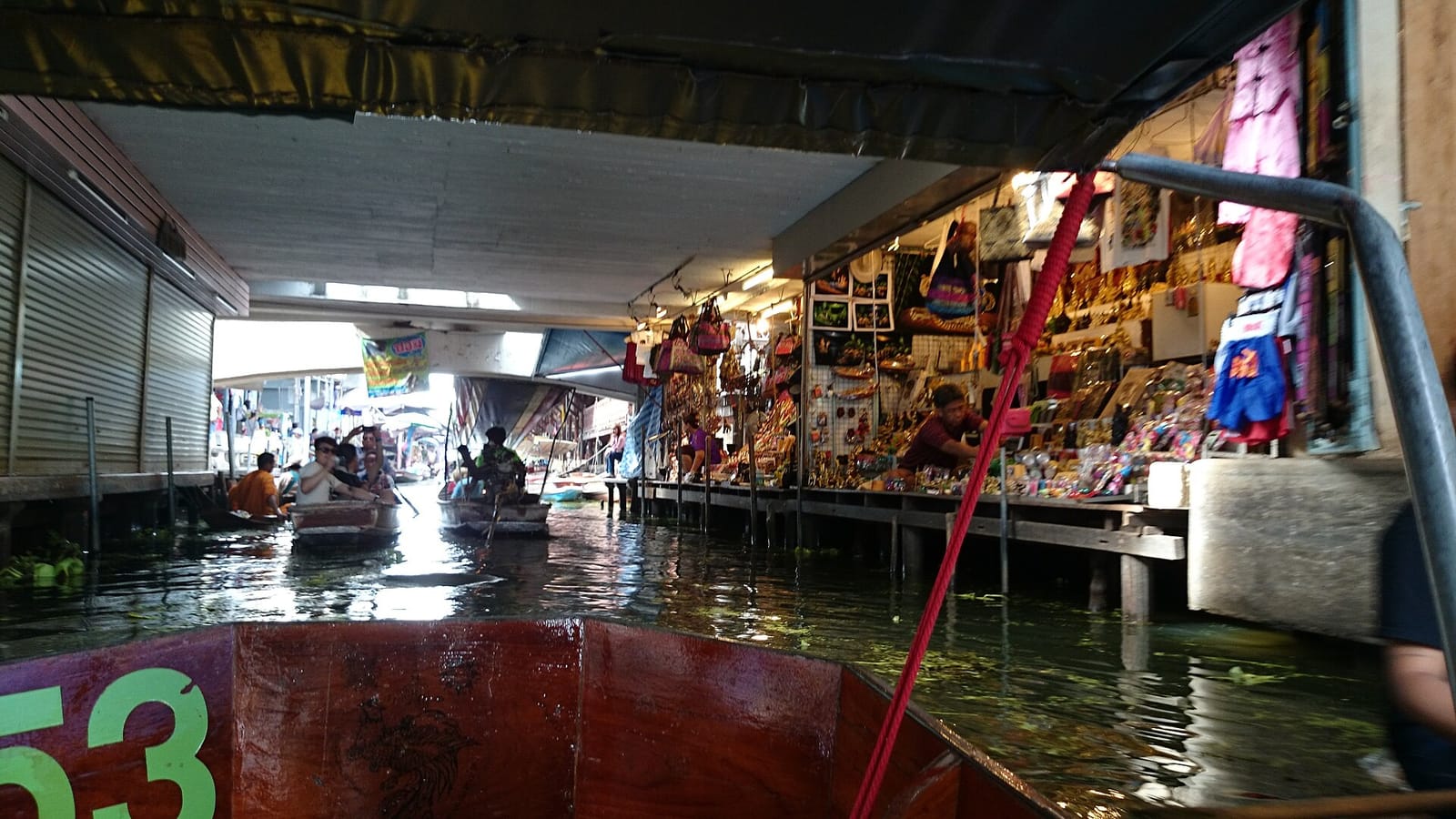
Thailand's most famous floating market and one travellers worldwide recognise, about 100 km from Bangkok. Paddle boats packed with food and souvenirs crowd the canal, and the atmosphere is liveliest in the morning. Standout eats are boat noodles, fragrant young coconuts and Thai sweets. Come before 9am to catch the market while the boats are still out in force and the crowds haven't built up.
Dragon Jars — Jar Town
Ratchaburi's dragon jars are earthenware decorated with dragon patterns, made from the local red clay — a GI product the town has been known for over 60 years. These days many jar workshops let you watch the throwing, paint a mini jar as a souvenir, and shoot photos against walls of jars lined up in rows. A good stop on the way into town.
Chet Samian Old Market
A row of old wooden shophouses along the railway, with a quiet, retro feel that's far less crowded than the floating market. There's local food, old-school sweets and the famous Chet Samian pickled radish. Best for a relaxed wander and grazing on snacks over the weekend.
Ratchaburi National Museum
Set in a European-style former provincial hall right in town, it tells the story of Ratchaburi from the Dvaravati era onward, with antiquities, woven textiles and the history of the dragon jars. Good if you want to understand where the town came from before heading out. The building itself is photogenic.
Timing Damnoen Saduak right
Damnoen Saduak gets busy and the canal is still full of boats in the early morning. Arrive past noon and the boats thin out and it gets hot. Leave your hotel early so you're there before 9am — that's when you'll get the floating market at its liveliest.
Want more out of Ratchaburi? Book tours & activities
Booking online ahead on Klook or GetYourGuide is usually cheaper than the gate and skips the queue. Pick only the experiences you actually want — prices and availability are shown live on each site.
Culture, Caves & Ancient Buddhas
Ratchaburi is an old town with traces going back to the Dvaravati period, and the most interesting sites tend to sit in the caves and limestone hills around the city. This group suits anyone who doesn't mind a short climb to see ancient Buddha images and limestone scenery at the same time.
Khao Ngu Stone Park
A limestone hill about 8 km from town, once an old quarry and now a public park set in a valley with a pretty lake. The highlight is Ruesi Cave, with a Dvaravati-era Buddha image carved into the rock — over a thousand years old, seated with legs pendant. You can climb the steps up to see it, and the valley view below makes for good photos.
Khao Bin Cave (Wat Tham Khao Bin)
A large stalactite-and-stalagmite cave in a forest reserve, split into several chambers. It was one of the first caves in Thailand to add coloured lighting so you can walk through and admire the oddly shaped rock formations. It's cool and roomy inside, easy walking for both kids and adults, about 20 km from town.
Wat Tham Khao Ngu (Fa Tho & Chin caves)
Part of the same Khao Ngu cluster as Ruesi Cave, with several caves to work through, including a Buddha's footprint and old rock-carved Buddhas. Good for history lovers who want to tick off the whole Khao Ngu group. The stairway up is fairly steep, so save some energy.
Wat Mahathat Worawihan, Ratchaburi
The town's principal temple in the heart of the old quarter, with a Khmer-style main prang and old murals inside the prang's chamber that archaeologists prize. It's a pleasant walk around, close to the Mae Klong River and the town's food streets.
Before you tackle the Khao Ngu caves
The climbs up to Ruesi Cave and the others in the Khao Ngu cluster are fairly steep stone stairs. Wear shoes you can walk in, carry water, and watch out for the monkeys near the stairways — don't wave a bag of food around or it may get snatched.
Nature & Suan Phueng
The western side of the province, up against the Tenasserim range, is Suan Phueng district — a nature getaway where the air runs cooler than in town, especially from November to February when temperatures sit around 20–28°C. You'll need a car for this group and should allow about an hour's drive from town, but you get forested hills, farms and waterfalls that feel a world apart from the city.
Coro Field
A Japanese-style farm in the middle of Suan Phueng, with melon greenhouses, organic veggie plots, a windmill and cute photo corners all over the grounds. You can pick tomatoes, taste melon and sit at the café. Open Mon–Fri 09:00–17:00, and Sat–Sun and holidays until 19:00.
The Scenery Vintage Farm
Suan Phueng's hit vintage sheep farm, where you can feed sheep, try archery, ride horses and shoot photos in European-style corners. Great for families letting kids play all day.
Bo Khlueng Hot Springs
The closest natural hot springs to Bangkok, where mineral water seeps down from the Tenasserim range into a warm stream you can soak your feet in. Shady, relaxing surroundings in the middle of the forest.
Kao Chan (Kao Chon) Waterfall
A nine-tiered waterfall in the Suan Phueng forest with water year-round; the lower tiers are good for a swim. A nature trail and bridge link it to Bo Khlueng Hot Springs about 1 km away, so you can do the two together. Open 08:00–18:00, entry around ฿20/person plus ฿30 parking.
Beyond these four spots, Suan Phueng has plenty more check-ins scattered around — hillside cafés, riverside stays and local souvenir markets. If you have time to stay overnight, you'll see far more comfortably than on a single day trip.
- Best time to go — late rainy to early cool season (Nov–Feb), when the air is cool and the waterfalls are full. This is when Suan Phueng looks its best.
- Getting around — Suan Phueng's spots are spread out and far apart, so your own car is by far the easiest. Public transport is hard to rely on here.
- Allow extra time — it's about an hour from Ratchaburi town to Suan Phueng, so if you want to hit several spots, stay overnight in Suan Phueng.
Wondering what to eat in Ratchaburi
See the Ratchaburi food guide →Sample Trips: How to Fit It All In
If you're not sure how to string the spots together, here are two options: a single day focused on the town side and the floating market, and a two-day plan that covers both the town's culture and Suan Phueng's nature.
Floating market, old town & Khao Ngu
Town + Suan Phueng
If you want pure nature
If you have two days but want to spend them all in Suan Phueng, skip the floating market and drive straight in for two nights. You'll get to enjoy the farms, waterfalls, hot springs and hillside cafés without rushing, since the spots are spread out and the drives between them take a while.
Plan a full Ratchaburi trip
See the Ratchaburi travel guide →